Signs Your Septic System Is Failing
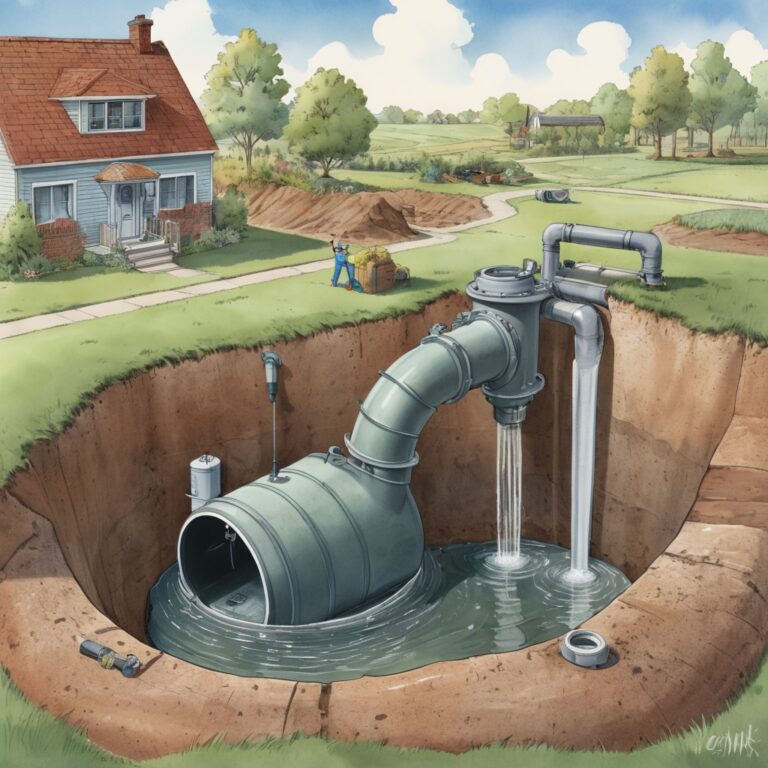
If you’re noticing slow drains, foul smells, or soggy patches of lawn that just won’t dry out, your septic system may be trying to tell you something. The average septic system failure costs homeowners between $3,000 and $35,000 to fix — but the difference between a manageable repair and a catastrophic replacement almost always comes down to how fast you catch the warning signs of Septic System Is Failing.
The good news: septic systems rarely fail overnight. They send clear signals for months — sometimes years — before a full breakdown. This guide covers all 10 warning signs, explains what each one means, and tells you exactly what to do at each stage before costs spiral out of control.
The 10 Warning Signs of Septic System Failure — Quick Checklist
Use this checklist to assess your system right now. Check any signs you’re currently experiencing:
Slow drains throughout the house (not just one fixture)
Gurgling sounds in toilets or pipes
Foul sewage odor inside or around the yard
Unusually lush, bright green grass over the drain field
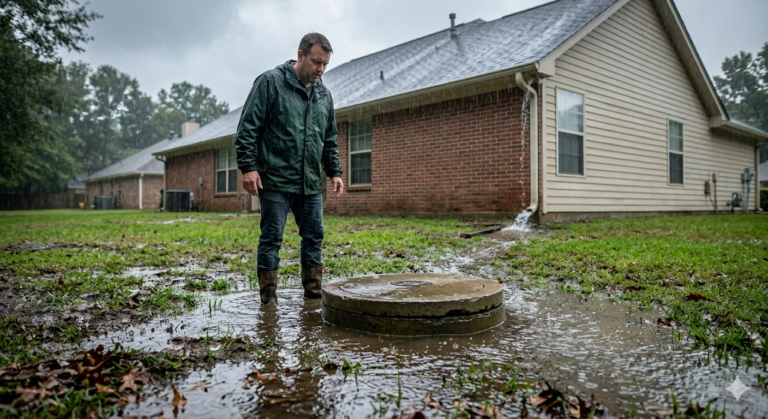
Soft, spongy, or wet ground near the septic tank or drain field
Standing water pooling over the drain field (not after rain)
Sewage surfacing visibly on the yard
Sewage backing up through drains, toilets, or the bathtub
Well water testing positive for nitrates or bacteria
Tank needing pumping more frequently than every 3–5 years
What your count means:
1–2 signs: Early warning. Take action this week — costs are still low.
3–4 signs: Moderate risk. Schedule a professional inspection within 48 hours.
5+ signs: Likely active failure. Stop non-essential water use and call a pro today.
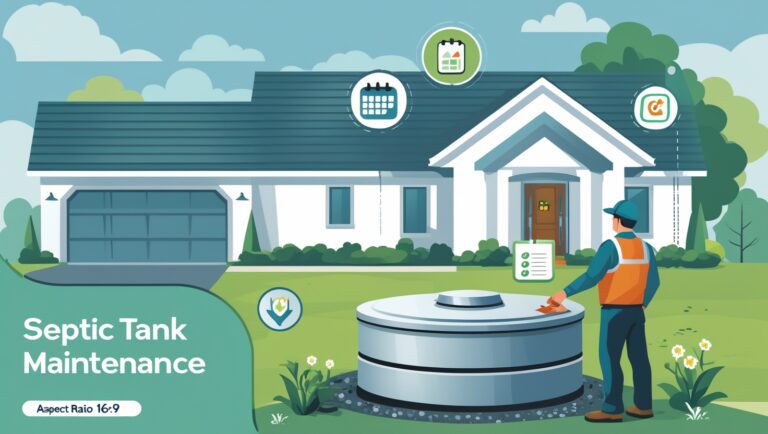
Septic Tank Maintenance Checklist: Free Homeowner Guide | Maintain Septic Tank
Quick answer: If several of these signs appear at once, book an inspection first — no treatment repairs a failed drainfield, a crushed pipe, or a broken baffle. For early-stage symptoms and ongoing upkeep between pumps, an easy monthly tablet is the low-cost step to consider. Septifix is our featured option to compare first.
How to Gauge Severity: The 4 Warning Levels
Not all warning signs are equal. Understanding the severity of what you’re seeing helps you avoid both panic and expensive delays.
Warning Level
Signs
Typical Repair Cost
Urgency
Level 1 — Early Warning
Occasional slow drains, faint outdoor odor
$300–$800 (pump + inspection)
This week
Level 2 — Caution
Multiple slow drains, gurgling, green grass patch
$800–$5,000 (repairs + possible baffle replacement)
Within 48 hours
Level 3 — Active Failure
Persistent odor, wet drain field, frequent pumping
$5,000–$15,000 (drain field repair or expansion)
Today
Level 4 — Emergency
Sewage backup indoors, sewage surfacing in yard
$15,000–$35,000+ (full system replacement)
Immediately — call 911 or emergency plumber
The goal is to catch problems at Level 1 or 2. Every week you delay at Level 3 increases the chance of sliding into a Level 4 emergency.
Early Warning Signs You Can Catch Before It’s Too Late
1. Slow Drains Throughout the House
What it looks like: Multiple sinks, showers, and toilets all drain more slowly than normal. This is the key distinction — if just one fixture is slow, it’s likely a local clog. When all your drains are sluggish, it points to the septic system. Our guide to slow drains and sewage backup works through the likely causes in order, from a simple blockage to a drain field that is losing absorption.
What it means: Your tank may be approaching full capacity, your inlet baffle could be partially blocked, or your drain field is starting to lose absorption capacity.
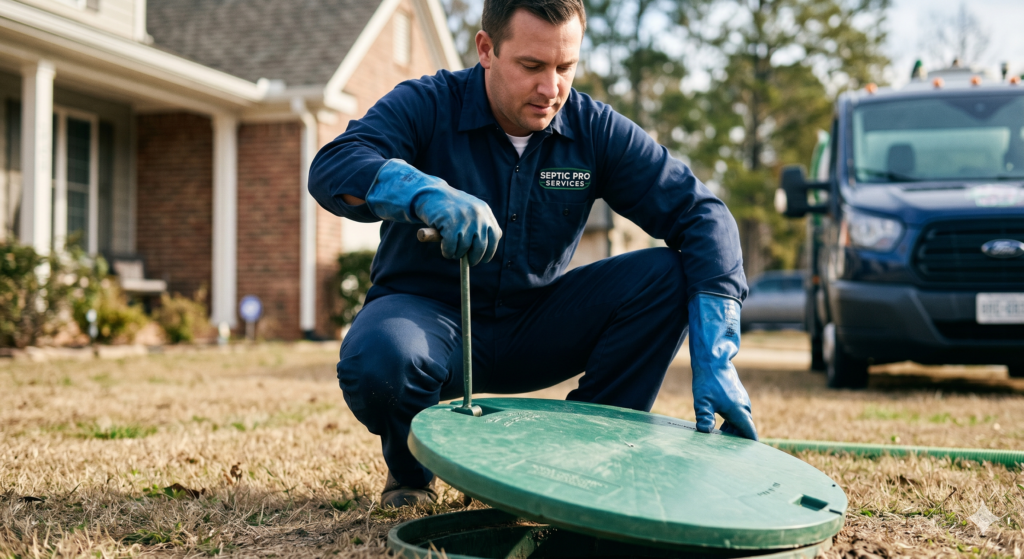
What to do: Check your pumping records. If it’s been more than 3–5 years since the last pump-out, schedule one now. Pumping typically costs $300–$600 and may fully resolve the issue at this stage. Adding a monthly bacterial treatment like RID-X monthly packets can help maintain bacterial balance and prevent solids buildup between pumpings.
2. Gurgling Sounds in Plumbing
What it looks like: You flush a toilet and hear gurgling in a sink or bathtub drain. The washing machine runs and toilets bubble. These sounds mean air is being displaced somewhere in the system.
What it means: Your tank is likely full or there’s a partial blockage creating pressure in the lines. It can also indicate a venting issue, but when combined with other signs, suspect the septic system first.
What to do: Reduce water use immediately. Schedule a septic pump-out. If the gurgling persists after pumping, have a plumber check the vent stack.
3. Foul Sewage Odor (Indoors or Out)
What it looks like: A persistent rotten egg or raw sewage smell around the yard, near the tank lid, over the drain field, or — more urgently — inside the home.
What it means: Sewage gas (methane and hydrogen sulfide) is escaping where it shouldn’t. Outdoor odors near the drain field suggest the soil is becoming saturated. Indoor odors indicate a leak in the system or a dry trap.
What to do: If the smell is outdoors only, schedule an inspection within a week. If you can smell sewage inside the home, that’s a Level 3 or 4 issue — call a professional within 24 hours.
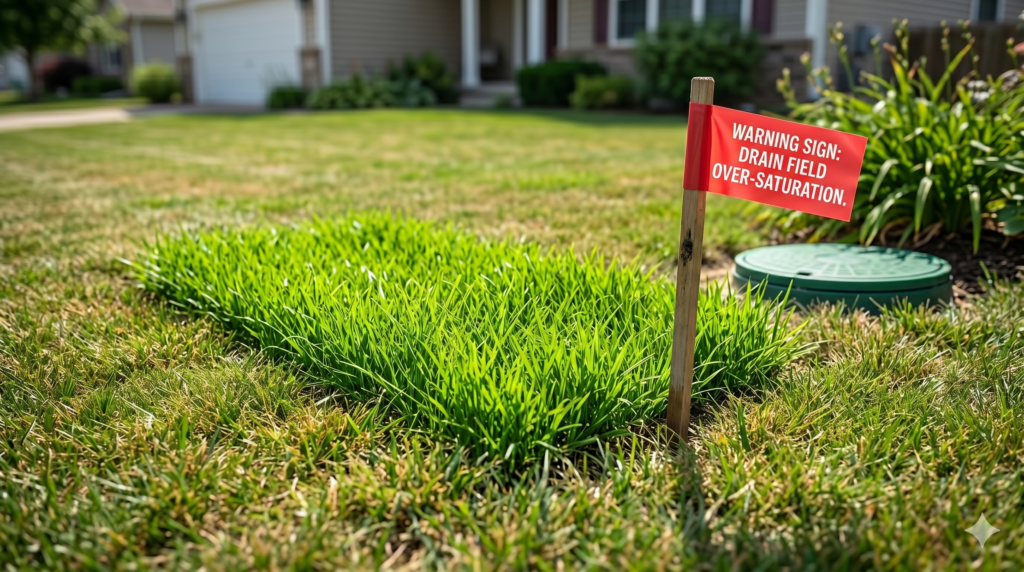
4. Unusually Lush or Green Grass Over the Drain Field
What it looks like: A distinct patch of brighter, thicker grass growing over the drain field — especially visible in dry weather when the rest of the lawn is stressed.
What it means: Effluent is not being properly absorbed and treated underground. Instead, it’s near the surface, fertilizing the grass above. This is an early-to-moderate sign of drain field saturation.
What to do: Don’t ignore it just because the lawn looks nice. Schedule a septic inspection. Avoid mowing, driving, or placing heavy objects over the drain field, as this compresses the soil further.
Signs of Active or Advancing Failure
5. Soft, Wet, or Spongy Ground Near the Tank or Drain Field
What it looks like: Ground that feels soft underfoot, remains muddy after dry weather, or has visible moisture even when rain hasn’t fallen recently.
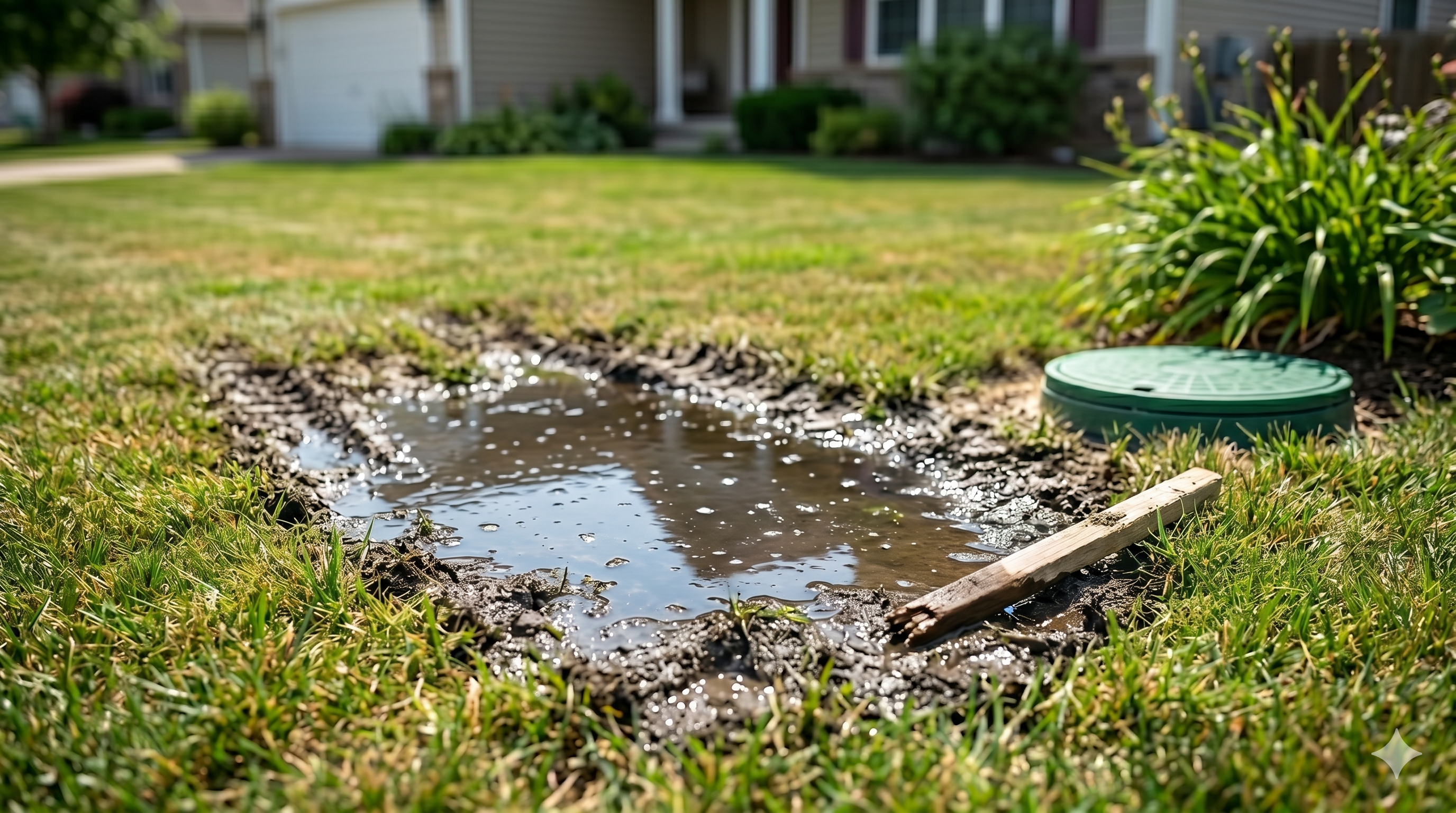
What it means: The drain field soil is saturated with wastewater. The soil can no longer absorb and filter liquid at the rate your household is producing it. This is Level 2 or 3 territory.
What to do: Reduce all water use in the home. Space out showers, laundry loads, and dishwasher cycles. Avoid using garbage disposals entirely. Schedule an inspection within 48 hours. At this stage, pumping the tank more frequently can temporarily relieve pressure while you wait for repairs.
6. Standing Water or Pooling Over the Drain Field (No Rain Explanation)
What it looks like: Visible puddles or a consistently wet area over the drain field even on dry days. The ground may have a slight sulfur smell.
What it means: Drain field failure. The soil biomat layer — the natural filter layer created by beneficial bacteria — has become clogged and impermeable. Wastewater is surfacing rather than draining downward.
What to do: Keep people and pets away from the area. Schedule an emergency inspection. This is a Level 3 problem that can become Level 4 quickly. Expect drain field repair costs of $5,000–$20,000 depending on scope.
7. Sewage Surfacing in the Yard
What it looks like: Visible sewage — not just water — on the surface of the yard near the tank or drain field. You can usually identify it by the smell and dark color.
What it means: Complete drain field failure. This is a Level 4 emergency and a health hazard. Surfacing sewage can contaminate the soil, groundwater, and any nearby water sources.
What to do: Keep children and pets away immediately. Stop all non-emergency water use. Call a septic professional for emergency service and notify your local health department, as surfacing sewage may be a code violation requiring reporting.
Emergency Signs — Call a Pro Today
8. Sewage Backing Up Through Indoor Drains
What it looks like: Dark water or sewage coming up through your bathtub, shower drain, or floor drain — especially in the lowest level of your home. Toilets may overflow even when barely flushed.
What it means: The septic system is full or completely blocked and has nowhere to move waste. This is a Level 4 emergency. Lower-level fixtures are affected first because they’re closest to the main septic line.
What to do: Stop using all water in the home immediately — no toilets, no sinks, no dishwasher. Call an emergency septic service. This situation typically requires immediate tank pumping and a full system inspection, followed by drain field assessment.
9. Well Water Testing Positive for Nitrates or Bacteria
What it looks like: Your annual well water test returns elevated nitrate levels or positive coliform bacteria results. You may also notice taste or odor changes in your water.
What it means: Your failing septic system is contaminating the groundwater that feeds your well. This is both a severe health hazard and a regulatory issue in most states.
What to do: Stop drinking or cooking with the well water immediately. Switch to bottled water. Contact your local health department and schedule an emergency septic inspection. In some counties, you may be legally required to report contamination if neighboring wells could be affected.
10. Tank Requiring Pumping Far More Frequently Than Before
What it looks like: Where you previously pumped every 3–5 years, you now find yourself needing service every 12–18 months — or the pumping company tells you the tank was nearly overflowing again despite a recent service.
What it means: Frequent over-filling means the drain field is not receiving and processing effluent properly. Solids that should stay in the tank are being forced into the drain field, accelerating its failure. Pumping alone is a temporary fix — it does not address the underlying drain field problem.
What to do: Ask your pumping company to inspect the baffle condition and check whether effluent is draining out of the tank normally. If the outlet baffle is damaged or the drain field is backing up into the tank, those repairs need to happen alongside pumping.
What to Do If You See Multiple Signs: Your Action Plan
Immediate Steps (Do These Today)
- Stop garbage disposal use entirely. Disposal adds excessive solids that overwhelm a stressed system.
- Spread out water use. No back-to-back laundry loads. Shorter showers. Run the dishwasher once daily, not multiple times.
- Don’t add chemical drain cleaners. They kill the beneficial bacteria your septic system depends on.
- Check your records. When was the last pump-out? A professional inspection starts here. This Week Schedule a pump-out + inspection if it’s been 3+ years (or sooner if you’re seeing multiple signs)
Use an enzyme treatment to help restore bacterial balance: Green Gobbler Septic Saver is a well-reviewed option that provides monthly doses of septic-safe bacteria and enzymes.
If You Need a Pro Now
Don’t wait if you’re seeing standing water, indoor backups, or surfacing sewage. Use a service finder like HomeAdvisor or Angi to get quotes from licensed septic contractors in your area — most offer free estimates and emergency response.
How Much Does Septic Repair Cost? What to Expect
Understanding the cost range helps you make faster decisions when warning signs appear.
Repair Type
Average Cost
Septic tank pump-out
$300–$600
Baffle repair or replacement
$150–$500
Distribution box replacement
$500–$1,500
Drain field repair / aeration
$1,000–$5,000
Drain field expansion
$5,000–$12,000
Full drain field replacement
$3,000–$15,000
Full system replacement
$15,000–$35,000+
Drain field figures above follow the contractor-reported ranges in our drain field replacement cost guide, where the sourcing is set out in full. For pumping, see how much septic tank pumping costs.
How to Prevent Septic Failure
The most cost-effective thing you can do is maintain your system before problems start. Three rules prevent the majority of septic failures:
- Pump every 3–5 years (more often with larger households or smaller tanks)
- Add monthly bacterial treatment — products like Bio-Clean Drain Septic help maintain a healthy bacterial population that processes solids efficiently
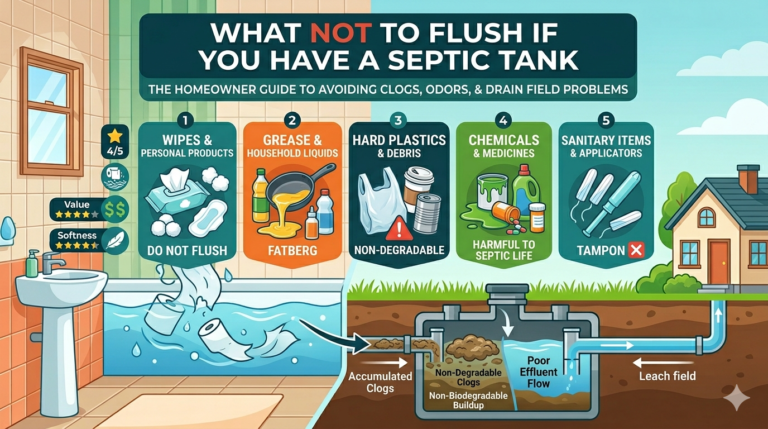
- Watch what you flush — see our guide: what not to flush if you have a septic tank
Regular maintenance inspections — even when nothing seems wrong — catch problems at Level 1, where repair costs are a fraction of emergency replacement.
Frequently Asked Questions
What is the most common cause of septic system failure?
The most common cause is neglected pumping. When solids aren’t removed on schedule (every 3–5 years), they escape into the drain field and clog the soil. The second most common cause is excessive water use, which overwhelms the system’s capacity. Both are entirely preventable with routine maintenance.
How long does a septic system last before failing?
A properly maintained septic system lasts 25–40 years. Drain fields typically last 20–30 years. Systems that are poorly maintained, undersized for household use, or built in clay-heavy soil may fail in 10–20 years. Regular pumping and conservative water use are the single biggest factors in lifespan.
Can a failing septic system be repaired, or does it always need replacement?
It depends on how far along the failure is. Early-stage drain field saturation can sometimes be reversed through aeration, resting the field, or installing a new distribution box. Full biomat clogging usually requires drain field replacement. Complete system failure requires full replacement. Catching it at Level 1 or 2 dramatically increases repair options.
Is it safe to stay in a house with a failing septic system?
In most cases, yes — at Level 1 or 2, it’s safe while repairs are arranged. At Level 3 (surfacing sewage outdoors), limit outdoor exposure and keep children and pets away from affected areas. At Level 4 (indoor sewage backup), minimize water use and call for emergency service — raw sewage indoors is a health hazard and should be treated urgently.
How do I know if it’s a plumbing problem or a septic problem?
The key indicator is scope. If one fixture is slow or backed up, it’s likely a localized plumbing clog. If multiple fixtures throughout the home are affected simultaneously, the problem is in the septic system, not the pipes. Gurgling sounds across multiple fixtures, combined with outdoor odors, almost always points to septic issues.
What should I do immediately if sewage backs up into my home?
Stop all water use in the home immediately — toilets, sinks, showers, and dishwasher. Call an emergency septic service. Don’t attempt to clear it with a plunger or chemical drain cleaner. If sewage has spread across floors, don’t walk through it — call a water damage restoration company alongside your septic contractor.
Final Thoughts: Act Early, Save Big
Septic system failure follows a predictable pattern: subtle early signs → ignored warning signs → expensive emergency. The homeowners who avoid the $20,000–$35,000 replacement bills are the ones who acted at the first or second warning sign — not the fifth or sixth.
If you checked more than two boxes in the checklist above, schedule a professional inspection this week. A $400 pump-out today is almost always better than a drain field replacement averaging around $7,900 six months from now.
If you are selling, these signs matter sooner. Some states and counties require a septic inspection before title transfers, and a problem found by the buyer’s inspector arrives as a demand rather than a decision — see selling a home with a septic system.
Related: How Often Should You Pump a Septic Tank? | How Much Does Septic Tank Pumping Cost? | Best Septic Tank Treatment: Honest Reviews
Quick answer: Treat the cause first, then keep the tank on a routine. If you want a simple monthly tablet alongside your normal pumping schedule, compare package options and check your tank size before ordering.
If the diagnosis is a system that needs replacing and the cost is the obstacle, that is a solvable problem more often than people expect. See our guide to septic system financial assistance for the grant and loan programmes that cover repair and replacement, and how to find the one your county runs.
If the signs point to the drainfield rather than the tank, the next question is what it costs to put right. Our drain field replacement cost guide covers when a field can still be rejuvenated, when it cannot, and what the work actually runs.
Essential septic guides
Affiliate disclosure: This guide contains affiliate links, including our Septifix partner link. If you purchase through one of these links, we may earn a commission at no additional cost to you. Our conclusions are based on product information and published guidance, not payment level.