Green Gobbler Septic Tank Treatment Packets Review (2026)
Quick Answer
Green Gobbler septic tank treatment packets are pre-measured, water-soluble packets that add beneficial bacteria and an enzyme formula to your tank to help break down grease and waste. They’re a convenience-focused, monthly treatment product that supports — but does not replace — proper septic system maintenance.
- What they are: Bio-enzymatic, dissolvable packets you flush on a set schedule.
- What they do: Supplement the anaerobic bacteria that digest sludge and scum inside the tank.
- What they don’t do: Reset your pump-out interval or fix a failing leach field.
- Best for: Homeowners who want a simple, septic safe, no-measuring routine.
What Are Green Gobbler Septic Tank Treatment Packets?
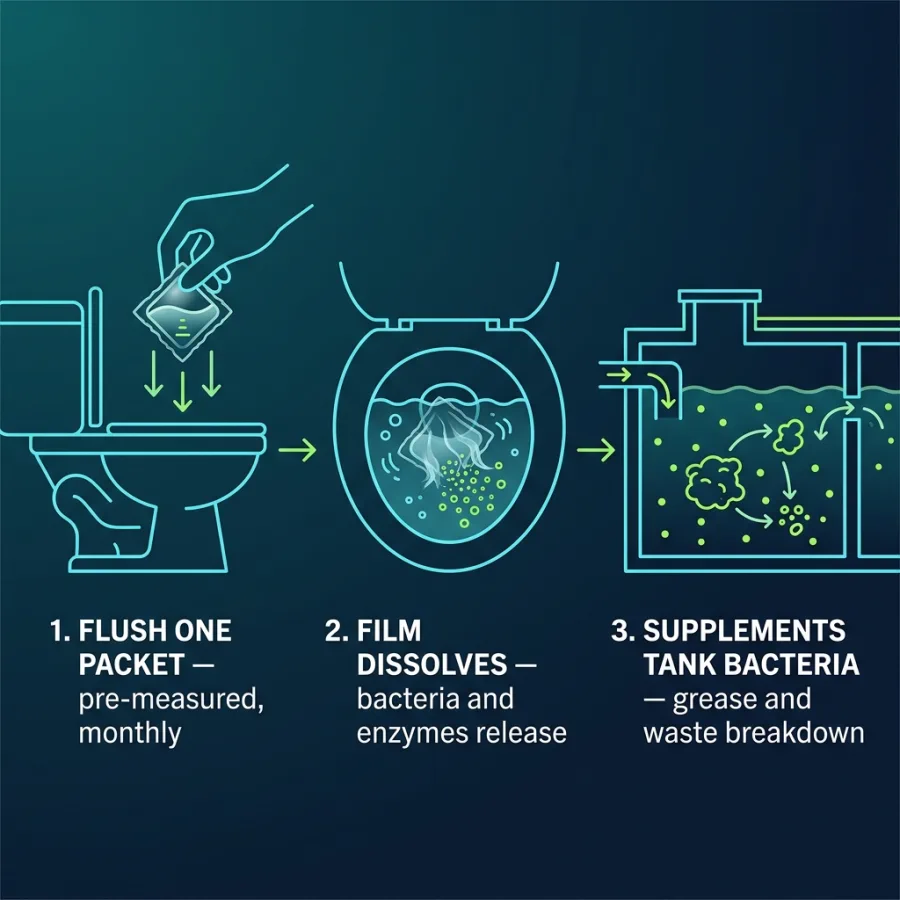
These are single-dose, water-soluble packets designed to be flushed directly down a toilet. Each packet contains a bio-enzymatic blend — a mix of beneficial bacteria and an enzyme formula — intended to boost the biological activity already happening inside your septic tank.
The appeal is simplicity. Instead of scooping powder or pouring liquid and guessing at the dose, you drop in a packet, flush, and you’re done. The dissolvable wrapper is the whole selling point for people who dislike handling septic products directly.
Think of a packet like this as a maintenance supplement, not medicine. A healthy tank already grows its own bacterial colony. These products aim to reinforce that colony, especially in homes where harsh cleaners, heavy grease loads, or infrequent use knock the population down.
How Does the Enzyme and Bacteria Formula Actually Work?
Your septic tank is a living system. Solids settle to the bottom as sludge, lighter fats and oils float up to form a scum layer, and the relatively clear liquid in the middle — the effluent — flows out to your drainfield. Between the sludge and scum, colonies of anaerobic bacteria (bacteria that thrive without oxygen) quietly digest organic matter.
A bio-enzymatic treatment works in two complementary ways:
- Enzymes act like scissors, chopping large molecules — fats, proteins, starches — into smaller pieces.
- Beneficial bacteria then consume those smaller pieces as food, which is how sludge breakdown actually happens.
The goal is to keep the biological engine running efficiently so more waste is digested and less accumulates as solids. That can help slow how quickly your tank fills between services.
One honest note: the tank interior is an anaerobic environment. Some products advertise aerobic bacteria, which need oxygen and are better suited to aerated treatment units or certain drainfield restoration products. Inside a conventional tank, the anaerobic side of the equation does the heavy lifting.
How Do You Use Green Gobbler Septic Packets Correctly?
Always follow the label on your specific package, since formulations and dosing can change. In general, packet products follow a simple routine:
- Drop the recommended number of packets into a toilet — usually one, based on tank capacity.
- Flush. The water-soluble wrapper dissolves and carries the bacteria and enzymes into the tank.
- Repeat on a monthly treatment schedule for ongoing maintenance.
Best practices from the field:
- Dose at night or when water use is low, so the bacteria have quiet hours to establish before the next big flush pushes them toward the outlet.
- Match dosing to tank capacity. A large tank serving a big household may need more product than a small one. When in doubt, follow the higher end of the label range.
- Don’t run a load of laundry with bleach right after dosing. Give the new bacteria a chance.
For homeowners who prefer pre-measured packets, Green Gobbler is one commonly available option. Check the current label and dosing instructions before buying.
Quick answer: Green Gobbler packets and Septifix tablets solve the same routine-maintenance job in different formats. If you want the tablet approach, compare Septifix first, then read the packet comparison below.
Do Septic Treatment Packets Actually Work?
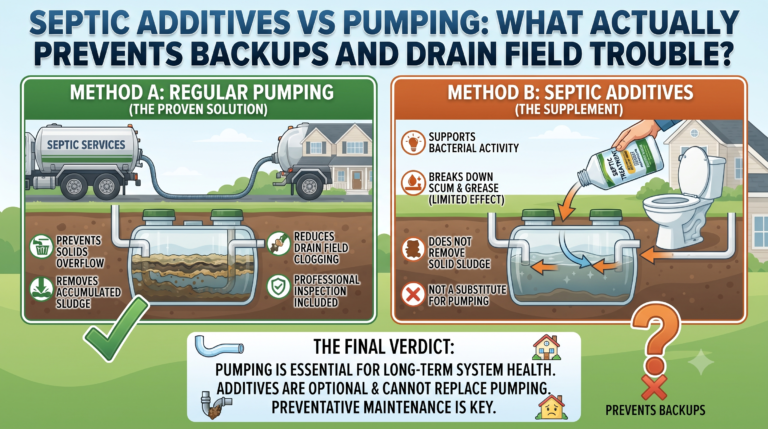
Here’s the straight answer a lot of product pages won’t give you: treatments like this are a maintenance aid, not a miracle. They can help a healthy system stay healthy and give a stressed system a boost. They cannot dig out compacted sludge, and they cannot repair a clogged or saturated leach field. (For regulatory context, see the EPA Septic Systems Overview.)
Where these products genuinely help:
- Homes with heavy grease and waste loads from cooking
- Systems recovering after heavy cleaner use
- Vacation properties or low-use homes where bacterial populations struggle
Where they won’t save you:
- A tank that’s overdue for pumping — solids still need to be physically removed
- A failing drainfield with standing water or sewage odors
- Structural problems, root intrusion, or a collapsed baffle
If you want the full picture on how additives fit into a smart routine, read our complete guide to septic tank treatment before you build a schedule.
How Do Packets Compare to Other Treatment Formats?
Packets aren’t the only way to deliver bacteria and enzymes. Each format has trade-offs.
| Format | Ease of Use | Dosing Accuracy | Best For | Watch Out For |
|---|---|---|---|---|
| Water-soluble packets | Very easy — flush and go | Pre-measured, consistent | Hands-off monthly routine | Costs more per dose |
| Powder | Easy | You measure by scoop | Budget-minded homeowners | Dust, spills, guesswork |
| Liquid | Easy | You measure by cap | Fast dispersal | Bulky, heavier to store |
| Drop-in tablets | Easy | Pre-measured | Simple maintenance | Slower to dissolve |
All formats aim at the same target: feeding the biological process. The right choice comes down to how much you value convenience versus cost. Wondering if a monthly tablet can actually save an aging septic system? For homeowners eager to manage waste and nix odors, it’s a simple, proactive routine worth trying.
Check: Septifix Septic Tank Treatment Tabs →
If you like the packet concept but want a proven powder option in your rotation, a general-purpose bacterial treatment is a solid backup.
And for households battling stubborn kitchen fats, a grease-targeting formula can complement your monthly packet.
What About “EPA Compliant” and “Septic Safe” Claims?
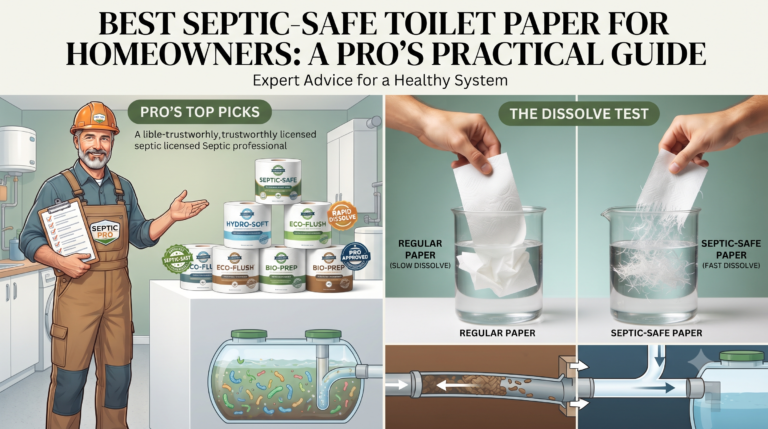
You’ll see phrases like “septic safe” and “EPA compliant” on many treatment products. These terms are reassuring but they aren’t a guarantee of results — they generally speak to the product being non-corrosive and appropriate for use in a septic environment, not to how much sludge it will remove.
Treat those labels as a baseline safety signal. What matters more for your system is the overall routine: reasonable water use, keeping harsh chemicals out, avoiding non-degradable items down the drain, and pumping on schedule. A packet supports that routine — it doesn’t replace it.
The same logic applies to older systems. A cesspool or a legacy pit works differently than a modern two-compartment tank feeding a proper drainfield, and additives behave differently in each. If you have an older system, confirm the product is appropriate before you commit to a schedule.
Does Using Treatment Extend Your Pump-Out Interval?
A common misunderstanding is that additives can eliminate pumping. No packet, powder, or liquid removes every solid from a tank. Mineral matter, inorganic material, and solids that bacteria cannot fully digest still accumulate at the bottom over time.
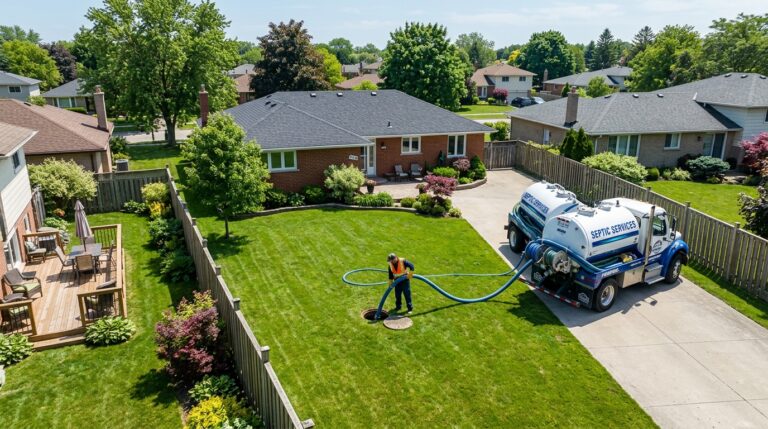
A good treatment routine may help a system run more efficiently, but the physical solids still have to be removed. The safest approach is to keep monitoring sludge and scum levels and pump based on actual accumulation, not just the calendar.
As a general rule, many households have their tank inspected regularly and pumped when the combined sludge and scum layers approach a significant share of the tank capacity. Your local pumper can tell you where your system stands.
When Should You Call a Professional?
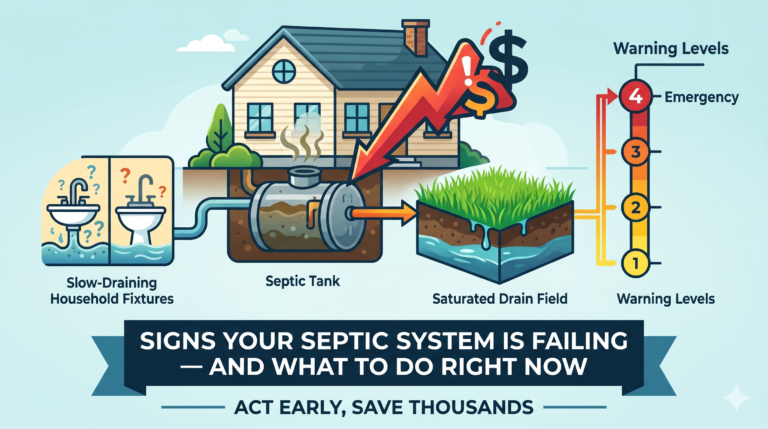
Additives are for maintenance. Call a licensed septic professional right away if you notice any of these:
- Sewage smell indoors or a foul odor over the drainfield
- Slow drains throughout the house, or gurgling fixtures
- Standing water, soggy ground, or unusually green grass over the leach field
- Sewage backing up into the lowest drains or toilets
- Alarms sounding on an aerated or pump-based system
These are signs of a tank that needs pumping or a drainfield in distress — not a job for a treatment packet. Trying to “treat your way out” of a backup usually just delays a repair and raises the final bill.
Frequently Asked Questions
How often should I use Green Gobbler septic packets?
Most packet products are designed for a monthly treatment schedule. Follow your package label, and match the number of packets to your tank capacity if the instructions offer a range.
Are septic treatment packets safe for all plumbing and toilets?
Water-soluble packets are formulated to dissolve fully and pass into the tank, so they’re generally safe for standard plumbing when flushed as directed. Never combine them with a slug of bleach or drain cleaner in the same flush.
Can a treatment packet unclog my drainfield?
No. Packets support bacterial activity inside the tank. A clogged, saturated, or failing drainfield is a structural and hydraulic problem that requires professional evaluation and often repair.
Do I still need to pump my tank if I use treatments regularly?
Yes. No additive removes physical solids. Continue routine inspections and pump based on measured sludge and scum accumulation.
The Bottom Line
Green Gobbler septic tank treatment packets are a legitimate, convenient way to add beneficial bacteria and an enzyme formula to your system on a predictable schedule. They shine on ease of use and consistent dosing. Just keep expectations realistic: they’re one part of good septic system maintenance, alongside sensible water use, keeping harsh chemicals out, and pumping on time. Use them as a supplement, not a substitute, and your system — and your wallet — will thank you.
Quick answer: A treatment supports routine maintenance; it does not replace pumping, inspection, or repair. If the tablet format suits you, compare package options and check your tank size before ordering.
Compare the alternatives
If you are weighing brands before committing to a routine, these side-by-side comparisons cover the products homeowners ask about most:
- RID-X vs Septifix — the supermarket default, and where its powder format costs you consistency.
- Bio-Clean vs Septifix — a drain-and-tank crossover, and when the dual purpose is worth the extra effort.
- Instant Power Septic Shock vs Septifix — shock dosing versus monthly maintenance, and why they answer different questions.
- Cabin Obsession vs Septifix — built for seasonal and intermittently used properties.
Essential septic guides
Affiliate disclosure: This guide contains affiliate links, including our Septifix partner link. If you purchase through one of these links, we may earn a commission at no additional cost to you. Our conclusions are based on product information and published guidance, not payment level.