Septic Tank Pumping Services: Trusted Maintenance and Reliable Scheduling Tips
⚠️ Affiliate Disclosure: This post contains affiliate links. As an Amazon Associate, I earn from qualifying purchases at no extra cost to you.
You rely on your septic system every day, and neglect can lead to slow drains, bad smells, or full backups. Get your septic tank pumped on a regular schedule to prevent costly repairs and keep wastewater flowing safely away from your home.
This post will show what septic tank pumping does, why it matters, how the service works, how to choose a pro, and what affects price and timing. You’ll learn clear steps to protect your system and avoid surprise emergencies.
Understanding Septic Tank Pumping Services
You will learn what pumping removes, how your septic system moves and treats wastewater, and the common signs that show when pumping is needed. These points help you protect the system and avoid costly repairs.
What Is Septic Tank Pumping?
Septic tank pumping is the removal of solids and floating scum from your tank using a vacuum truck. A technician opens the access port, inspects the tank, then pumps out accumulated sludge and scum layers that bacteria cannot break down.
Pumping does not clean the pipes or replace normal bacterial action. It restores tank capacity and prevents solids from flowing into the drain field. Most tanks need pumping every 3–5 years, but frequency depends on tank size and household usage.
Key items a technician will do:
- Measure sludge and scum levels.
- Remove waste to a licensed disposal facility.
- Check baffles, risers, and visible components for damage.
Get Free Septic Tank Diagnose Using Our Free Septic Tank Diagnose Tool
How Septic Systems Work
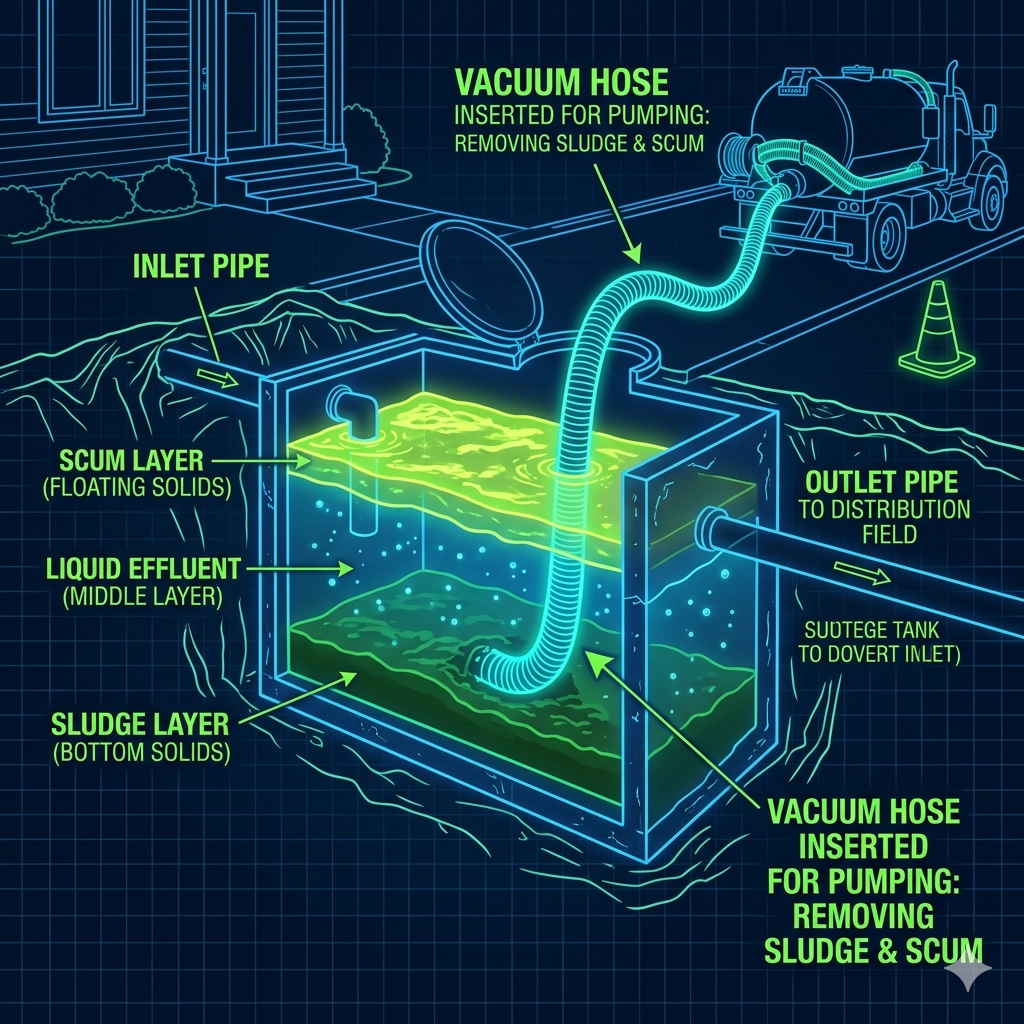
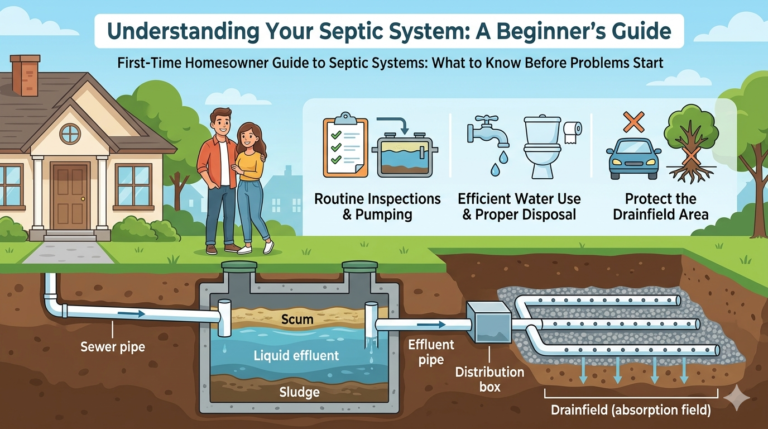
Your septic system treats household wastewater on-site. Waste flows from your drains into the septic tank where solids settle, fats float, and liquid effluent moves to the drain field.
Bacteria in the tank break down some solids, but not everything. The tank’s job is to separate solids from liquids and hold them long enough for partial digestion. The drain field then disperses liquid effluent into soil for final treatment.
You control system health by reducing water use, avoiding grease and chemicals down drains, and scheduling regular inspections and pumping. Proper maintenance keeps the drain field functioning and prevents backups or costly repairs.
-
Texas General Land Office: Onsite Disposal System Resources
– A comprehensive collection of septic system publications, including federal case studies and extension service training materials.
Signs Your Septic Tank Needs Pumping
Watch for slow drains, gurgling toilets, and sewage smells near drains or the tank. These are early signs that your tank is filling with solids and losing capacity.
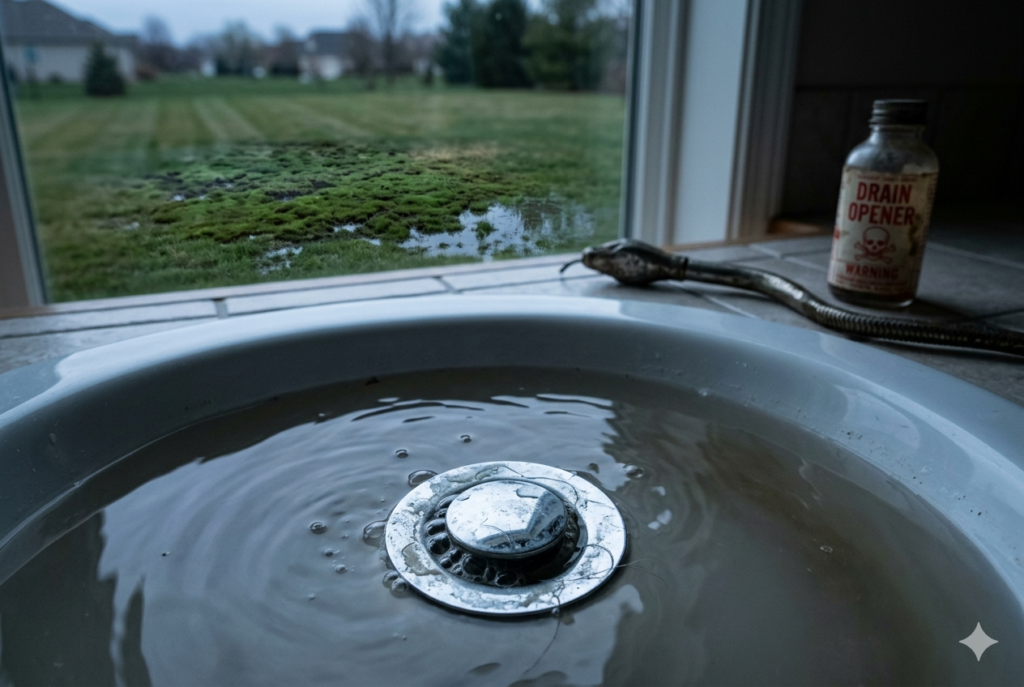
Other warning signs include sewage surfacing in the yard, unusually green or soggy areas over the drain field, and backups in sinks or toilets. A sudden spike in water bill or recurring clogs can also indicate a full tank.
If you notice any of these signs, call a licensed septic service to inspect and, if needed, pump the tank. Regular inspections catch issues before they turn into expensive failures.
Benefits of Regular Septic Tank Pumping
Regular pumping keeps solids from building up, prevents slow drains and backups, and reduces the chance of costly system failures. You get better flow, longer component life, and lower risk of sewage reaching your yard or local water.
Extending System Lifespan
Pumping removes solids and sludge that settle in your tank. When solids stay too long, they can move into the drain field and clog pipes and soil pores. Clogged drain fields fail faster and often require full replacement.
Keeping solids out of the drain field preserves soil absorption. That means your leach lines, distribution box, and soil can continue treating wastewater correctly. Regular pumping can add many years to the usable life of these parts.
Create a pump schedule based on tank size, household size, and water use. Most households pump every 3–5 years, but yours may need more frequent service if you use a garbage disposal or have high water flow.
Protecting Home and Environment
Pumping lowers the chance of sewage backups into your basement or yard. Backups bring health risks from bacteria and unpleasant odors that can damage belongings and indoor air quality. Regular service reduces this risk.
Removing solids also reduces nutrient and pathogen discharge to groundwater and nearby streams. That protects well water, local lakes, and public health. Properly disposed septage prevents contamination of drinking sources.
Technicians follow safe handling and disposal rules. This reduces your legal and environmental liability. You also keep neighborhood property values from dropping due to odors or visible soil contamination.
Preventing Costly Repairs
Small problems turn expensive when solids damage the drain field. Replacing a drain field costs far more than routine pumping. Pumping prevents blockages that lead to pipe repair, tank replacement, or whole-system replacement.
Regular inspections during pumping catch issues early, like damaged baffles or roots near the tank. Fixing a baffle or clearing a root is much cheaper than major excavation. You save hundreds to thousands of dollars over time.
Plan for predictable maintenance costs by tracking pump intervals and receipts. That helps you avoid emergency calls, sudden repair bills, and the stress of an unexpected sewage problem.
The Septic Tank Pumping Process
You will learn how a technician evaluates your system, removes solids safely, and performs basic cleaning to keep your system working. The steps include a close inspection, vacuum pumping of sludge and scum, and targeted cleaning or minor repairs.
Inspection and Assessment
A technician starts by locating your tank and risers, then opens access ports to check levels. They measure scum and sludge depth with a probe and note the liquid level to spot signs of backup or leakage.
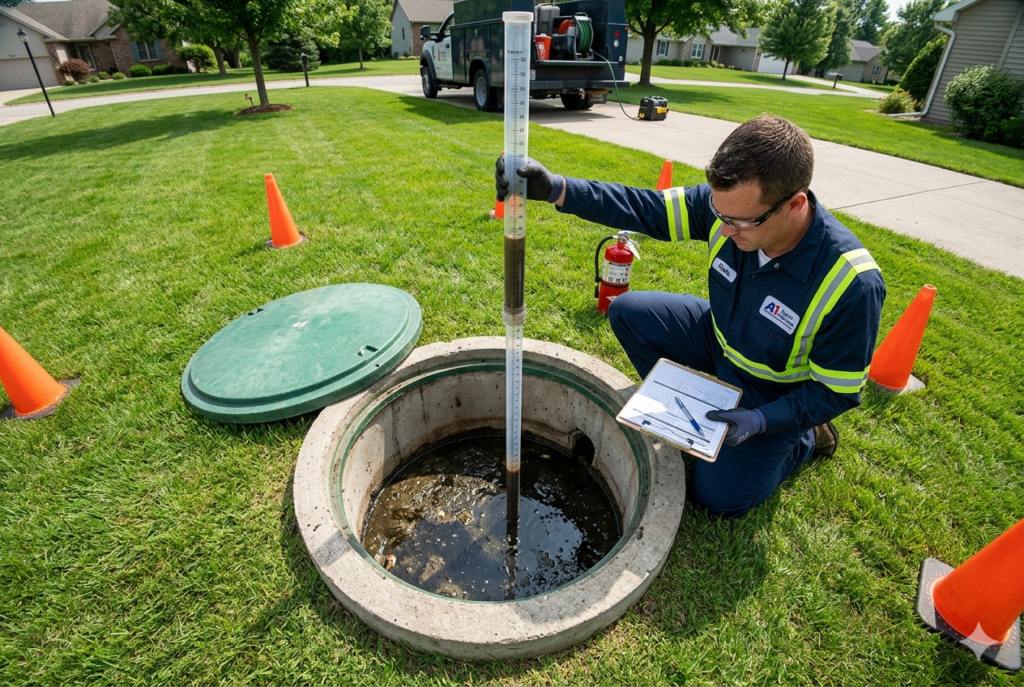
They inspect inlet and outlet baffles, the distribution box, and the drain field for standing water or odors. The tech also looks for damage, cracks, root intrusion, and past repairs that could affect pumping.
Expect them to record tank size, last pump date, and any odors or slow drains you reported. This information helps set the pumping frequency and flag issues that need repair before or after pumping.
Pumping and Waste Removal
Techs use a vacuum truck and hoses to remove solids, scum, and wastewater from the tank. They pump until sludge and scum are reduced to safe levels while avoiding damage to baffles and outlet pipes.
Removed waste goes into a sealed tank on the truck. The truck then hauls that waste to a licensed treatment facility; disposal on-site is illegal in most places and risks contamination.
Technicians watch tank contents and stop pumping when safe levels are reached. They may reroute or hold off pumping if the tank shows structural problems that could worsen during suction.
Cleaning and Maintenance Steps
After pumping, the tech will wash the tank interior and inspect baffles and the outlet pipe for clogs. They may use a high-pressure nozzle to remove residue from walls and the outlet tee.
You’ll get a written report listing tank condition, any repairs needed, and recommended pump interval (often 3–5 years, depending on tank size and household use). Records help you track maintenance and avoid costly drain-field failures.
If they find minor repairs—like a damaged riser or cracked baffle—they can often make them then. For bigger repairs, they will recommend a contractor and explain the risks of delaying work.
Get Free Septic Tank Diagnose Using Our Free Septic Tank Diagnose Tool
Choosing Professional Septic Tank Pumping Services
You should pick a company that inspects your system, gives clear pricing, and follows local rules. Focus on service quality, proper paperwork, and what past customers say.
Qualities of Reliable Service Providers
Look for companies that use modern vacuum trucks and deflector hoses to reach tight tank openings. Ask if they perform a full tank inspection, measure sludge depth, and check baffles and outlet filters during the visit. Reliable crews arrive on schedule, wear protective gear, and leave the site clean.
Expect transparent pricing. A clear written estimate should list pump-out fees, disposal costs, and any extra repair or diagnostic charges. Also confirm whether they offer routine maintenance plans or reminder services to keep pumping on schedule.
Licensing and Certification
Verify that the company holds the licenses required by your state or county for septic pumping and waste transport. Ask for their waste hauler permit and proof they drop solids at an approved treatment facility. Licensed firms must follow local disposal rules and reduce the chance of illegal dumping.
Check staff certifications for septic system work and confined-space safety training. Insurance matters: confirm they carry general liability and pollution liability so you’re not on the hook for accidents or contamination. Request copies of documents before you hire them.
Customer Experience and Reviews
Read recent reviews on multiple sites to spot consistent praise or complaints. Look for comments about punctuality, cleanliness after the job, and whether the final invoice matched the estimate. Pay attention to responses from the company to see if they handle problems professionally.
Call past customers if possible, or ask the company for references. Ask about communication—how they schedule, how they notify you of delays, and if they explain findings like sludge levels or needed repairs. A provider who documents work with photos or a checklist reduces surprises.
Official Government Resources
-
EPA SepticSmart Program
– The U.S. Environmental Protection Agency’s official resource for septic system care, offering maintenance tips, water conservation advice, and information on protecting your drainfield.
Cost Factors and Scheduling
You’ll learn what drives price, how often to schedule service, and practical tips for booking. Know the main cost drivers, the ideal timing for pump-outs, and how to set appointments that fit your property.
Pricing Considerations
Costs depend most on tank size, your ZIP code, and how easy the tank is to reach. Small tanks (around 500–1,000 gallons) usually cost less than larger tanks. Urban areas and places with high labor costs often charge more.
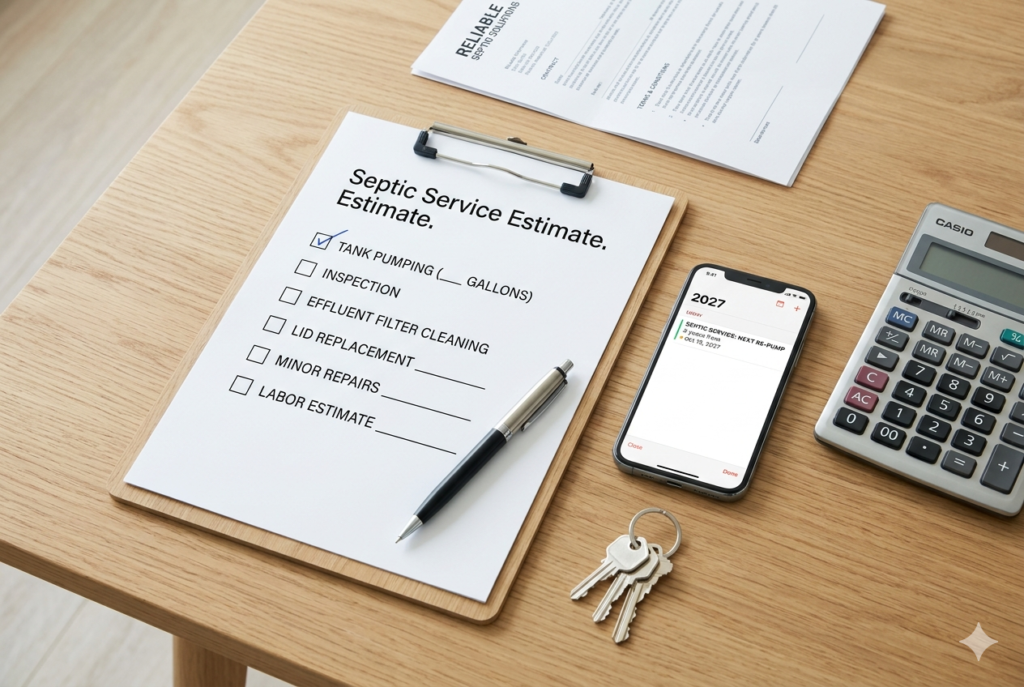
Extra fees can add up. Expect higher charges for deep or buried lids, long hose runs, heavy yard cleanup, or required permits. Inspections or septic system repairs during pumping may be billed separately.
Ask for an itemized quote. Get prices for the base pump-out, travel, disposal fees, and any add-ons. Compare two or three local companies and check reviews, licenses, and proof of proper disposal to avoid surprise charges.
Frequency of Service
Your pumping schedule should match your tank size and household use. A typical household (3–5 people) with a 1,000-gallon tank often needs pumping every 2–4 years. Smaller tanks or more occupants require more frequent service.
Watch system signs to adjust timing. Slow drains, sewage odors, or wet spots in the yard mean you should schedule a pump-out soon. Regular inspections help set the right interval for your situation.
Keep records of past pumpings and inspections. That history helps you and your service provider plan future visits and can prevent costly backups and repairs.
Making Appointments
Call or book online with at least 2–4 weeks’ notice for routine pump-outs, more during spring and fall when demand rises. Ask the company about weekend or emergency slots if you need faster service.
Prepare the site before the crew arrives. Clear access to the tank lid, move vehicles or debris, and mark the tank if needed. Note any pets and planned yard work so the crew can work safely.
Confirm the estimate and payment methods before service. Ask for written receipts, a report of what was done, and any recommendations for repairs or follow-up inspections.