
Septic Tank Maintenance: The Complete 2026 Guide
Quick answer: Good septic tank maintenance means controlling water use, keeping harmful materials out of drains, protecting the drain field, inspecting the system regularly, and pumping the tank when needed. Many household systems are pumped about every three to five years, but the correct interval depends on tank size, household size, wastewater volume, and solids.
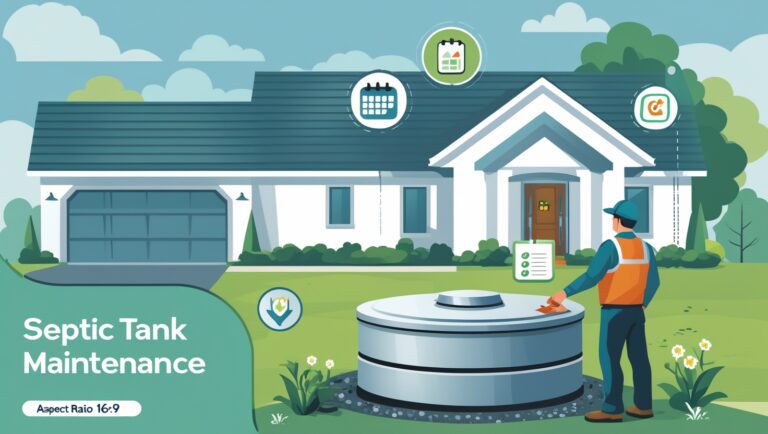
Septic tank maintenance checklist
Keep this checklist with your home records:
- ☐ Locate the tank, access lids, distribution box, and drain field.
- ☐ Record the tank size, system type, and installation date.
- ☐ Save every pumping, inspection, and repair receipt.
- ☐ Check toilets, faucets, and appliances for leaks monthly.
- ☐ Spread laundry and high-water-use tasks across the week.
- ☐ Keep wipes, grease, paint, medications, and harsh chemicals out of drains.
- ☐ Keep vehicles, structures, and deep-rooted plants away from the drain field.
- ☐ Watch for odors, wet soil, unusually green grass, slow drains, or backups.
- ☐ Arrange regular professional inspection and pumping based on measured solids.
Recommended maintenance schedule
| Frequency | What to do | Why it matters |
|---|---|---|
| Monthly | Check for leaks, odors, slow drains, and wet areas | Find small problems before they become backups |
| Every 3–6 months | Review water use and clean effluent filters if your system has one and the manufacturer allows homeowner service | Reduce hydraulic overload and protect downstream components |
| Every 1–3 years | Have the system inspected, depending on system type and local requirements | Measure sludge/scum and check mechanical condition |
| Commonly every 3–5 years | Pump when the inspection, solids level, tank size, and household use indicate it | Prevent solids from reaching and damaging the drain field |
This is a planning guide, not a substitute for local rules or a service provider’s measurements. Aerobic treatment units, pumps, alarms, filters, commercial systems, and systems under maintenance contracts may require more frequent service.
Step 1: Know your septic system
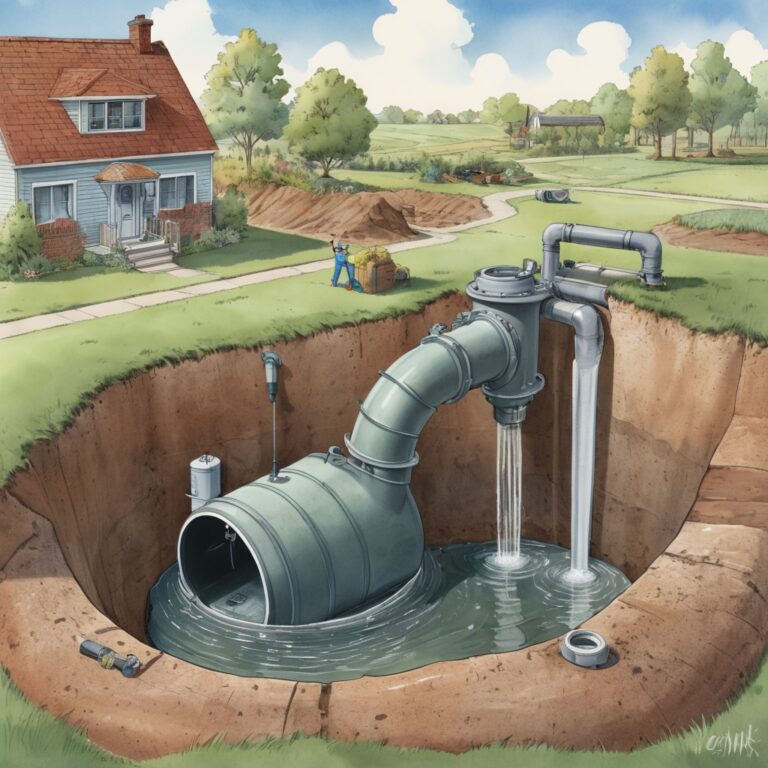
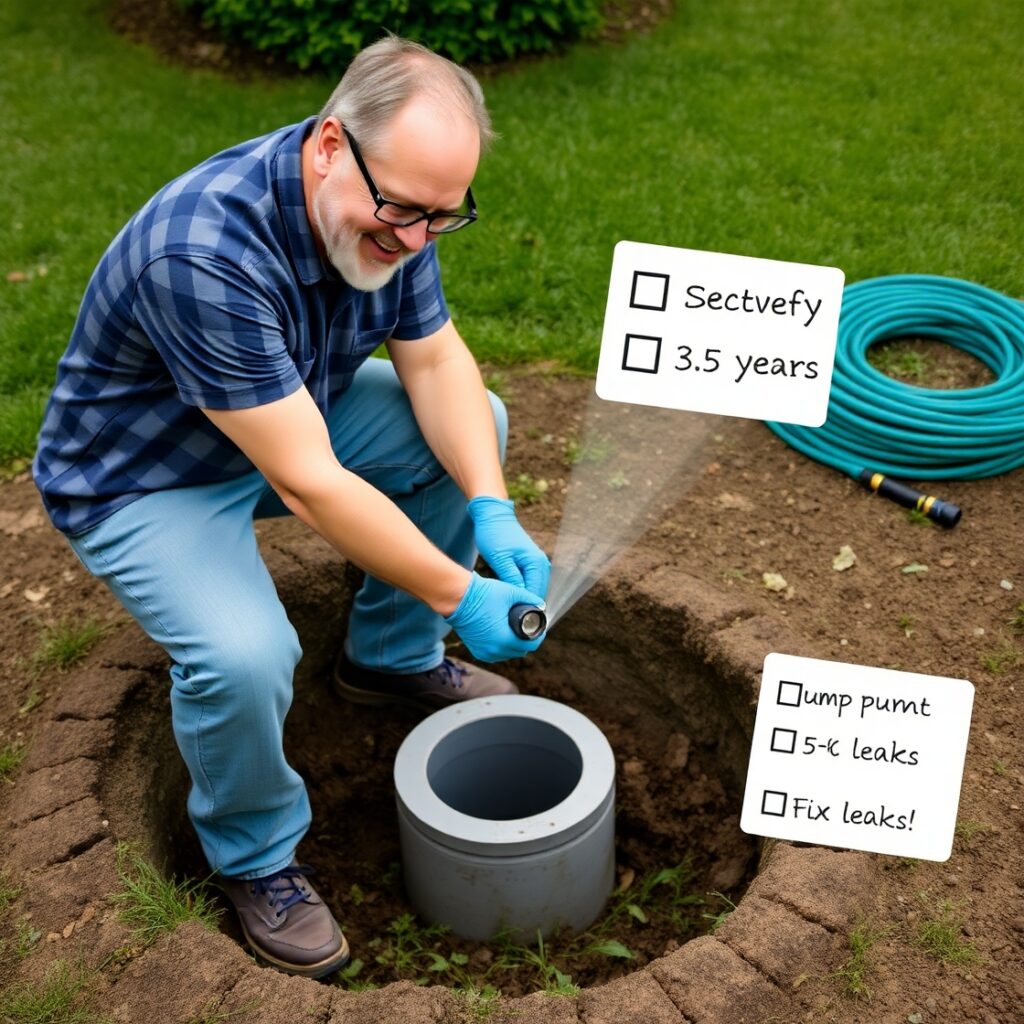
Start with a simple system record. Locate the tank, access lids, distribution box, drain field, pump chamber, alarm, and any treatment equipment. If you do not have an as-built drawing, check property records, the local health department, or the installer. Do not probe or open a tank unless you know how to do so safely; septic tanks contain dangerous gases and should never be entered.
Record:
- Tank capacity and construction material.
- System type and installation date.
- Number of bedrooms or designed daily flow.
- Date and findings from the last pumping or inspection.
- Location of pipes, lids, filters, pumps, alarms, and the replacement drain-field area.
Step 2: Control household water use
A septic system needs time to separate solids and send clarified effluent to the drain field. A sudden surge of water can push unsettled material through the tank and overload the soil treatment area.
Figures make this easier to act on. A washing machine uses roughly 15 to 30 gallons a load, a dishwasher 4 to 6, a shower about 2 gallons a minute, and a modern toilet around 1.6 gallons a flush — older ones considerably more. The problem is rarely the weekly total so much as volume arriving all at once: four loads of laundry on a Saturday morning sends a surge through the tank that lifts settled solids toward the outlet before they have separated. A single running toilet can pass hundreds of gallons a day into the tank without anyone hearing it, which is why checking for silent leaks is the highest-value habit on this page.
- Repair running toilets and dripping faucets promptly.
- Spread laundry across several days instead of running many loads together.
- Use properly sized, water-efficient fixtures and appliances.
- Redirect roof drains, sump pumps, and surface runoff away from the septic system.
- Avoid draining hot tubs or large volumes of water into the system at once.
Step 3: Keep the wrong materials out
Your toilet is not a trash can. Flush human waste and toilet paper only. “Flushable” on a package does not mean the material breaks down quickly enough for every septic system.
Keep these items out:
- Wipes, paper towels, facial tissues, diapers, and hygiene products.
- Cooking grease, coffee grounds, and large quantities of food waste.
- Paint, solvents, pesticides, automotive fluids, and photographic chemicals.
- Unused medications and concentrated disinfectants.
- Cat litter, dental floss, cigarette butts, and similar non-biodegradable items.
Review our complete what-not-to-flush guide and septic-safe cleaning product guide for household-specific choices.
Step 4: Inspect and pump based on the system
Pumping removes the sludge and scum that microorganisms do not eliminate. Waiting for sewage to back up is not a maintenance schedule. A professional inspection can measure the solids layers and evaluate baffles, tees, lids, filters, pumps, alarms, and visible signs around the drain field.
The U.S. Environmental Protection Agency notes that household systems are commonly inspected at least every three years and pumped every three to five years, with more frequent service for systems using electrical switches, pumps, or mechanical components. See the EPA septic-system care guidance.
Use the septic pumping cost calculator to prepare a budget, then ask a licensed or qualified local provider for an actual inspection and quote.
Step 5: Protect the drain field
The drain field is part of the treatment system, not empty yard space. Compaction, excess water, excavation, and deep roots can shorten its useful life.
- Do not drive or park vehicles over the tank or drain field.
- Do not build patios, sheds, pools, or other structures over the system.
- Keep trees and deep-rooted plants at an appropriate distance.
- Maintain grass or suitable shallow-rooted cover to reduce erosion.
- Route gutters, irrigation, and stormwater away from the area.
- Do not cover the field with plastic, concrete, or other impermeable surfaces.
Roots deserve specific attention, because they seek water and will grow into small cracks or pipe joints. Once inside they trap solids and reduce flow, and the usual sign is a clog that keeps returning in the same line. Keep trees and large shrubs at least as far from the field as the tree’s expected mature height, and choose shallow-rooted planting near the lines. If roots do get in, a licensed contractor can clear them and repair the damaged section — but repeated cutting without repairing the pipe only buys time, because the opening that let them in is still there.
Step 6: Decide carefully about septic additives
A normally functioning septic tank already contains microorganisms. Additives are optional products, not substitutes for water management, inspection, pumping, or repair. Do not use a treatment to delay service when there is a backup, standing wastewater, a failed alarm, or sewage surfacing outdoors.
If you still prefer a convenient tablet format for optional routine use, check the current directions against your tank size and system type.
View the current Septifix offer
For a balanced comparison, read Best Septic Tank Treatment: 5 Options Compared.
Step 7: Keep records and teach the household
Record the date, provider, tank condition, measured sludge/scum, gallons removed, repairs, and recommended next service date. Give everyone in the household the same short rules: conserve water, flush only waste and toilet paper, report leaks immediately, and never drive on the drain field.
When buying a home with a septic system, request permits, drawings, pumping receipts, maintenance agreements, and a system-specific inspection. A seller’s statement that “it has never had a problem” is not a substitute for documentation.
Situations the seven steps do not cover
Before a houseful of guests
Holidays and gatherings are when otherwise healthy systems get into trouble, because a tank sized for four people suddenly serves ten. A few days beforehand, check when the tank was last pumped; if you are near the end of the interval, book the service before the visit rather than after the backup. During the stay, stagger showers instead of running them back to back, hold laundry until guests have left, and put a bin in each bathroom so wipes and hygiene products have somewhere to go other than the toilet. None of it is dramatic, and all of it is cheaper than an emergency call-out on a public holiday.
Seasonal care through the year
Spring is when saturated ground is the risk: after snowmelt or heavy rain keep vehicles off the drain field entirely, because wet soil compacts far more easily than dry. Check that gutters and downspouts discharge well away from it. Before winter, insulate exposed lids and service risers against freezing, and leave snow cover on the field rather than plowing or piling it there — the snow is insulation. In dry summer months the advice reverts to spreading water use across the week. After any flood, have the system inspected before using it heavily; floodwater shifts lids, carries in debris and can contaminate the tank.
Warning signs that need prompt action
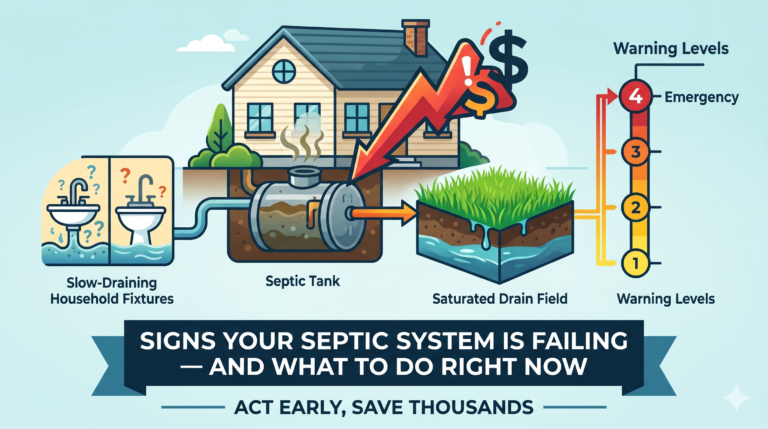
- Sewage backing up into tubs, showers, sinks, or toilets.
- Several slow or gurgling drains at the same time.
- Persistent sewage odor indoors or near the tank/drain field.
- Wet, spongy, or unusually green areas over the drain field.
- A septic alarm, pump, or breaker problem.
- Wastewater surfacing on the ground.
Reduce water use and contact a qualified septic professional when these appear. Avoid contact with sewage and keep children and pets away from contaminated areas. The septic diagnosis quiz can organize symptoms for educational purposes, but it cannot replace an onsite inspection.
Frequently asked questions
How often should a septic tank be pumped?
Many household systems are pumped about every three to five years, but the correct interval depends on tank capacity, household size, wastewater volume, garbage-disposal use, solids accumulation, and inspection findings. Specialized systems may need more frequent service.
What is the most important septic maintenance task?
No single task works alone. The foundation is regular inspection and timely pumping, supported by water conservation, correct flushing habits, drain-field protection, and accurate service records.
Can too much water damage a septic system?
A large volume in a short period can reduce settling time and overload the drain field. Fix leaks and spread high-water-use activities across the week.
Do septic tank treatments eliminate pumping?
No. Solids still accumulate. Do not rely on any product that promises to permanently eliminate inspection or pumping.
Can I maintain the septic tank myself?
Homeowners can control water use, protect the drain field, monitor warning signs, and keep records. Pumping, tank entry, repairs, and many inspections require trained professionals and may be regulated locally.
Your next step: Write the last pumping date and the provider’s recommended next inspection date in your calendar today. If the history is unknown, schedule an inspection instead of guessing.
Essential septic guides
Affiliate disclosure: This guide contains affiliate links, including our Septifix partner link. If you purchase through one of these links, we may earn a commission at no additional cost to you. Our conclusions are based on product information and published guidance, not payment level.