Best Septic-Safe Cleaning Products 2026
If your home runs on a septic system, the cleaning products you choose matter far more than most people realize. Every drop of water that goes down your drains ends up in your septic tank, where a delicate colony of beneficial bacteria works around the clock to break down waste. Use the wrong cleaner — even once in a while — and you risk killing off that bacterial ecosystem, leading to sluggish drains, foul odors, and potentially a very expensive pump-out or system repair.
The good news is that you don’t have to sacrifice cleanliness to protect your septic system. There are genuinely effective, septic-safe cleaning products for every room in your home. In this guide, we’ll walk you through the best options room by room, explain what to look for on product labels, and help you make confident, informed choices that keep both your home and your septic system healthy for the long haul.
Why Cleaning Products Matter for Your Septic System
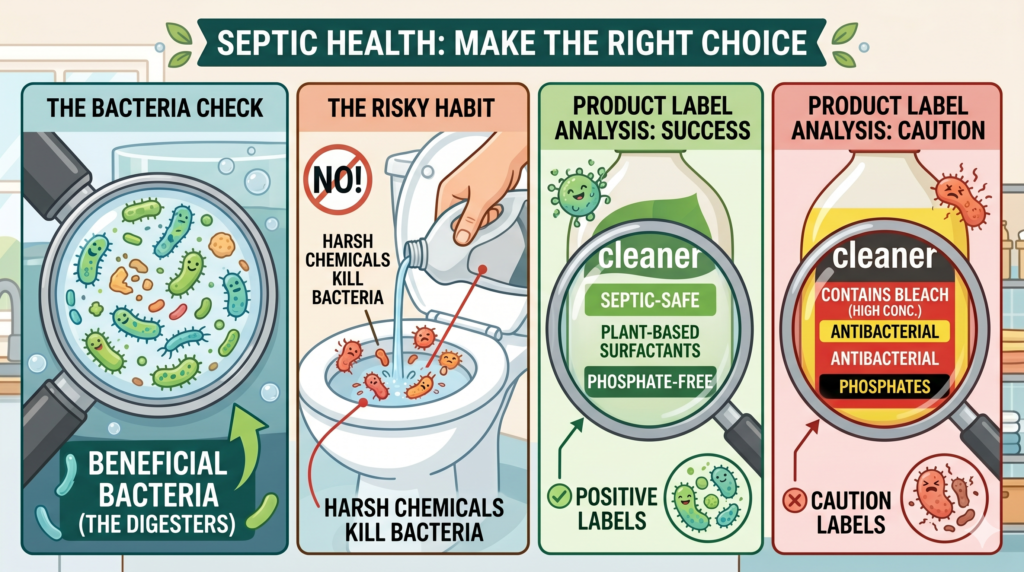
Your septic tank is essentially a living bioreactor. Billions of anaerobic bacteria break down solid waste so that relatively clean effluent can flow out into your drain field. When harsh chemicals enter the tank, they don’t just clean your toilet bowl or kitchen sink — they travel all the way into the tank and can disrupt or destroy that bacterial balance.
Septic Tank Maintenance Checklist: Free Homeowner Guide | Maintain Septic Tank
The most common offenders include antibacterial agents like triclosan, bleach in large quantities, chemical drain cleaners with lye or sulfuric acid, and some synthetic surfactants found in conventional cleaners. Even “biodegradable” doesn’t always mean septic-safe — it simply means the ingredient will eventually break down in nature. The question is whether it damages your tank’s bacteria in the meantime.
What you want are products that are:
- Phosphate-free — phosphates contribute to nutrient overload in drain fields
- Bleach-free or low-bleach — occasional diluted bleach use is fine; regular heavy use is not
- Free of harsh antibacterial agents — triclosan and similar compounds can kill beneficial bacteria
- Biodegradable with plant-based surfactants — these break down quickly without harming tank biology
- Labeled “septic-safe” — though this isn’t a regulated term, it’s a good starting signal
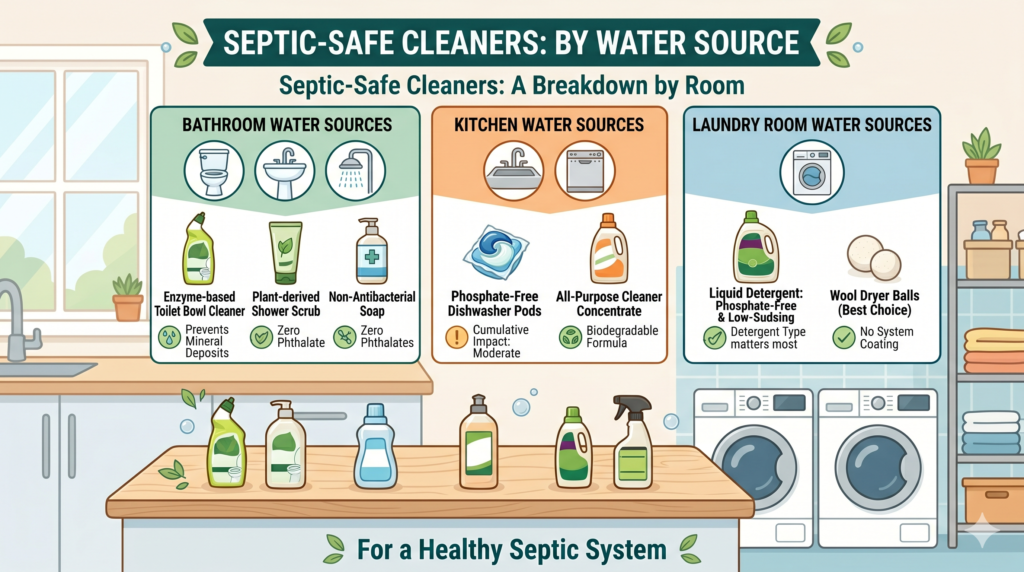
Septic-Safe Cleaners for the Bathroom
The bathroom is where most septic concerns originate. Between toilet cleaners, shower scrubs, and daily hand soap, a lot of chemistry flows through here every day.
Toilet Bowl Cleaners
Conventional toilet bowl cleaners are often the worst culprits — many contain high concentrations of hydrochloric acid or thick bleach gels that linger in the bowl before eventually flushing. For septic homeowners, look for enzyme-based or plant-derived formulas that clean effectively without nuking your tank.
One of the most recommended options among septic system owners is a citric acid-based toilet cleaner. These use natural acids to dissolve mineral deposits and stains without introducing harsh synthetic chemicals into your system. Seventh Generation and Better Life are two brands with solid reputations in this category.
Quick answer: Septic-safe cleaners limit what goes into the tank. A monthly tablet supports the bacteria already in it — the two work together, and neither replaces pumping. Septifix is our featured option to compare first.
Shower and Tub Cleaners
Soap scum and hard water deposits in the shower can be tackled effectively with plant-based surfactant sprays. Look for products free of phosphates and synthetic fragrances, as some fragrance compounds are also harmful to septic bacteria. Method and Biokleen both make shower sprays that are widely considered safe for septic use.
Hand Soaps and Body Wash
Standard liquid hand soaps in moderate amounts are generally fine for septic systems, but avoid antibacterial soaps as a daily staple. Triclosan and benzalkonium chloride — common in antibacterial hand soaps — are particularly harmful to the microbial life in your tank. Plain castile soap or plant-based liquid soap is an excellent alternative that cleans just as effectively.
Septic-Safe Cleaners for the Kitchen
The kitchen sink drains grease, food particles, and cleaning chemicals into your system on a daily basis. Choosing the right dish soap and surface cleaners here has a cumulative impact on your septic health.
Dish Soap and Dishwasher Detergent
Dish soap is one of the most frequently used cleaning products in any home. The good news is that most modern dish soaps — especially the more natural brands — are relatively gentle on septic systems when used in normal amounts. The key is to avoid heavily concentrated antibacterial formulas and to use only the recommended amount.
For dishwashers, phosphate-free detergent tablets are a must. Conventional dishwasher pods often contain high levels of phosphates, which overwhelm the drain field and contribute to algae growth. Brands like Seventh Generation, Ecover, and Dropps have excellent phosphate-free options that clean well and won’t harm your system.
Kitchen Surface and All-Purpose Cleaners
For countertops, stovetops, and general kitchen surfaces, an all-purpose cleaner with plant-based surfactants is your best friend. Vinegar and water is a classic DIY option, or you can reach for ready-made sprays from brands like Method, Mrs. Meyer’s, or Branch Basics. These clean effectively, smell great, and are gentle on both your surfaces and your septic system.
Septic-Safe Cleaners for the Laundry Room
Many homeowners overlook the laundry room when thinking about septic health, but your washing machine drains a significant volume of water — and detergent — into your system with every load. This makes laundry detergent one of the single most important septic-safe product choices you’ll make.
Laundry Detergent
Look for liquid laundry detergents over powder when possible — powder detergents can contain fillers and anti-caking agents that don’t break down well in septic tanks and can accumulate in the system. Liquid detergents that are plant-based, low-sudsing, and phosphate-free are the gold standard for septic households.
Powder detergents that are labeled specifically septic-safe are acceptable, but check the ingredient list. Sodium lauryl sulfate (SLS) in high concentrations can be problematic, while milder surfactants like sodium lauryl glucoside are much gentler on your tank.
Fabric Softeners and Dryer Sheets
Liquid fabric softeners can coat the inside of your septic tank and interfere with bacterial activity — they’re worth avoiding or using very sparingly. Dryer sheets are a better option since they don’t go down the drain at all. Wool dryer balls are an even better alternative: reusable, chemical-free, and completely septic-neutral.
Septic-Safe Cleaners for the Rest of the Home
Floor Cleaners
Floor mop water typically ends up poured down the sink or toilet. Make sure your floor cleaner is free of disinfectants with high concentrations of quaternary ammonium compounds (“quats”), which are potent bacteria killers. Plant-based floor cleaners or diluted castile soap work well on most hard flooring without any septic risk.
Glass and Window Cleaners
Most glass cleaners — including DIY vinegar-and-water solutions — are fine for septic systems when used in normal household amounts. The key here is to avoid ammonia-based products in large quantities, as ammonia can be disruptive in high concentrations. Light use is generally acceptable.
Product Comparison: Top Septic-Safe Cleaners at a Glance
| Product Type | Recommended Brand | Key Feature | Septic Risk Level |
|---|---|---|---|
| Toilet Bowl Cleaner | Seventh Generation | Plant-based, bleach-free | Low |
| Dish Soap | Ecover / Method | Plant-based surfactants | Low |
| Dishwasher Detergent | Dropps / Seventh Generation | Phosphate-free pods | Low |
| Laundry Detergent | Biokleen / Molly’s Suds | Liquid, phosphate-free | Low |
| All-Purpose Cleaner | Branch Basics / Mrs. Meyer’s | Concentrate, plant-based | Low |
| Antibacterial Hand Soap | Most conventional brands | Contains triclosan / quats | High — Avoid |
| Chemical Drain Cleaner | Drano / Liquid-Plumr | Lye / sulfuric acid based | High — Avoid |
Quick Tips for Protecting Your Septic System Beyond Cleaners
Switching to septic-safe cleaners is the single most impactful change you can make, but a few additional habits will go a long way:
- Use only what you need. Even septic-safe products can cause harm in large quantities. Follow recommended dosages.
- Space out laundry loads. Doing six loads back-to-back on one day floods the system. Try to spread laundry throughout the week.
- Never flush wipes — even “flushable” ones. They don’t break down and cause serious clogs and tank buildup.
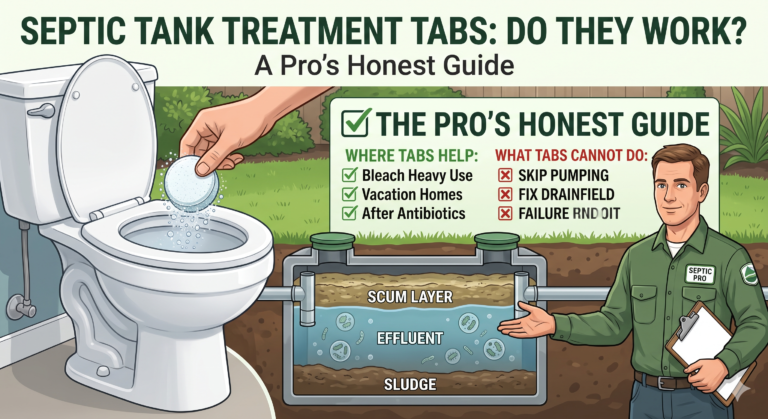
- Add a septic tank treatment monthly. Enzyme and bacteria-based additives help replenish beneficial microbes, especially after any chemical exposure.
- Pump your tank regularly. Most systems need pumping every 3–5 years regardless of how careful you are with products.
Frequently Asked Questions
Is bleach safe to use if I have a septic tank?
Small, occasional amounts of bleach — like wiping down a surface with a diluted bleach solution once in a while — are generally tolerated by a healthy septic system. The problem arises with frequent, heavy use: pouring undiluted bleach into toilets regularly or using thick bleach gels as daily toilet cleaners. The bacteria in your tank can recover from minor chemical exposure, but consistent heavy bleach use will deplete the bacterial population over time. When in doubt, choose bleach-free alternatives for everyday cleaning.
Are “natural” or “green” cleaners automatically safe for septic systems?
Not necessarily. “Natural” and “green” are marketing terms with no regulated definitions. Some natural cleaners still contain high concentrations of essential oils like tea tree oil, which is actually quite antimicrobial and can affect septic bacteria. Always look at the ingredient list and prioritize products specifically labeled “septic-safe” or that use gentle, plant-based surfactants
Quick answer: A treatment supports routine maintenance; it does not replace pumping, inspection, or repair. If the tablet format suits you, compare package options and check your tank size before ordering.
Compare the alternatives
If you are weighing brands before committing to a routine, these side-by-side comparisons cover the products homeowners ask about most:
- RID-X vs Septifix — the supermarket default, and where its powder format costs you consistency.
- Bio-Clean vs Septifix — a drain-and-tank crossover, and when the dual purpose is worth the extra effort.
- Instant Power Septic Shock vs Septifix — shock dosing versus monthly maintenance, and why they answer different questions.
- Cabin Obsession vs Septifix — built for seasonal and intermittently used properties.
Essential septic guides
Affiliate disclosure: This guide contains affiliate links, including our Septifix partner link. If you purchase through one of these links, we may earn a commission at no additional cost to you. Our conclusions are based on product information and published guidance, not payment level.