Septic Tank Backup After Heavy Rain: What to Do Right Away
If your septic tank backup after heavy rain, the weather is not just an inconvenience. It is a direct clue about how your system is handling water. Rain can saturate the soil around the drainfield, slow or stop wastewater treatment, and trigger backups into tubs, toilets, or floor drains. For many homeowners, the stressful part is not just the smell or mess. It is not knowing whether to keep using the system, pump the tank, or wait it out.
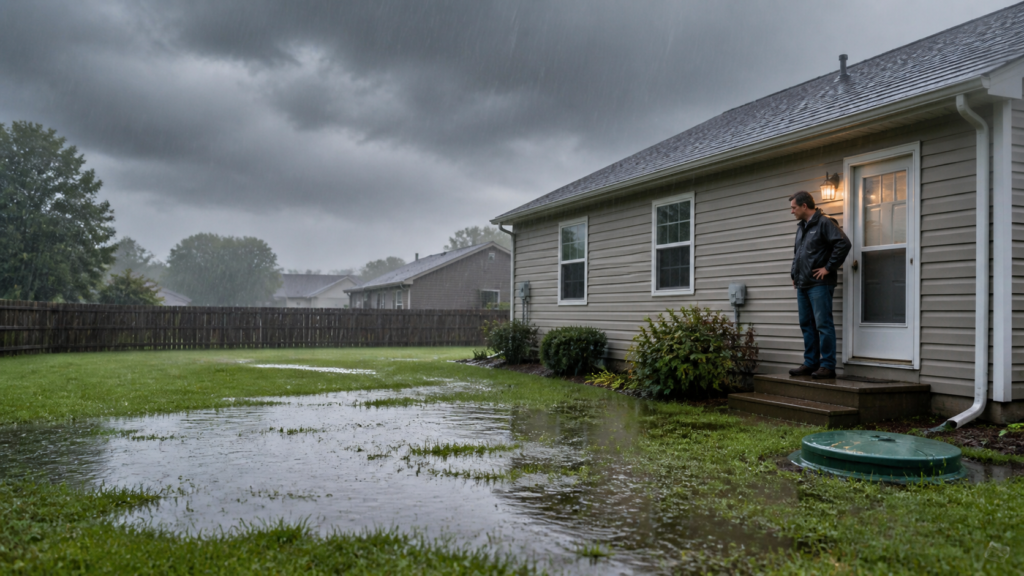
Penn State Extension gives clear flood-season guidance: too much water in the drainfield can overload it and stop the liquid portion of wastewater from percolating through the soil. When that happens, sewage may back up into the home. The right first move is usually to reduce or stop use, protect the house from more water entering the system, and avoid actions that can make the situation worse. Source
Why Heavy Rain Causes Septic Problems
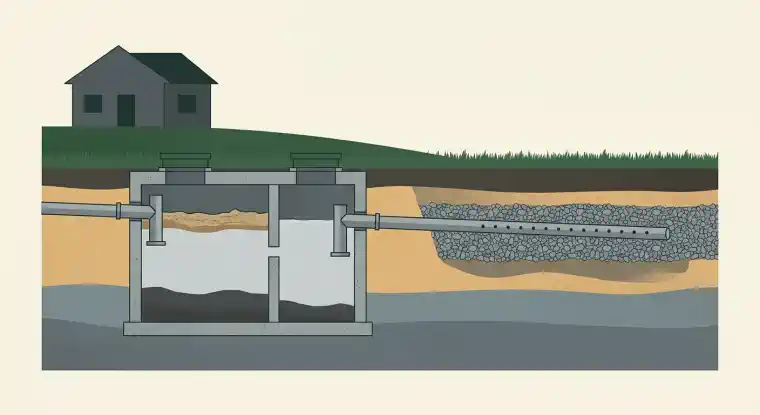
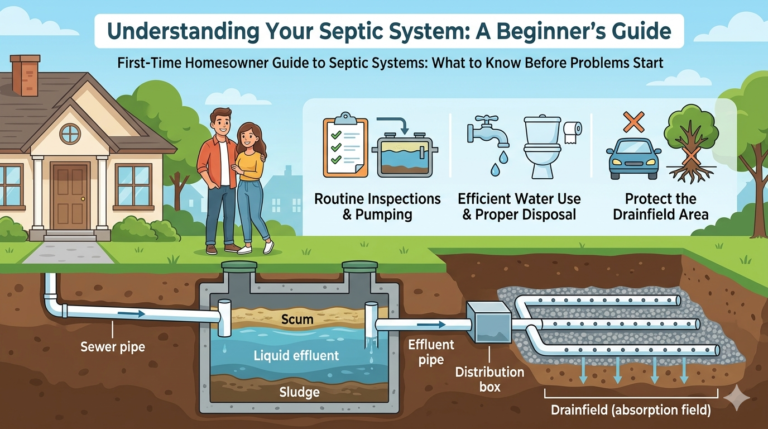
A drainfield only works when the surrounding soil can accept and treat effluent. After prolonged rain or flooding, that soil may be saturated. Penn State explains that a soaked drainfield may prevent effluent from moving downward through the soil. NC State also notes that excess water is one of the most common reasons systems fail, especially when runoff from roofs, roads, or paved surfaces moves toward the system. In short, the problem is not that rain “fills the tank” in a simple sense. The bigger issue is that the system loses its ability to disperse wastewater effectively. Source Source
Get Free Septic Tank Diagnose Using Our Free Septic Tank Diagnose Tool
Quick answer: After heavy rain, wait for groundwater to drop before pumping and keep water use to a minimum — no additive drains a saturated drainfield. Once the system recovers, a monthly tablet is the routine step to consider. Septifix is our featured option to compare.
What to Do First
The first priority is to cut down water use immediately. If the drainfield is saturated, every shower, toilet flush, dishwasher cycle, and laundry load adds more stress. Penn State says that during a flood or when the drainage area is underwater, homeowners should do their best not to use the septic system. Even before conditions get that bad, minimizing water use is one of the best first responses. Skip laundry, shorten or avoid showers, and limit flushing as much as you realistically can. Source
Do Not Pump Too Early
This is the part many homeowners get wrong. If floodwater is still high or the ground is still saturated, Penn State advises delaying septic tank pumping until water levels recede to normal. An empty septic tank can become buoyant and rise out of the ground during flood conditions. That means “pump it now” is not always the safe answer in the middle of a rain-driven event. Timing matters. Source
Protect the House from More Water Entering the System
If your basement or lower-level drains connect to the septic system, do not let floodwater flow into those fixtures. Penn State recommends plugging basement drains if necessary and never pumping floodwater into sinks or toilets. It also advises making sure sump pumps or subsurface drains are not tied into the septic system. Sending extra stormwater into an already stressed system is exactly what you do not want. Source
If your system has a pump chamber, heavy rain is one of the classic triggers for its high-water alarm — inflow briefly outpaces what the pump can move. An alarm that sounds only when it rains hard points at water getting into the system somewhere it should not. Here is what a septic alarm means and how long it gives you.
Watch for Warning Signs That Need Professional Help
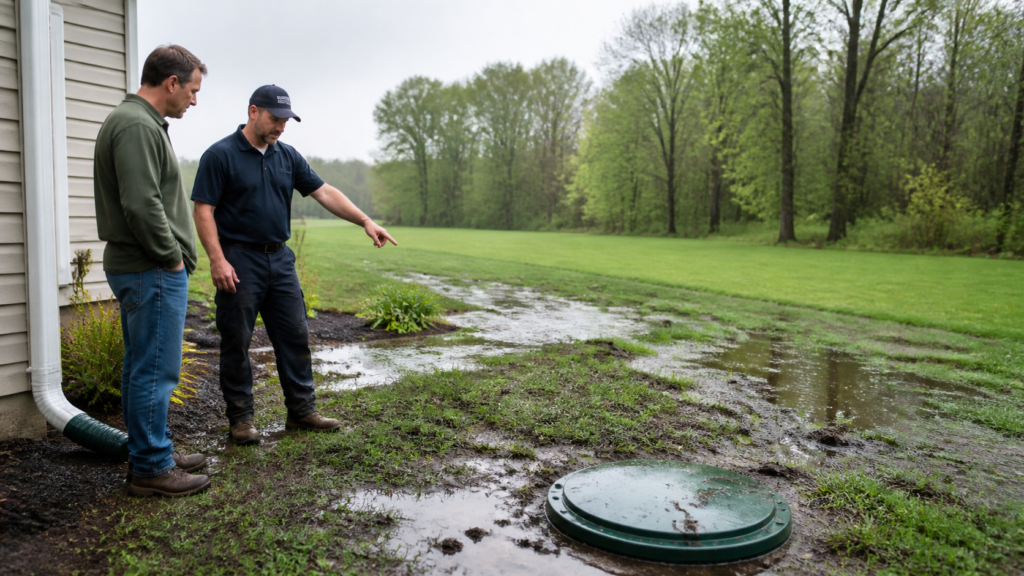
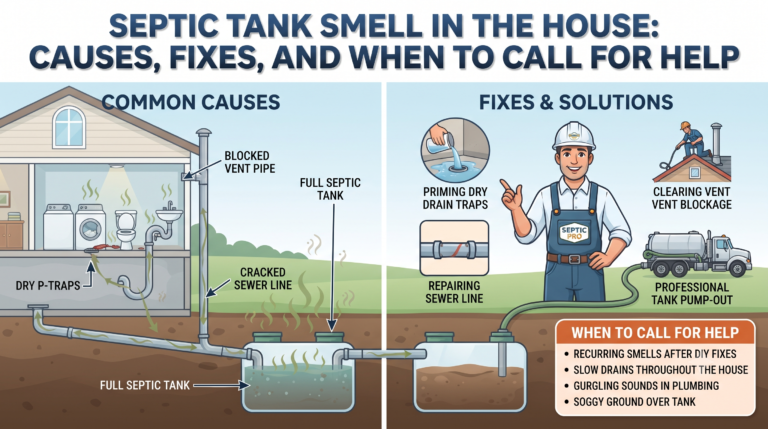
If you see sewage backup indoors, strong odor around the tank or field, persistent slow drains, or wet and spongy ground, move quickly toward professional inspection. NC State lists these as warning signs of failure or near-failure. Heavy rain can reveal a weakness that was already building, not create a totally new problem by itself. In other words, the storm may be the trigger, but the system may already be overdue for maintenance or dealing with design, age, or drainage issues. Source
What to Do After the Water Recedes
Once conditions improve, do not jump straight back into normal use if the drainfield is still saturated. Penn State says not to use the system until floodwater in the drainfield has receded below the home’s level, and if you suspect damage, do not use it until a professional inspects it. After floodwaters recede, the tank may need pumping to remove sediment that entered during the event. If you have a private well, Penn State also recommends testing the water before drinking it. Source
How to Reduce Future Rain-Related Problems
Long-term prevention mostly comes down to drainage and maintenance. Penn State recommends diverting water from roofs and driveways away from the tank and drainfield, making sure downspouts do not point toward the field, and considering slight mounding or berms to redirect runoff. EPA and Penn State also emphasize inspection, regular pumping, and keeping records. A well-maintained system is better able to handle stress than one that is already overdue for attention. Source Source
Should You Use Additives After Heavy Rain?
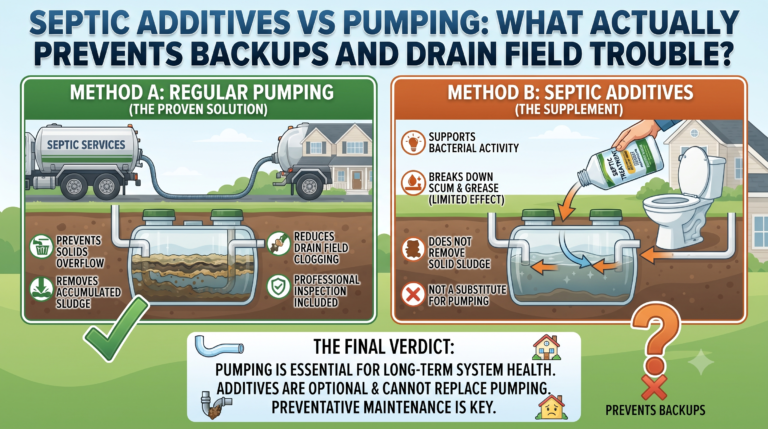
Not as a shortcut. EPA says septic additives are not recommended for normal domestic wastewater treatment because septic systems already contain the microorganisms they need, and some products may even harm performance. After heavy rain, the problem is usually saturation, hydraulic overload, or maintenance history, not a lack of bacteria. Focus on drying conditions, reduced use, and correct inspection instead. Source
Bottom Line
If your septic tank backs up after heavy rain, treat the weather as a serious diagnostic clue. Reduce water use immediately, do not force more water into the system, avoid pumping while flood conditions remain, and schedule professional follow-up if symptoms persist. Then fix the site and maintenance issues that made the problem possible in the first place.
Related Reading
- Residential Septic Tank Maintenance
- Septic Tank Pumping Costs
- Septic Tank Maintenance Checklist
- Septic Additives vs. Pumping
Quick answer: Recovery first, routine second. When the ground has dried and the system is behaving normally again, compare package options and check your tank size before ordering.
How Long Recovery Takes, and What Normal Looks Like
After heavy rain the most common mistake is judging the system too early. A saturated drainfield cannot accept water at its usual rate, and that is a soil condition rather than a fault in the tank. As the surrounding ground drains, capacity returns on its own.
- First 24 to 48 hours. Slow drains and gurgling are expected while the ground is still saturated. Keep water use to a minimum and avoid laundry entirely.
- Three to seven days. With no further heavy rain, drainage should noticeably improve. This is the point at which a system that is genuinely recovering starts to behave normally again.
- Beyond two weeks. If fixtures still drain slowly, or the ground over the field stays soggy once the rest of the garden has dried, the rain has revealed a pre-existing problem rather than caused a temporary one.
That last distinction is the useful one. Heavy rain rarely breaks a healthy system; it exposes a field that was already close to its limit. If recovery does not follow the pattern above, the next step is a drainfield assessment rather than a pump-out, because pumping an emptied tank into saturated ground can allow it to float or shift.
Repeated flooding often points to a drainfield at the end of its life rather than a one-off storm. If replacement is coming, our guide to septic system financial assistance explains which grants and loans cover it and how to apply through your county.
If the ground over the field stays soggy long after the weather clears, the field itself may be at the end of its life rather than simply saturated. Our drain field replacement cost guide sets out how to tell, and what replacement costs if it is.
Essential septic guides
Affiliate disclosure: This guide contains affiliate links, including our Septifix partner link. If you purchase through one of these links, we may earn a commission at no additional cost to you. Our conclusions are based on product information and published guidance, not payment level.