First-Time Homeowner Septic System Guide
Buying a home with a septic system can feel intimidating if you have only lived with city sewer before. The system is buried, expensive to repair, and easy to ignore until something smells bad. The encouraging part is that septic ownership is not mysterious once you understand the basics. A first-time homeowner does not need to become a septic engineer. You just need to know what the system does, what good habits matter most, and which warning signs should never be brushed off.
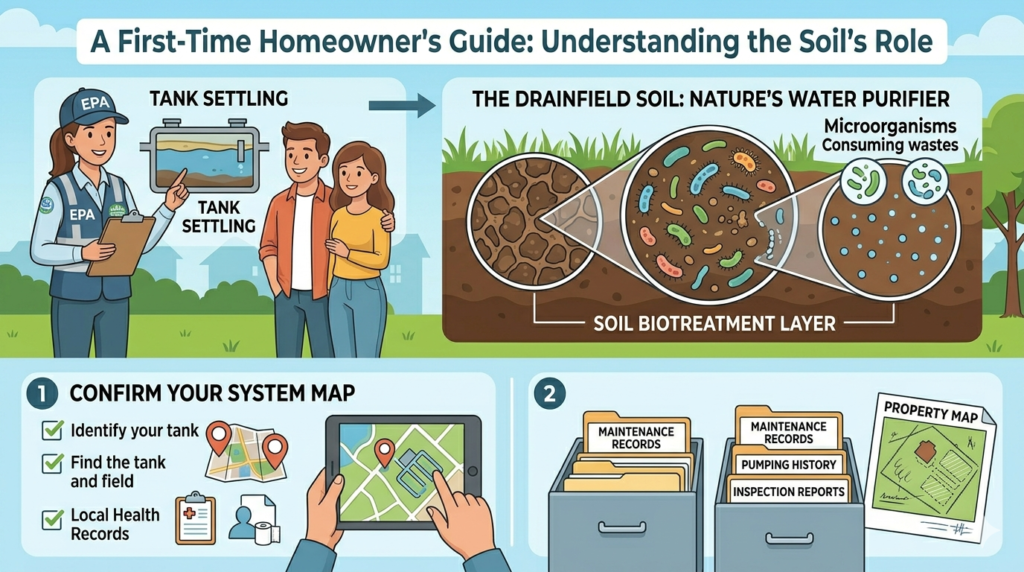
EPA’s homebuyer guide was designed for exactly this moment. It explains how septic systems work, why inspection matters before purchase, and what daily habits protect the system once you move in. Paired with EPA and extension maintenance guidance, it gives new owners a simple rule: septic systems reward routine and punish neglect. Source Source
What a Septic System Actually Does
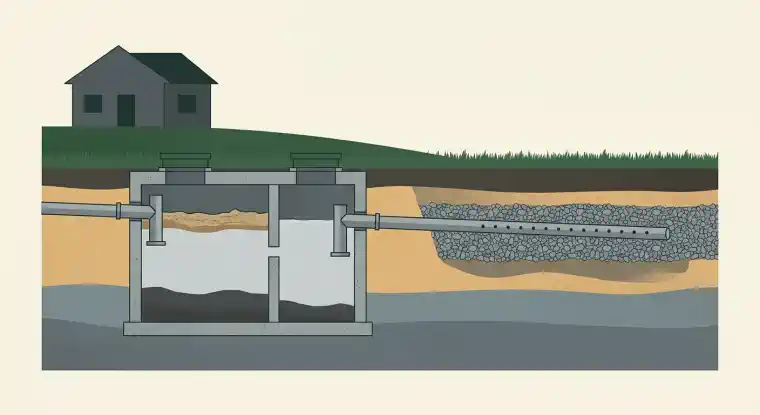
A typical septic system sends all household wastewater from the home into a buried tank. In that tank, solids settle to the bottom as sludge while fats and oils float to the top as scum. The liquid layer in the middle then leaves the tank and moves to the drainfield, where the soil provides further treatment. EPA’s guide emphasizes that this soil treatment step is a major part of how the system works. That is why the health of the drainfield matters so much. Source
Get Free Septic Tank Diagnose Using Our Free Septic Tank Diagnose Tool
Quick answer: New to a septic system? Get the tank located, the age confirmed, and a pumping schedule set. Once that routine exists, a monthly tablet is the simple upkeep step to consider. Septifix is our featured option.
Step One: Confirm What You Actually Own
If you are buying or recently bought a home, find out what type of septic system is on the property and where it is located. EPA recommends asking the seller, checking “as-built” records with the local health department, looking for lids or inspection caps in the yard, and working with a septic service provider if needed. A first-time owner should also learn whether the property has a conventional system or an alternative system with pumps, floats, alarms, or treatment units, because those systems may need more frequent inspection. Source
Step Two: Get the Right Records
The most valuable septic document is often a boring one: the maintenance record. EPA says an inspection should look at pumping history, system age, sludge and scum thickness, signs of leakage or backup, tank integrity, and drainfield condition. Penn State also recommends keeping a sketch or map of the tank and drainfield and maintaining records of inspection and pumping. For a first-time homeowner, records turn guessing into planning. Source Source
Those same records matter again at the other end of ownership. Where a septic inspection is required before a sale, a documented annual pumping history can extend how long that inspection stays valid — one of several things worth knowing well before selling a home with a septic system.
Daily Habits That Matter More Than New Owners Expect
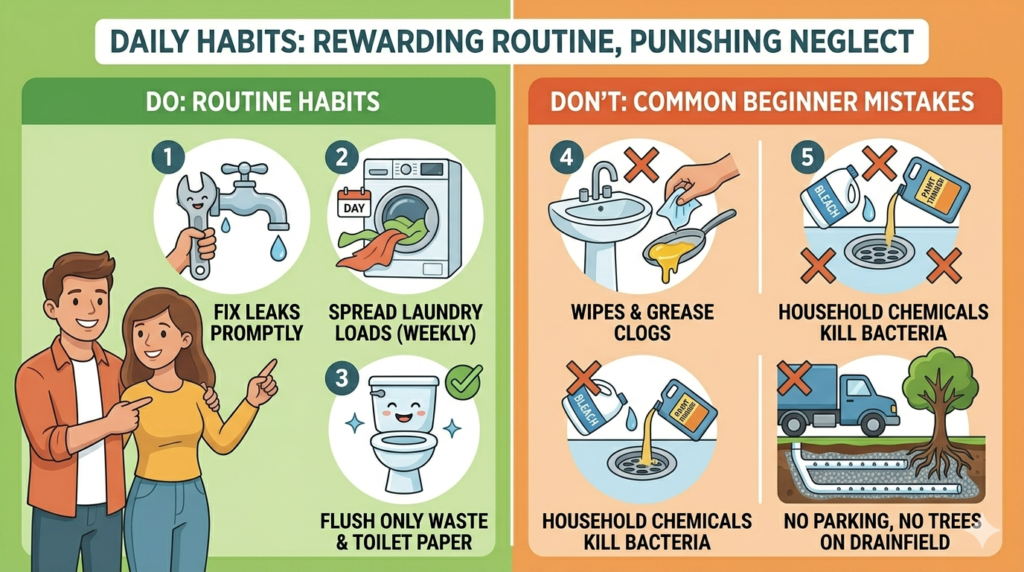
EPA’s care guidance keeps septic ownership refreshingly simple: use water efficiently, dispose of waste properly, inspect and pump on schedule, and protect the drainfield. In daily life, that means fix leaks, spread laundry across the week, use efficient fixtures when possible, and flush only human waste and toilet paper. It also means keeping grease, wipes, cat litter, coffee grounds, pharmaceuticals, and household chemicals out of the system. Those habits protect both the tank and the drainfield. Source
Do Not Treat the Drainfield Like Empty Yard
One of the biggest beginner mistakes is forgetting that the drainfield is part of the treatment system, not just open lawn. EPA and Penn State both advise homeowners not to drive or park on it, not to build over it, and not to plant trees or shrubs where roots can damage lines. Roof drains, sump pumps, and excess runoff should also be directed away from the area. A healthy yard over the field is fine, but the wrong use of the yard can quietly shorten system life. Source Source
How Often Should a First-Time Owner Pump the Tank?
There is no one-size-fits-all date, but EPA says many household septic tanks are pumped every three to five years, and inspections should happen at least every three years for typical systems. Alternative systems may need yearly attention. The right frequency depends on tank size, number of people in the home, and how much solid waste enters the system. If you have a garbage disposal or a smaller older tank, service may need to happen sooner. Source Source
One thing to locate before you need it: if your house sits below its drainfield, you probably have a pump chamber and an alarm box on a wall or a post. Find it now, while nothing is wrong, and read up on what a septic alarm means — it is the one septic warning that arrives with a countdown attached.
Warning Signs You Should Not Ignore
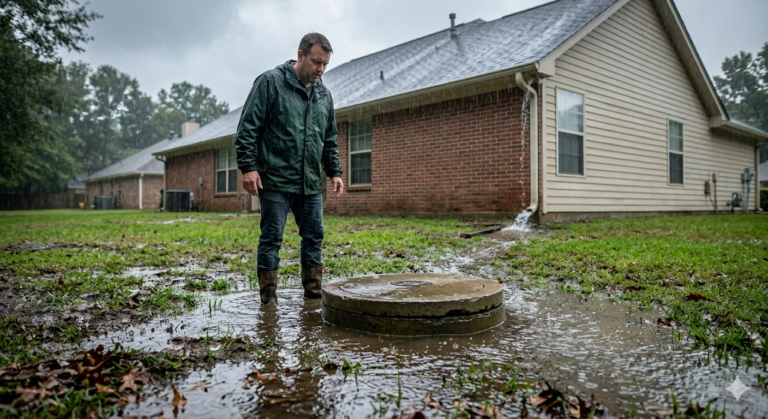
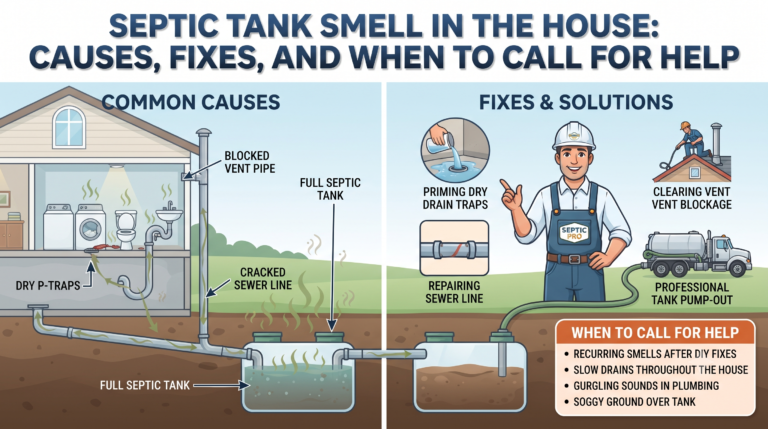
NC State and EPA point to the same core warning signs: slow drains, sewage backup, strong odor, wet or spongy yard areas, and bright green patches over the system. Problems that show up after rain or heavy water use also matter. A first-time homeowner does not need to self-diagnose every symptom, but you do need to recognize when the system is asking for professional attention. Ignoring those signals is where small issues become big bills. Source Source
What About Additives?
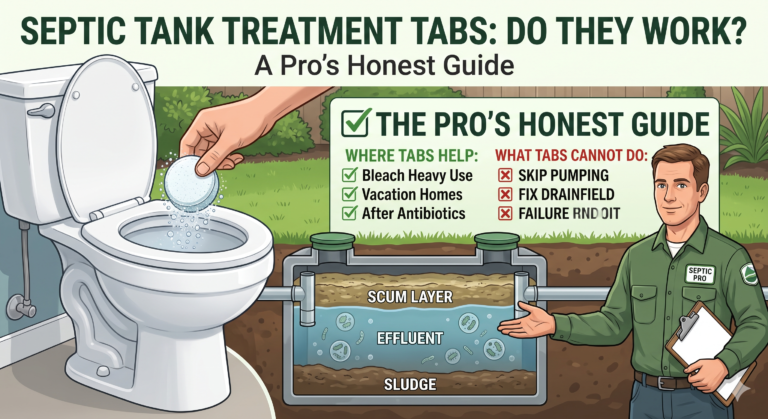
New homeowners are often marketed septic additives as if they are essential starter products. EPA says otherwise. The agency does not recommend septic additives for normal domestic wastewater treatment because the system already contains the microorganisms it needs, and some products may be ineffective or even harmful. For a beginner, that is actually good news. Your first septic priorities should be maintenance history and good habits, not shopping. Source
Bottom Line
A first-time homeowner with a septic system does not need to panic. Learn what type of system you own, locate it, keep records, use water carefully, flush only what should be flushed, and protect the drainfield like valuable infrastructure. If you do those things early, you will avoid many of the headaches that make septic ownership feel overwhelming.
Related Reading
- Residential Septic Tank Maintenance
- Septic Tank Maintenance Checklist
- How Often Should You Pump a Septic Tank?
- Septic System Health Quiz
Quick answer: A treatment supports routine maintenance; it does not replace pumping, inspection, or repair. If the tablet format suits you, compare package options and check your tank size before ordering.
Your First Ninety Days
New owners tend to do nothing until something goes wrong. A short sequence in the first three months prevents most of the expensive surprises:
- Weeks one to two: find it. Locate the tank lids and the drainfield, and mark them somewhere permanent — a sketch kept with the house documents, plus a note of the distance from a fixed point such as a corner of the house. You do not want to be locating a tank for the first time during a backup.
- Week three: request the records. Ask the county health department for the permit file and the previous owner or agent for pumping receipts. If no one can tell you when the tank was last pumped, treat it as overdue.
- Month two: book an inspection. Have sludge and scum depths measured and written down. That single measurement sets your interval far more accurately than any rule of thumb about household size.
- Month three: fix the inputs. Check for running toilets, redirect any downspout discharging near the drainfield, and agree with the household what does not go down the drain.
None of this is expensive, and all of it is cheaper than learning the same information from a failure. The single highest-value item on the list is the sludge measurement, because it converts every future decision from guesswork into arithmetic.
Essential septic guides
Affiliate disclosure: This guide contains affiliate links, including our Septifix partner link. If you purchase through one of these links, we may earn a commission at no additional cost to you. Our conclusions are based on product information and published guidance, not payment level.