Septic Tank Care: Essential Maintenance Tips for Longevity and Reliability
⚠️ Affiliate Disclosure: This post contains affiliate links. As an Amazon Associate, I earn from qualifying purchases at no extra cost to you.
You want your septic system to work without surprise repairs or bad smells. With a few smart habits—watching what goes down the drains, pumping at the right times, and scheduling inspections—you can avoid costly failures and keep your yard and water safe. Follow simple maintenance steps and regular inspections to protect your septic tank and stop small issues from becoming expensive emergencies.
You will learn practical septic tank care tips for daily maintenance, signs that something needs fixing, and when to call a pro. Use these steps to save money, protect your property, and keep your system running smoothly year after year.
Key Takeaways
- Keep daily habits that prevent clogs and slow buildup.
- Schedule routine pumping and inspections to catch problems early.
- Get professional service when you see warning signs or for required checks.
Understanding Septic Systems
Septic systems treat household wastewater on site. You will learn how wastewater moves, the common tank types, and the parts you must keep maintained.
How Septic Systems Work
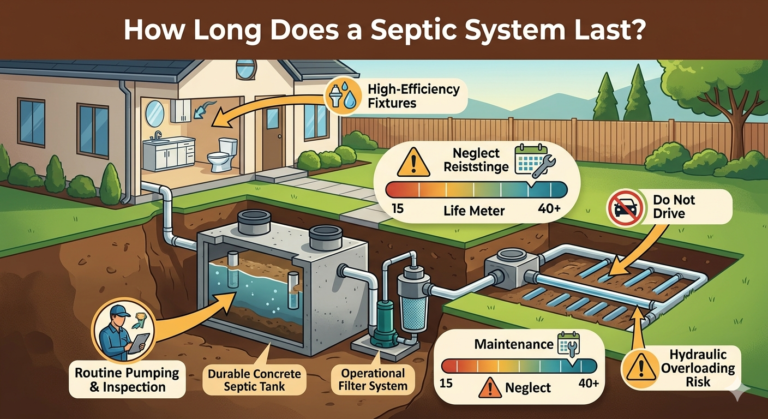
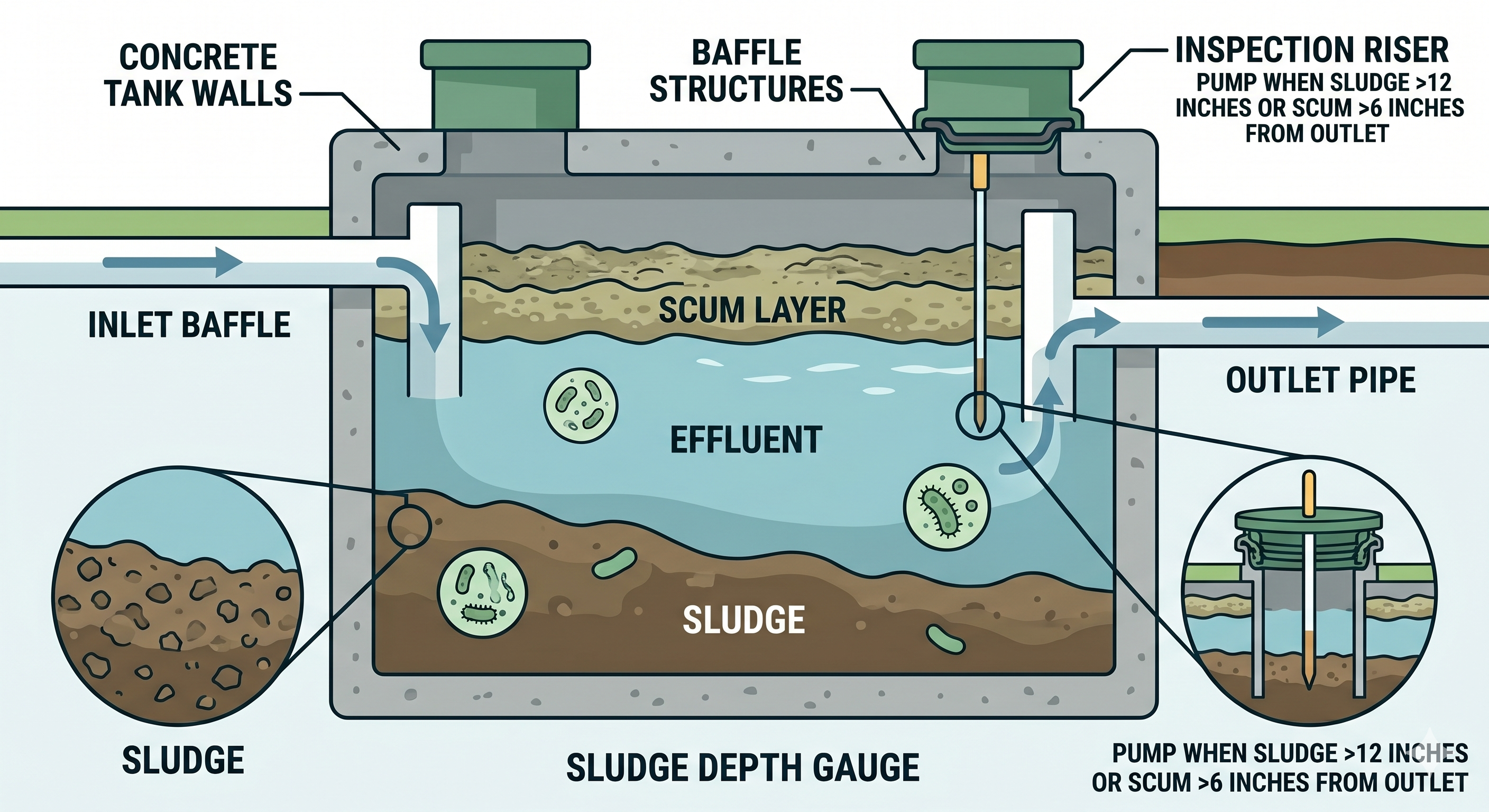
A septic system collects wastewater from your sinks, showers, toilets, and appliances and sends it to an underground tank. Solids settle to the bottom as sludge while lighter materials form a scum layer on top. Bacteria in the tank break down some solids, reducing volume.
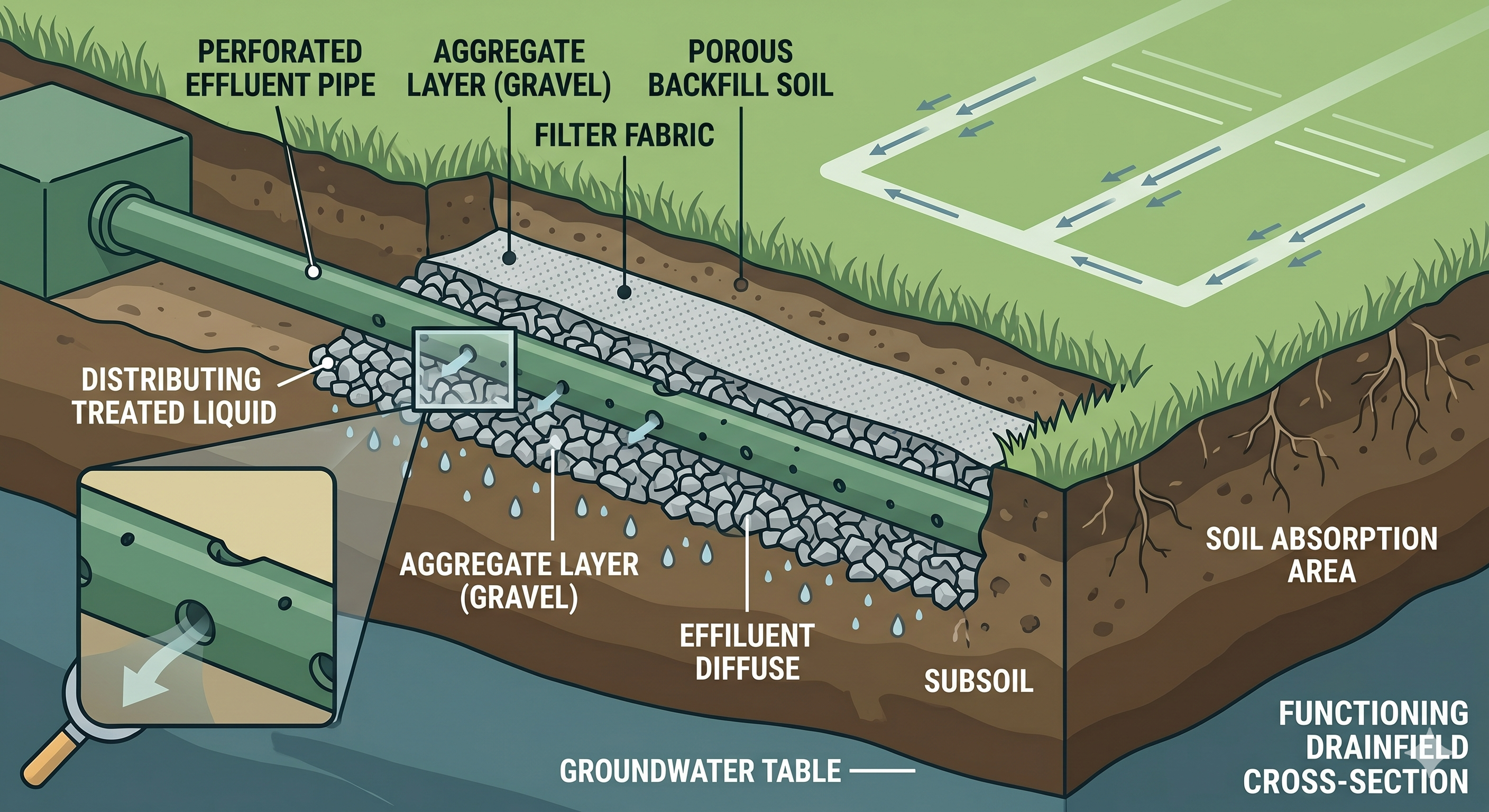
Clearer liquid in the middle layer flows out to a drainfield or leach field through an outlet baffle. The drainfield lets the liquid soak into soil where microbes and filtration remove remaining contaminants. If the tank is not pumped, solids can flow into the drainfield and clog it, causing backups or surface pooling.
You should monitor water use and avoid flushing nonbiodegradable items. Regular inspections and pumping keep the system working and protect your yard and groundwater.
Get Free Septic Tank Diagnose Using Our Free Septic Tank Diagnose Tool
Types of Septic Tanks
Concrete tanks are common and durable; they resist crushing and last decades when maintained. Steel tanks exist but corrode over time and are less common now. Plastic and fiberglass tanks are lightweight, resist rust, and are easier to install, but they can float in high water tables if not anchored.
You may also encounter chamber systems, sand filters, and aerobic treatment units (ATUs). Chamber systems use plastic chambers instead of stone in the drainfield and are easier to maintain. ATUs add oxygen to speed bacterial treatment; they need power and more frequent service. Choose a type based on soil percolation, lot size, budget, and local codes.
Key Components of a System
Septic tank: holds and partially treats wastewater; you must pump it every 3–5 years depending on household size and tank volume.
Inlet and outlet baffles: direct flow into and out of the tank and prevent solids from moving to the drainfield. Check baffles during inspections.
Drainfield (leach field): accepts treated liquid; it uses soil to filter and polish effluent. Keep heavy vehicles and deep-rooted plants off it.
Distribution box: evens flow to drainfield lines in multi-line systems. If it clogs or tilts, flow can concentrate and damage the field.
Pipes and cleanouts: allow inspection and access. Ensure pipes remain unobstructed and insulated where freezing is possible.
Accessories: risers and lids improve access for pumping and inspection. Alarms and pumps appear in systems with mechanical components; test alarms yearly and service pumps as recommended.
Routine Maintenance Practices
Keep records of service dates, inspections, and repairs. Watch for odors, slow drains, wet spots, and high water use that can signal trouble.
Proper Pumping Schedules
You should pump your tank based on household size and tank volume, not on a fixed calendar. A typical 1,000–1,500 gallon tank for a family of four usually needs pumping every 3–5 years. If you use a garbage disposal or have many guests, shorten that to every 1–2 years.
Ask the service provider to:
- Measure sludge and scum layers during inspection.
- Pump when sludge is within 6 inches of the outlet baffle.
- Note tank condition and any repairs needed.
Keep service records and receipts. They help you track intervals and prove maintenance if you sell the home.
Efficient Water Usage
Cut your water use to reduce stress on the drainfield. Fix leaks, install low-flow showerheads and toilets, and run full loads in the washer and dishwasher.
Spread laundry loads across the week; do not run consecutive heavy loads in one day. Use high-efficiency appliances when possible. Avoid long baths and multiple showers back-to-back.
Monitor household habits. A leaky toilet can add hundreds of gallons per month. Reducing peaks of water flow helps solids settle properly and lengthens the time between pumps.
Safe Disposal Methods
Only flush human waste and toilet paper. Do not flush wipes, feminine hygiene products, diapers, cotton swabs, or paper towels. These items clog pipes and fill the tank faster.
Dispose of fats, grease, cooking oil, and coffee grounds in the trash. Do not pour chemicals, paints, solvents, or large amounts of bleach down drains. These substances can kill helpful bacteria and harm the system.
Use household cleaners sparingly and choose septic-safe products. Train everyone in your home on what not to flush or pour down drains to protect the system and avoid costly repairs.
Recognizing and Preventing Issues
You will learn the key signs that a septic system is failing, how tree roots harm tanks and pipes, and what to do when seasons change to protect your system. Pay attention to odors, slow fixtures, water use, and landscape changes.
Common Warning Signs
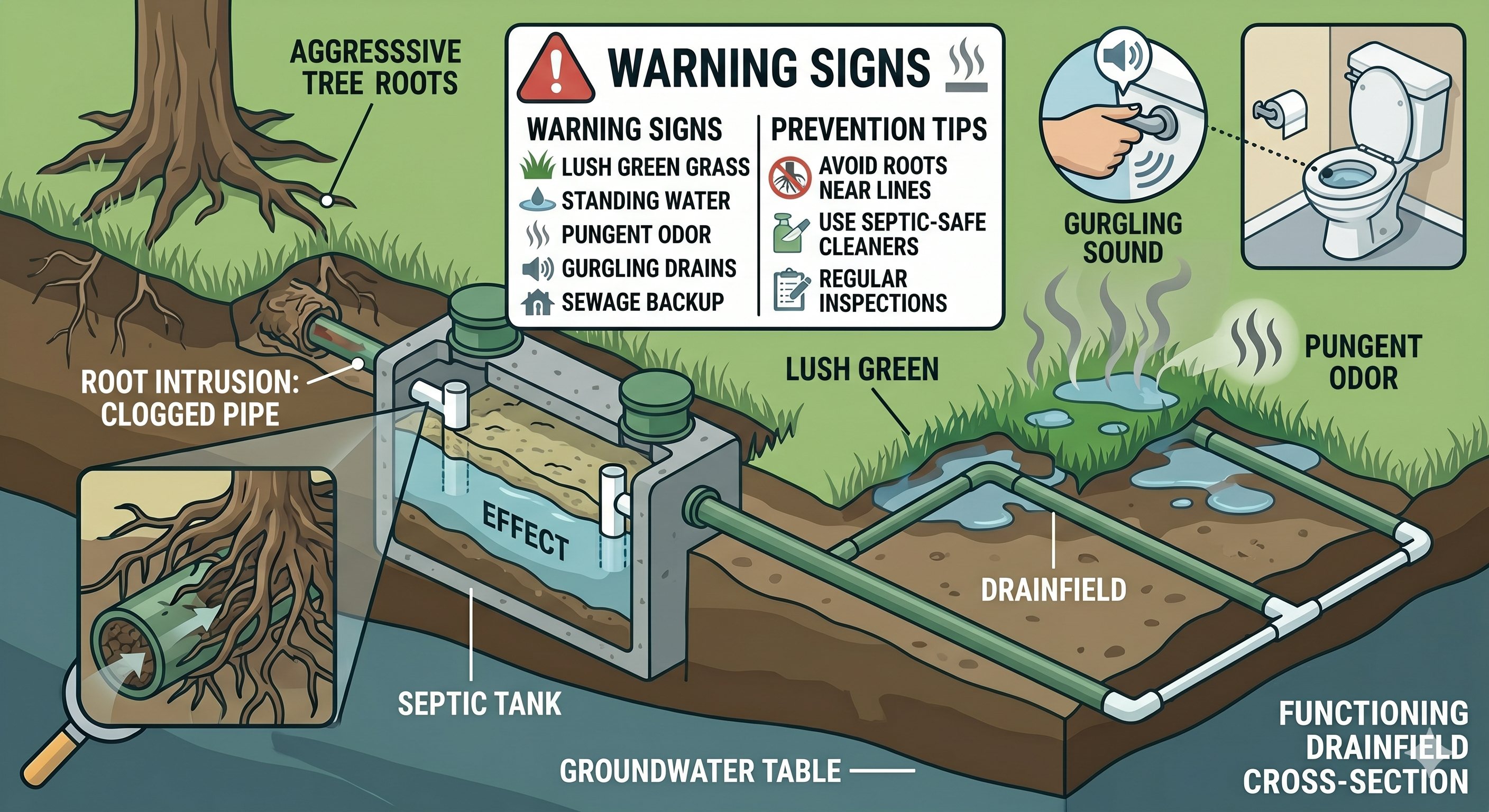
Watch for slow drains in sinks, tubs, and toilets. If multiple drains slow at once or toilets gurgle after flushing, the tank or drain field may be blocked. Noticeable sewage odors inside or outside the house mean waste is near the surface or a vent is blocked.
Look for soggy patches, lush green grass, or pooling water near the drain field. These can show the drain field is saturated and not treating effluent. Frequent need for pumping — more than every 3 years for most homes — or records showing high sludge levels means you should schedule service.
Track your water use. Running the dishwasher, laundry, and showers at the same time can overload the system. Stop using harsh drain cleaners and flush only toilet paper and human waste. Keep a simple log of pumping dates and any repairs so you can spot trends.
Root Intrusion Risks
Roots seek water and nutrients and will grow into small pipe cracks or joints. Once roots enter a pipe, they trap solids and reduce flow. Look for repeating clogs in the same line or wet soil near pipes as signs of root problems.
Protect pipes by keeping trees and large shrubs at least as far from the drain field as the tree’s expected height. Choose shallow-rooted plants near septic lines. If roots invade, a licensed contractor can remove roots mechanically or chemically and repair damaged pipe sections.
Do not use high-pressure root cutting repeatedly without fixing pipe damage. Cutting roots can make them grow back thicker and faster. After removal, schedule an inspection and consider replacing old clay or damaged pipe with modern materials like PVC.
Seasonal Care Considerations
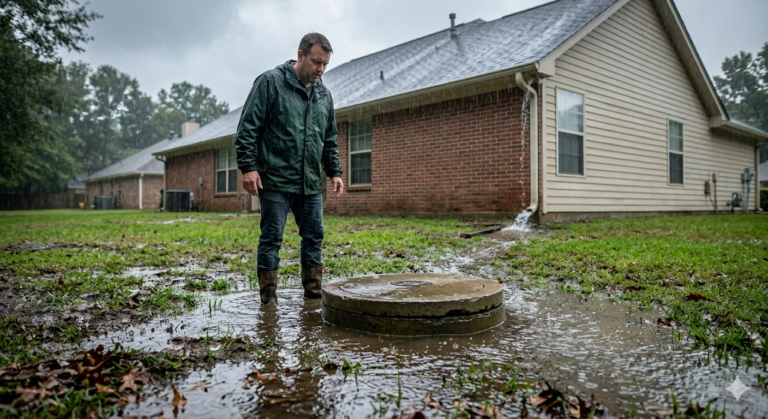
In spring, check for saturated soil after snowmelt or heavy rain. Avoid driving or parking on the drain field during wet months to prevent soil compaction and pipe damage. Divert roof runoff with gutters and downspouts away from the drain field to reduce saturation.
Before winter, insulate exposed tank lids and service risers to protect against freeze damage. Keep snow cover over the drain field to help insulation but avoid plowing or piling snow there. In dry summer months, conserve water and spread laundry through the week to prevent overloading the system.
After storms or floods, have a professional inspect the system before using it heavily. Floodwaters can shift lids, introduce debris, and contaminate the tank. Record any seasonal repairs and adjust your maintenance schedule accordingly.
For more comprehensive guidelines on protecting your groundwater and maintaining your system, you can explore the EPA’s SepticSmart program. Additionally, reducing your household water footprint by choosing WaterSense labeled plumbing fixtures can significantly reduce the daily stress on your drainfield. If you are planning to update the landscaping in your yard, be sure to consult expert advice on managing plants and tree roots near septic systems to prevent costly pipe damage and root intrusion.
Products and Additives
You should pick cleaning products and additives that protect the tank and drain field, and know which additive claims are backed by evidence. Focus on labels, active ingredients, and whether a product is meant for aerobic or anaerobic systems.
Choosing Approved Cleaners
Use cleaners labeled “septic-safe” or “biodegradable” and check for an EPA or state approval when possible. Avoid drain cleaners with lye, strong acids, or high concentrations of bleach. These kill beneficial bacteria and can harm drain fields.
Look for products that list mild surfactants or enzyme blends rather than harsh solvents. For routine cleaning, use small amounts of liquid dish soap or a septic-safe bathroom cleaner. For clogs, try a mechanical snake before chemical treatments.
Store cleaners away from the tank and follow label dosing. Overuse of any cleaner increases risk to the system and may cause faster sludge buildup or need for earlier pumping.
Understanding Additive Claims
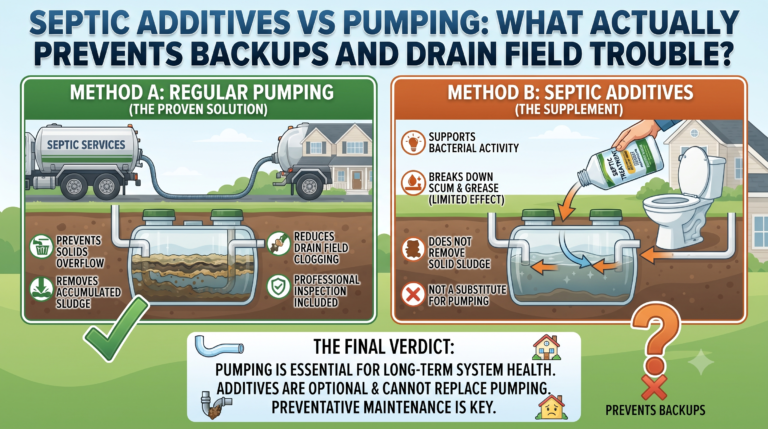
Additives fall into two main groups: biological (bacteria or enzymes) and chemical (solvents, acids, degreasers). Biological additives aim to boost digestion of fats and solids, but they rarely replace regular pumping. Read labels for specific bacterial strains, CFU counts, and enzyme types.
Be skeptical of claims that additives will eliminate pumping, restore a failing drain field, or instantly clear backups. Independent tests and health departments often show mixed results. If a manufacturer cites a study, check whether it was peer-reviewed and whether conditions match your system.
If you choose an additive, match it to your system type: aerobic systems need compatible formulations, and some chemicals can damage pumps and filters. Keep dosing records and consult a septic professional before using additives on a failing system.
Professional Inspections and Legal Compliance
You should have your septic system inspected by a qualified professional on a regular schedule and whenever you notice signs of trouble. Know the local rules about permits, inspections, and records so you can avoid fines and protect your property value.
Get Free Septic Tank Diagnose Using Our Free Septic Tank Diagnose Tool
When to Call an Expert
Call a septic professional if you see slow drains, sewage odors, wet or lush areas over the drain field, or sewage backup into sinks or toilets. These signs can mean a full tank, clogged lines, or a failing drain field that needs technical diagnosis and repair.
Hire a licensed inspector for real estate transactions or before major landscaping, digging, or adding bedrooms. Professionals can locate the tank, open lids, pump and inspect the interior, and test baffles, filters, and soil percolation if needed.
Ask about state certification, liability insurance, and written estimates. Get a inspection report that lists findings, photos, and recommended repairs. Keep that report and any service receipts for permits and future buyers.
Local Regulations Overview
Local rules vary by city and county. Many areas require routine inspections at set intervals, septic permits for repairs or replacements, and proofs of pump-outs before property transfers. Contact your county health department or permitting office for exact requirements.
You may need a certified inspector for real estate closings. Some jurisdictions require licensed contractors to perform pumping, repairs, and drain-field work. Fees, required paperwork, and timelines differ, so confirm permit lead times before scheduling work.
Keep copies of permits, inspection reports, and contractor invoices for at least the time your local code requires. These documents protect you from fines and help show prospective buyers that the system was maintained properly.