Septic Tank Smell in the House: Causes, Fixes, and When to Call for Help
⚠️ Affiliate Disclosure: This post contains affiliate links. As an Amazon Associate, I earn from qualifying purchases at no extra cost to you.
A septic Tank smell inside the house is one of those problems that is easy to ignore for a day and hard to ignore for a week. The odor can show up near a bathroom sink, around a shower drain, in a basement, or across multiple rooms after laundry day. Homeowners often assume the smell means the septic tank itself has suddenly “gone bad,” but indoor odors can come from several different causes. Some are minor plumbing issues. Others are early warning signs that the septic system is under stress.
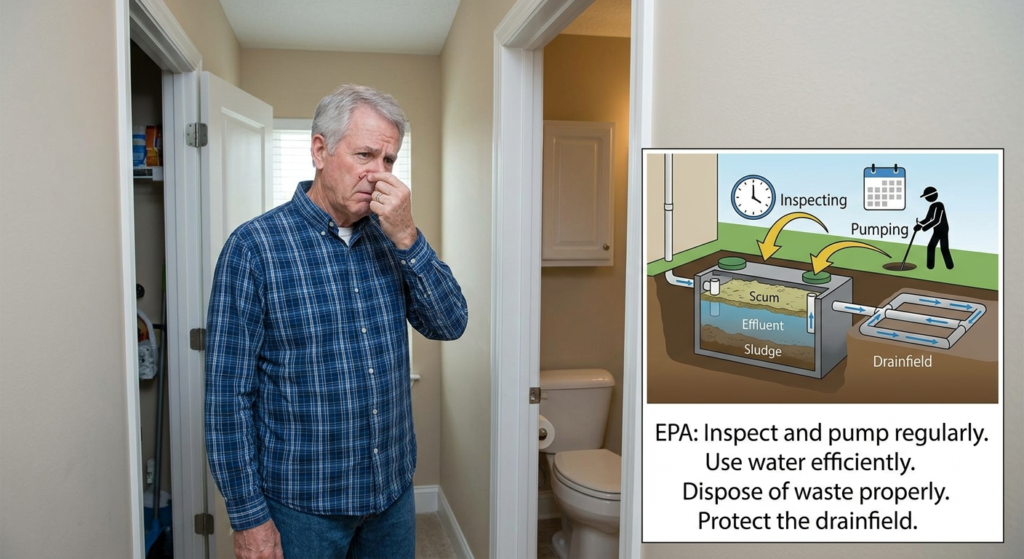
The good news is that septic odor is often diagnosable if you look at the whole picture. The EPA points homeowners back to the basics: inspect and pump regularly, use water efficiently, dispose of waste properly, and protect the drainfield. When those basics slip, odors are more likely to appear. If the smell is persistent, recurring, or getting worse, treat it as a useful warning rather than something to mask with cleaners or additives. Source
What a Septic Tank Smell in the House Usually Means
Indoor septic odor generally means either sewer gas is entering the house somewhere it should not, or wastewater is not moving and venting the way it should. That can happen because a drain trap has dried out, a vent issue is forcing odor back indoors, or the system itself is backing up and pushing smells into fixtures. The key is to notice whether the smell appears in one spot or across the home. One-room smell often points to a local plumbing issue. Whole-house odor raises the odds of a septic or drainage problem.
Cause 1: A Dry Trap in an Infrequently Used Drain
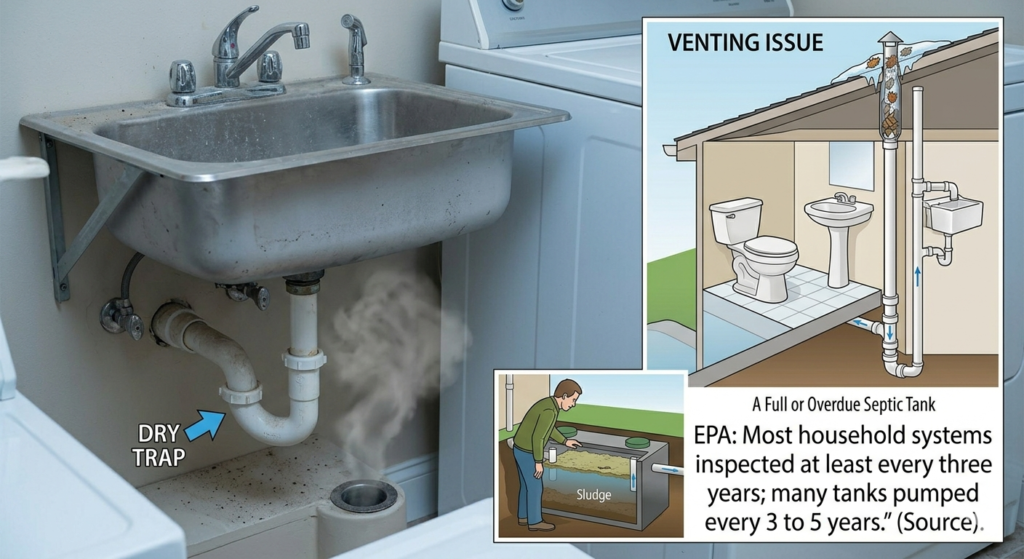
One of the simplest causes is also one of the most common: a dry trap. Every sink, shower, and floor drain is supposed to hold a small amount of water that blocks sewer gas from coming back into the room. If a guest bathroom, basement drain, or utility sink has not been used in a while, that water seal can evaporate. The result is a nasty smell that feels like a septic emergency even though the fix may be as simple as running water into the drain. If the odor disappears after restoring water to the trap, that is a good sign the problem was local rather than system-wide.
Cause 2: A Plumbing or Venting Problem
If the odor keeps returning in one bathroom or after certain fixtures are used, the issue may be in the drain or vent system. Plumbing vents help wastewater move properly and let sewer gases escape above the roofline. When venting is compromised, pressure can behave oddly and smells can get pulled indoors. Homeowners can watch for clues like gurgling drains, bubbling toilets, or odor that gets worse when multiple fixtures run at once. Those symptoms are often more than just “bad smell”; they suggest the drainage system is not breathing correctly.
Cause 3: A Full or Overdue Septic Tank
Sometimes the smell is the system telling you it is simply overdue for service. The EPA says most household septic systems should be inspected at least every three years and many tanks are pumped every three to five years, depending on size, use, and sludge accumulation. If you do not know when the tank was last pumped, odor alone is enough reason to check your maintenance history. A system with too much sludge and scum can start giving you warnings before a full backup happens. Source
Cause 4: Hydraulic Overload from Water Use
Septic systems do not just react to solids. They also react to too much water too fast. NC State Extension identifies excessive water use as a major reason systems fail. A leaking toilet, several loads of laundry in one day, more people in the home, or extra water entering the system can overload the tank and drainfield. When that happens, smells may show up before you see standing water outside. If odor seems worse after laundry, long showers, or heavy house use, think about water volume as part of the diagnosis.
Cause 5: Drainfield Saturation or Failure
If the smell inside the house is paired with wet yard spots, greener grass over the field, or drain problems that get worse in rain, the issue may be farther downstream. NC State lists wet, smelly spots, sewage backup, and greener grass around the septic area as warning signs of a failing system. Once the drainfield is saturated or stressed, the whole system loses margin. Odors can then show up around fixtures, outdoors, or both. Source
What to Check First
Start with the easiest checks before assuming the worst. Run water into little-used drains. Notice whether one room smells or several do. Ask whether the smell is tied to rain, laundry, or recent heavy house use. Look outside for soggy patches or stronger odors near the tank or field. Then check your maintenance history. Penn State Extension recommends knowing the location of your tank and drainfield and keeping records of pumping and inspection. That kind of record keeping turns a vague problem into a practical troubleshooting process.
What Not to Do
Do not respond to indoor septic odor by dumping harsh chemicals, drain cleaners, or grease-cutting products down the drain. EPA says homeowners should avoid household chemicals that can interfere with the system and should flush only human waste and toilet paper. Odor control products can also distract you from the real cause. If the smell is coming from a maintenance or performance problem, covering it up is not the same as fixing it.
When to Call for Help
Call a septic professional promptly if the smell is paired with multiple slow drains, sewage backup, wet or spongy ground over the system, or odor that repeatedly returns after basic checks. Those are the situations where delay gets expensive. EPA notes that routine maintenance is far cheaper than repairing or replacing a malfunctioning system, and poor maintenance can also affect health, water quality, and property value. Source
Bottom Line
A septic tank smell in the house is a clue, not a diagnosis. Sometimes the culprit is a dry trap or venting issue. Sometimes it is the first practical sign that the tank is overdue for pumping or the system is overloaded. Either way, the most helpful response is methodical: check simple causes first, review your maintenance history, reduce stress on the system, and escalate quickly if other warning signs are present.