Best Septic Tank Treatments for 2026: A Licensed Pro’s Honest Guide
Quick Answer: What are the best septic tank treatments for 2026?
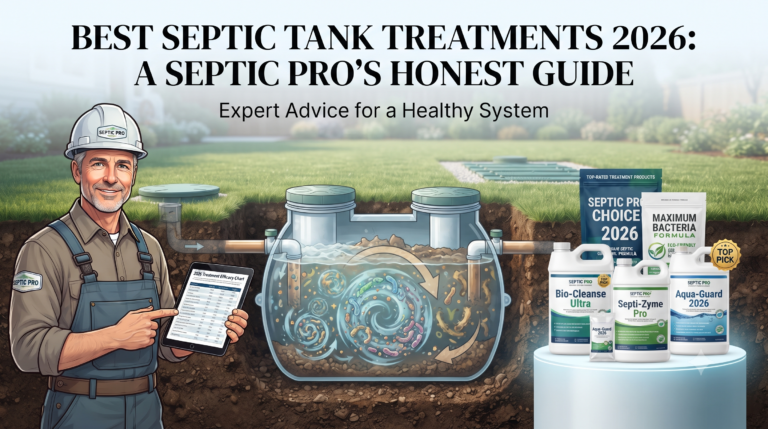
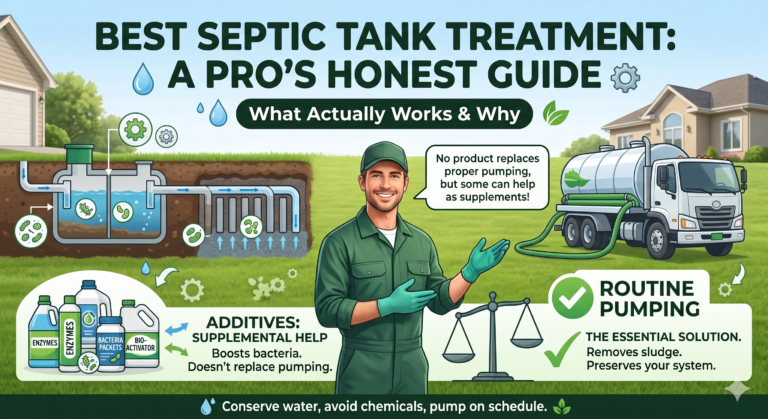
The best septic tank treatments in 2026 are biological additives built around live bacteria and enzymes — not harsh chemical additives that can damage your system. But here’s the honest truth from the field: a healthy septic tank usually doesn’t need additives at all. The real “best treatment” is routine pumping and smart water habits.
- Best overall type: monthly biological (bacteria + enzyme) additives for maintenance.
- Avoid: chemical additives with solvents, degreasers, or strong acids/bases.
- Non-negotiable: stick to your pump-out interval — no product replaces pumping.
- When they help most: after antibiotics, heavy bleach use, or a sluggish, odor-prone system.
I’ve spent more than 15 years pumping tanks, digging up failed leach fields, and answering the same question at kitchen tables across the country: “Which septic tank treatment should I buy?” This guide gives you the straight answer — what actually works, what’s a waste of money, and how to protect the most expensive part of your home you never see.
The form you have selected does not exist.
Do septic tank treatments actually work?
Sometimes. It depends on what you expect them to do.
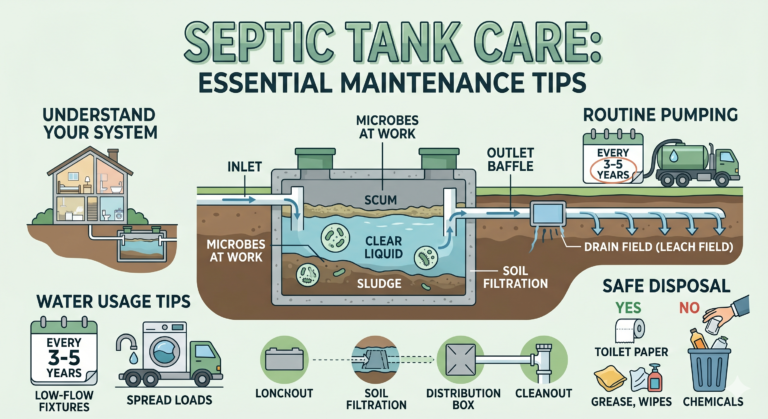
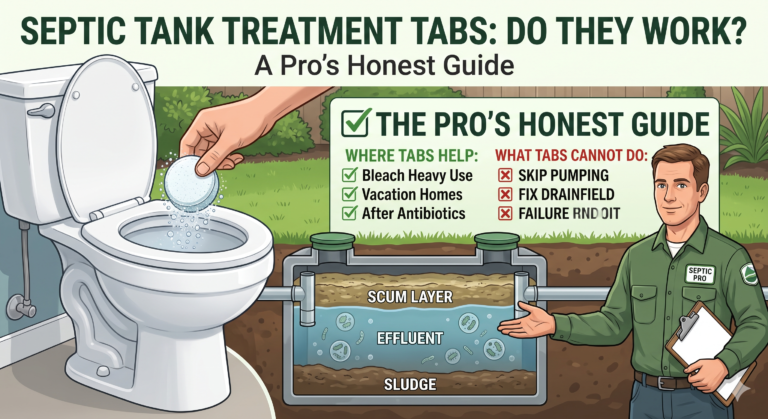
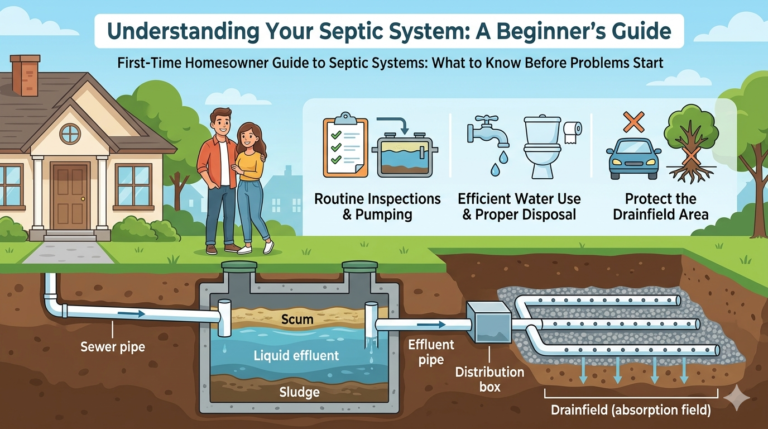
Your septic tank is a living system. Wastewater flows in through the inlet baffle, solids settle to the bottom as the sludge layer, fats and oils float to the top as the scum layer, and the relatively clear effluent in the middle flows out through the outlet baffle toward the drainfield. In that tank, anaerobic bacteria (bacteria that live without oxygen) break down the solids. This is wastewater treatment happening in your backyard, quietly, every day.
When people ask whether septic tank additives work, they usually mean one of two things:
- Can additives replace pumping? No. Nothing dissolves the sludge layer enough to skip a pump-out. Anyone who tells you otherwise is selling something.
- Can additives support a healthy bacterial population? Sometimes yes — especially after events that kill off your bacteria.
So the realistic goal of a good treatment is maintenance and recovery, not miracles. If you want the full picture on keeping your system healthy, our complete septic treatment guide walks through the whole maintenance routine.
What types of septic tank treatments exist?
There are three broad categories, and they are not created equal.
Biological additives (bacteria-based)
These add live anaerobic bacteria — and sometimes aerobic bacteria for aerated systems — to your tank. The idea is to reinforce or restore the microbial population that digests solids. These are the treatments most professionals are comfortable recommending because they work with your system’s natural biology instead of against it.
Enzymatic treatments
Enzymatic treatments use enzymes to help break down specific compounds — fats, oils, greases, proteins, starches. Enzymes aren’t alive; they’re catalysts that speed up the breakdown of the scum layer so your bacteria can do their job. Many quality products combine bacteria and enzymes together, which is generally the most sensible approach.
Chemical additives
Chemical additives are the ones I warn people about. Some contain solvents, degreasers, or strong acids and bases marketed to “unclog” or “clean out” a tank. They can kill the very bacteria your system needs, and some can pass through the tank and damage the biomat or soil in your leach field. As a general rule, if a product promises to dissolve everything overnight, put it back on the shelf.
Comparison: treatment types at a glance
| Type | How it works | Best for | Pro’s verdict |
|---|---|---|---|
| Biological (bacteria) | Adds live bacteria to digest solids | Routine maintenance, recovery after bacteria die-off | Recommended |
| Enzymatic | Catalyzes breakdown of scum/greases | Grease-heavy households, odor control | Good, best combined with bacteria |
| Chemical (solvent/acid) | Chemically dissolves solids/clogs | Rarely appropriate | Avoid |
What should I look for in a good septic treatment for 2026?
After years of seeing what helps and what hurts, here’s my checklist:
- Live bacteria, enzymes, or both — clearly listed on the label.
- No harsh chemicals — avoid anything with solvents, degreasers, hydroxide, or sulfuric compounds.
- Septic-safe and non-corrosive to your tank, baffle components, and pipes.
- Dosing that matches your tank size — bigger tanks need more.
- A monthly maintenance format — pre-measured packs make consistency easy.
Match the product to your system, too. A conventional tank relies on anaerobic bacteria; an aerobic treatment unit uses oxygen and aerobic bacteria, so the additives suited to each differ.
Which septic treatments does a pro actually recommend?
I’ll frame these the way I’d talk to a customer: these are solid picks, not magic. Choose one, use it consistently, and keep pumping on schedule.
simple monthly tablet really protect an aging septic system? For homeowners looking to proactively control odors and manage waste, this routine is worth exploring.
Check: Septifix Septic Tank Treatment Tabs →
For most homeowners on a conventional system, a monthly bacteria-and-enzyme maintenance product is the practical choice — it’s easy to dose and covers the everyday load.
If your household leans on the tank hard — big family, garbage disposal, lots of laundry — a higher-count bacterial blend gives you more digesting power for the sludge layer.
And when a system has been through trauma — a bleach dump, a round of antibiotics, or it’s just gone sluggish and smelly — a concentrated bacterial shock product can help rebuild the colony faster than a light maintenance dose.
How do treatments fit into real septic system maintenance?
Additives are one small tool. Here’s the maintenance hierarchy that actually protects your system, in order of importance:
- Pump on schedule. Your pump-out interval depends on tank size and household load — commonly every few years for most homes. Pumping removes the sludge and scum layers that no additive can eliminate.
- Watch what goes down the drain. Grease, wipes, chemicals, and excess bleach all stress the system.
- Manage water use. Overloading the tank pushes solids into the drainfield before they settle.
- Inspect the components. The inlet baffle, outlet baffle, and distribution box all need to be intact for effluent to reach the leach field evenly.
- Use additives if it makes sense. Maintenance dosing or recovery after a die-off — not as a substitute for the above.
Why pumping still beats any additive
Think of it this way: bacteria digest solids, but they always leave behind a non-digestible residue that accumulates as the sludge layer. Over time that layer rises. If it gets too high, solids escape through the outlet baffle, coat the biomat in your drainfield, and clog the soil. That’s a leach field failure — often the most expensive repair a septic owner ever faces. No amount of biological additives reverses a clogged leach field. Pumping prevents it. Additives support the biology between pumpings.
Can the wrong products damage my septic system?
Yes — this is where people accidentally cost themselves thousands.
- Harsh chemical additives can kill anaerobic bacteria and pass through to harm the biomat and soil.
- Excess bleach and disinfectants from normal cleaning suppress the bacterial colony.
- Antibacterial soaps and heavy antibiotic use reduce microbial activity in the tank.
- Grease and fats thicken the scum layer and can clog the outlet baffle.
General guidance from EPA guidelines and most state health departments emphasizes routine pumping, protecting the drainfield, and being cautious with additives rather than relying on them. When in doubt, less is more.
How much treatment do I need, and how often?
Follow the label for your tank size — under-dosing does little, and over-dosing wastes money without extra benefit. A rough framework:
| Situation | Typical approach |
|---|---|
| Routine maintenance | Monthly biological/enzymatic dose per label |
| New home / recently pumped tank | Let natural bacteria establish; light monthly dosing optional |
| After bleach dump or antibiotics | One-time bacterial shock, then resume monthly |
| Sluggish drains / mild odors | Bacterial shock + inspect baffles and check pump-out timing |
Always dose per the manufacturer’s instructions for your gallon capacity — that’s the number that matters, not the number of people in the house.
When should I call a professional?
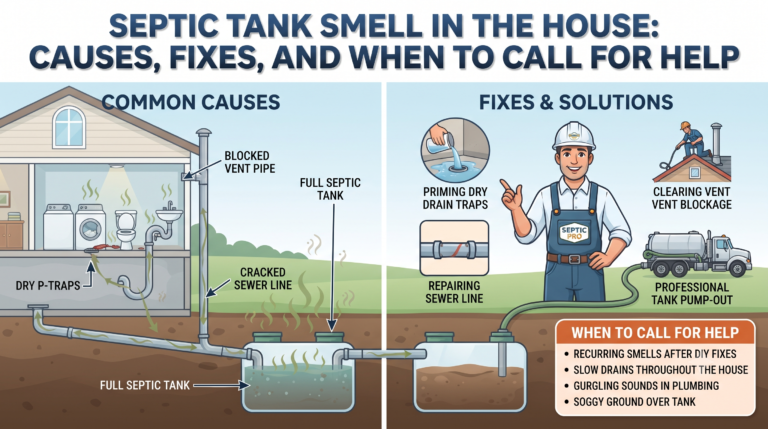
Skip the additives and call a licensed septic professional right away if you notice any of these:
- Sewage backing up into drains, toilets, or the lowest fixtures in the house.
- Standing water, soggy ground, or bright green grass over the leach field or distribution box.
- Persistent sewage odors indoors or outside near the tank.
- Gurgling drains or slow drains throughout the whole house at once.
- You can’t remember your last pump-out — get an inspection to check sludge and scum levels.
These are signs of a system problem, not something a bottle of bacteria will fix. A pro can measure your layers, inspect the baffles and distribution box, and tell you whether you’re facing a simple pumping or a drainfield issue. Catching it early is far cheaper than a full replacement. (For regulatory context, see the EPA guide to septic system types.)
Frequently asked questions
Do I really need to add bacteria to my septic tank?
Not usually. A healthy tank builds its own anaerobic bacteria from the wastewater entering it. Additives matter most after events that kill those bacteria — heavy bleach, antibiotics, or a sluggish system — or as low-cost insurance for heavy-use households. They never replace pumping.
Can septic treatments unclog my drainfield or leach field?
No. Once the biomat and surrounding soil in a leach field are clogged, no additive reverses it. That’s a physical and structural problem requiring professional evaluation and often excavation. Treatments work inside the tank, not in the soil.
Are chemical septic additives ever safe to use?
Most solvent- or acid-based chemical additives should be avoided — they can kill your bacteria and damage the drainfield. Stick to biological and enzymatic products labeled septic-safe. If a product’s job is to “dissolve” your tank contents, that’s a red flag.
How often should I pump instead of just using treatments?
Your pump-out interval depends on tank size and household load, but most homes need pumping every few years. No treatment extends that indefinitely. The safest plan is regular pumping plus optional maintenance dosing — the additives support the biology, the pumping removes what biology can’t.
The bottom line
The best septic tank treatments for 2026 are honest, boring, and effective: biological additives with live bacteria and enzymes, used consistently, on a system that still gets pumped on schedule. Steer clear of harsh chemical additives, protect your bacteria from bleach and antibiotics overload, and treat any warning signs as a reason to call a pro — not a reason to buy another bottle. Do that, and the most expensive part of your home you never see will keep quietly doing its job for decades.