Best Septic Tank Treatments 2026: A Septic Pro’s Honest Guide
Quick Answer
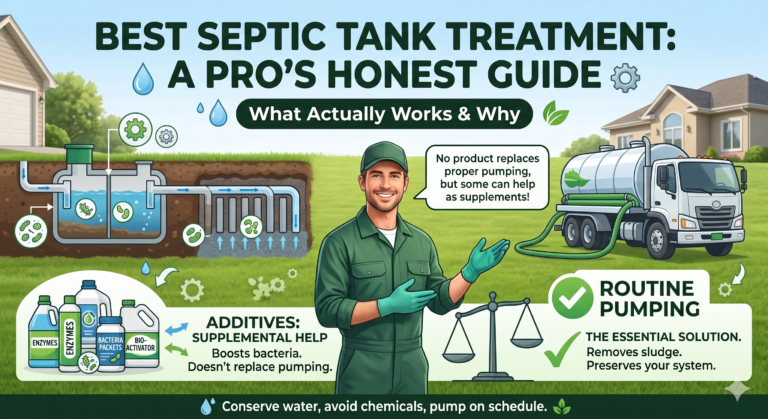
The best septic tank treatments for 2026 are bacterial additives and enzyme treatments that support the natural anaerobic bacteria already living in your tank — but they are a supplement, not a substitute for pumping. Here’s the short version:
- A healthy septic system rarely needs additives; routine pump-outs matter far more.
- If you use a treatment, choose live bacterial/enzyme blends — skip harsh chemical “cleaners.”
- No product lets you extend your pump-out interval safely.
- Best value comes from monthly maintenance doses, not one-time “miracle” fixes.
I’ve pumped, inspected, and repaired septic systems for more than 15 years, and the question I get more than almost any other is: “Which treatment should I buy?” The honest answer surprises people. Treatments can help in specific situations, but most of the money spent on them goes toward marketing, not results. This guide separates the genuinely useful products from the hype, explains how your system actually works, and tells you where your maintenance dollars are best spent.
The form you have selected does not exist.
Do septic tanks actually need treatments?
Let’s start with the uncomfortable truth: a well-functioning septic system is a self-sustaining biological reactor. Every time you flush, you introduce the anaerobic bacteria that break down solids. In most homes, those bacteria maintain a healthy population on their own.
So why do treatments exist? Because real-world conditions aren’t always ideal. Antibacterial soaps, bleach, medications passing through the body, low occupancy, and heavy grease loading can all knock back your bacterial colony. In those cases, bacterial additives and enzyme treatments can help restore balance.
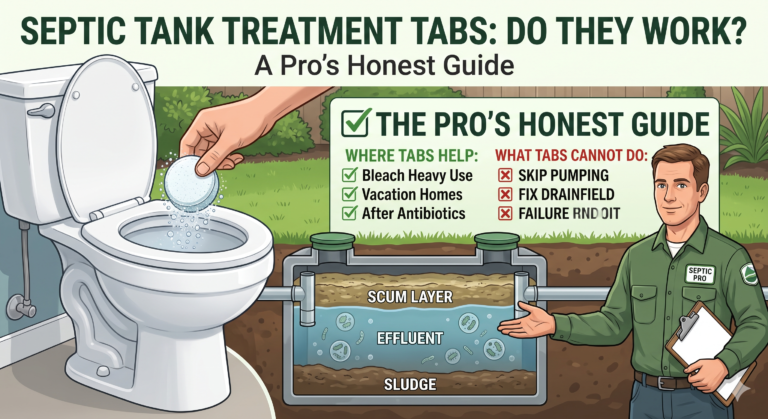
What a treatment cannot do:
- Digest the accumulated sludge layer fast enough to replace pumping.
- Repair a failing leach field or clogged drainfield.
- Dissolve a hardened biomat that has choked off your soil absorption area.
- Fix a broken tank baffle or a flooded distribution box.
If someone sells you a product claiming any of the above, walk away.
Field Note
On roughly a third of the service calls where a homeowner reported “treatments stopped working,” the real problem was a mechanical or drainfield failure that no additive could touch. Before you buy anything, confirm the issue is biological — not a broken baffle, a full tank, or a saturated leach field.
How does a septic system break down waste?
Understanding this makes every buying decision easier. Wastewater from your home flows into the tank, where physics and biology do the work:
- Scum layer: Fats, oils, and grease float to the top.
- Effluent: The relatively clear liquid middle layer that flows out to the drainfield.
- Sludge layer: Heavy solids settle to the bottom, where anaerobic bacteria slowly digest them.
The tank baffle keeps the scum layer from escaping into your outlet pipe. The effluent then moves to a distribution box, which spreads it across the pipes of your leach field. In the soil, a natural biomat forms — a thin biological layer that helps with final wastewater treatment as liquid percolates through the ground.
Anaerobic bacteria (living without oxygen inside the tank) handle most of the digestion. Some advanced systems add aerobic bacteria — oxygen-loving microbes that work faster — through an aerator that creates activated sludge. Treatments are formulated to support one or both of these populations.
What types of septic tank treatments are there?
Nearly every product on the shelf falls into one of these categories. Here’s how they compare.
| Treatment Type | What It Does | Best For | Pro’s Take |
|---|---|---|---|
| Live bacterial additives | Introduces fresh anaerobic (and sometimes aerobic) bacteria | Restarting a stressed system after antibiotics, bleach, or vacancy | The most defensible category. Useful in specific cases. |
| Enzyme treatments | Enzymes help break down proteins, starches, fats, and grease | Grease-heavy households; slow drains within the system | Helpful as a maintenance supplement; won’t rescue a failed field. |
| Bacteria + enzyme blends | Combines both approaches | General monthly maintenance | My default recommendation when a homeowner insists on using something. |
| Chemical “cleaners” (acids/solvents) | Dissolve or degrade material chemically | Marketed as clog fixes | Avoid. Can harm bacteria and, in some cases, the drainfield. |
Are chemical septic “cleaners” safe?
Generally, no — and this is where a lot of homeowners go wrong. Products built around harsh acids, solvents, or degreasers can kill the very bacteria your tank depends on. Kill the bacteria and solids stop digesting, meaning your sludge layer builds faster and your pump-out interval actually gets shorter. If you want to protect your system, biological products are the safer path.
What are the best septic tank treatments for 2026?
I don’t recommend products based on flashy packaging. I recommend the boring, biologically sound ones that support your existing bacterial colony without introducing anything harmful. Here are the categories I’d steer a homeowner toward, with a pick for each use case.
Best for protect septic system
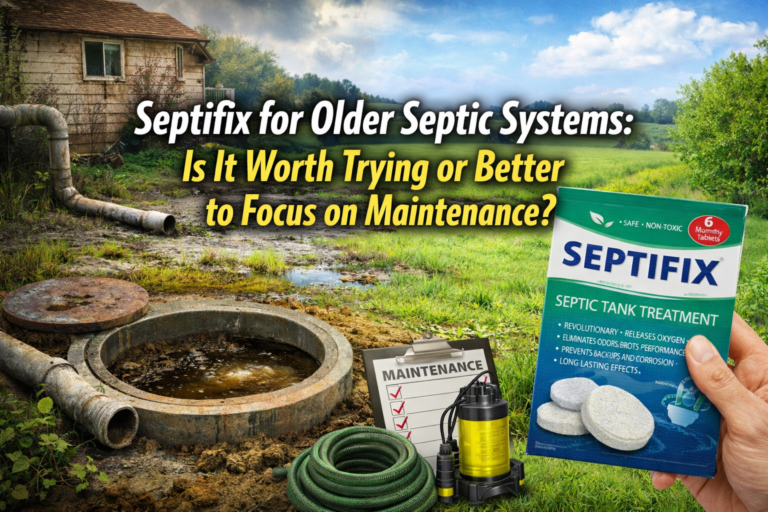
Septifix Can a simple monthly tablet really protect an aging septic system? For homeowners looking to proactively control odors and manage waste, this routine is worth exploring.
Check: Septifix Septic Tank Treatment Tabs →
Best for routine monthly maintenance
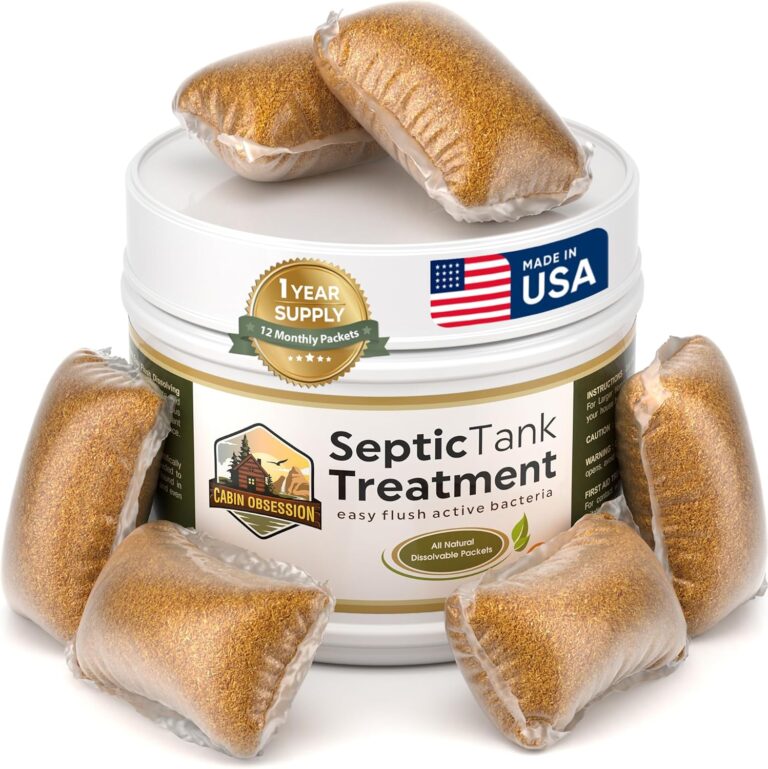
For most households, a simple monthly bacteria-and-enzyme dose is all you’d ever need — and even that is optional in a healthy, properly-sized system. If you want the reassurance of a maintenance routine, a dissolvable monthly packet is the easiest way to stay consistent.
Best for restarting a stressed system
If your household recently ran a course of antibiotics, used heavy bleach, or the house sat vacant, your anaerobic bacteria population may be depressed. A concentrated live-bacteria product can help re-establish the colony faster.
Best for grease-heavy households
Homes that cook a lot and don’t use a grease trap often build a thick scum layer. An enzyme-forward blend targeting fats, oils, and grease can slow that buildup between pumpings. It is not a license to pour grease down the drain — but it helps manage what slips through.
Pro Tip
If you decide to use a maintenance treatment, add it right before bed at a bathroom farthest from the tank, then avoid heavy water use for several hours. This gives the bacteria time to travel into the tank and settle in rather than getting flushed straight through to the drainfield.
How do I choose the right treatment for my situation?
Match the product to the actual problem. Here’s the decision path I walk homeowners through:
- Is the tank overdue for pumping? If yes, pump first. No treatment substitutes for removing accumulated sludge.
- Did something disrupt the bacteria recently? Antibiotics, bleach, or vacancy point toward a live bacterial additive.
- Is grease your main issue? Lean toward enzyme-forward blends and add a grease trap habit in the kitchen.
- Are you seeing backups, odors, or wet spots over the drainfield? Stop shopping for additives. This signals a mechanical or field problem that needs professional inspection.
For a deeper walkthrough of dosing, timing, and long-term system care, see our complete septic treatment guide, which covers maintenance schedules in more detail.
How often should I actually pump my septic tank?
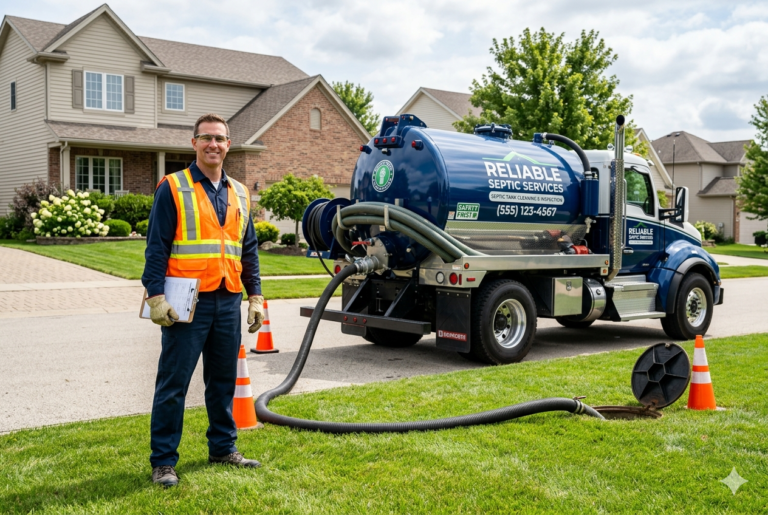
This is the maintenance that genuinely protects your system, and it’s where your money does the most good. The pump-out interval depends on tank size, household size, and how much you load the system. A common rule of thumb in the field is every few years for an average household — but the only reliable method is measuring the sludge and scum layers.
When the combined sludge and scum layers approach roughly a third of the tank’s depth, it’s time to pump. Wait too long and solids can push past the baffle into your drainfield, where they help form an impenetrable biomat and shorten the life of the whole system. Replacing a failed leach field costs many times more than a routine pump-out.
Pro Tip
Keep a simple maintenance log: date pumped, sludge depth measured, and any products used. When I inspect a system with good records, I can give a far more accurate pump-out recommendation — and buyers love seeing that log when a home changes hands.
What should I never put in my septic system?
Treatments matter far less than what you keep out of the tank. These habits protect your bacterial balance better than any product:
- Excess bleach and antibacterial cleaners — they kill the bacteria you’re paying to grow.
- Grease and cooking oil — thickens the scum layer and can clog the outlet.
- “Flushable” wipes, paper towels, feminine products — they don’t break down.
- Paint, solvents, medications, and harsh chemicals — toxic to bacteria and the environment.
- Garbage disposal overuse — dramatically increases the solids load.
General EPA guidelines on septic care emphasize water conservation and keeping harmful materials out of the system. The single most effective “treatment” is simply being careful about what goes down the drain.
Is a cesspool different from a septic system?
Yes, and it matters for treatment choices. A cesspool is an older design — essentially a pit that lets liquid seep directly into the surrounding soil, without the settling separation of a modern tank and drainfield. Bacterial and enzyme products can support the biology of a cesspool, but many are being phased out and, in some areas, must be upgraded. If you have a cesspool, check with your local county health department about current requirements before investing in any long-term maintenance plan.
When should I call a professional?
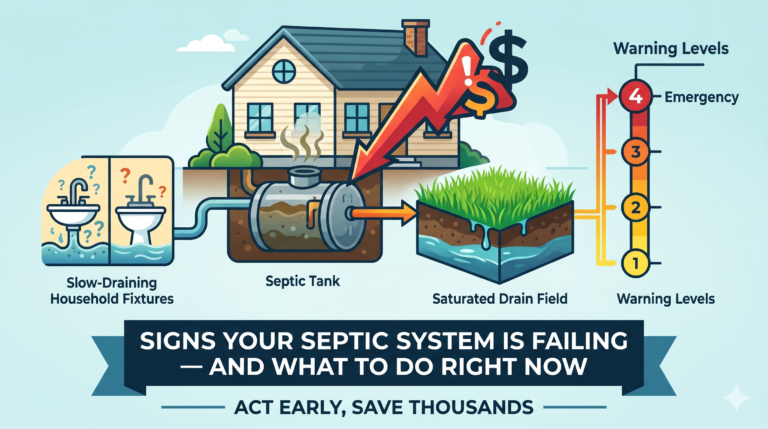
Treatments are a homeowner-level tool. These situations are not — call a licensed septic professional right away if you notice:
- Sewage backing up into drains, tubs, or toilets.
- Standing water, soggy ground, or unusually green grass over the drainfield.
- Persistent sewage odor indoors or outside near the tank.
- Gurgling drains or slow flow throughout the whole house.
- An alarm on an aerobic (activated sludge) system.
These are signs of a full tank, a failing leach field, a damaged baffle, a flooded distribution box, or a mechanical fault. No additive fixes these, and delay usually makes the repair more expensive. When in doubt, get an inspection — measuring layers and checking the components takes a pro under an hour and can save you thousands. (For regulatory context, see the EPA Septic Systems Overview.)
Field Note
Never enter a septic tank yourself, and don’t lean over an open tank. The gases inside — including hydrogen sulfide and methane — can incapacitate a person within seconds. Every year people are injured or worse doing exactly this. Leave anything involving an open tank to trained, equipped professionals.
Frequently asked questions
Can septic treatments extend how long between pump-outs?
No. This is the most common myth. Treatments may help digest some solids, but they cannot keep up with accumulation over time. You still need to measure your sludge and scum layers and pump on schedule. Any product claiming to eliminate pumping is overpromising.
Do I need treatments if my system is working fine?
Usually not. A healthy, properly-sized system maintains its own bacterial population. Many homeowners never use additives and never have problems. If you want a maintenance routine for peace of mind, a monthly bacteria-and-enzyme blend is reasonable — just don’t expect miracles.
Will a treatment fix a smelly or slow drainfield?
Almost never. Odors and slow drainage over the drainfield usually point to a saturated field, a thickened biomat, or a mechanical failure. These require professional inspection, not additives. Pouring product into a failing field wastes money and delays the real fix.
Are enzyme treatments better than bacterial additives?
They do different jobs. Enzymes help break down specific compounds like fats and starches, while bacterial additives introduce living microbes that continue digesting waste. Blends offer both. For grease-heavy homes, enzymes shine; for restarting a stressed colony, live bacteria matter more.
The bottom line for 2026
The best septic tank treatment strategy isn’t really about a product — it’s about protecting the biology and mechanics you already have. Use a bacterial or enzyme blend if your system is stressed or grease-heavy, keep harmful materials out of your drains, and pump on schedule based on measured layers, not a calendar guess. Do those three things and you’ll spend less on treatments, avoid drainfield failures, and keep your system running for decades. Spend wisely: your pump truck and your drain habits protect your investment far more than any bottle on the shelf.