Septic Tank Treatment Tabs: Do They Work? 2026 Guide
Quick Answer
Septic tank treatment tabs are dissolvable tablets that add beneficial microorganisms and enzymes to your tank to support the bacteria that already break down waste. They can help maintain steady biological activity, but they are not a substitute for regular pumping.
- They feed and supplement anaerobic bacteria that digest solids.
- Typical use is one tablet per month, following the label’s tablet dosage for your tank capacity.
- They will not eliminate sludge accumulation or replace your pump-out interval.
- Best treated as routine monthly maintenance, not an emergency fix.
What are septic tank treatment tabs?
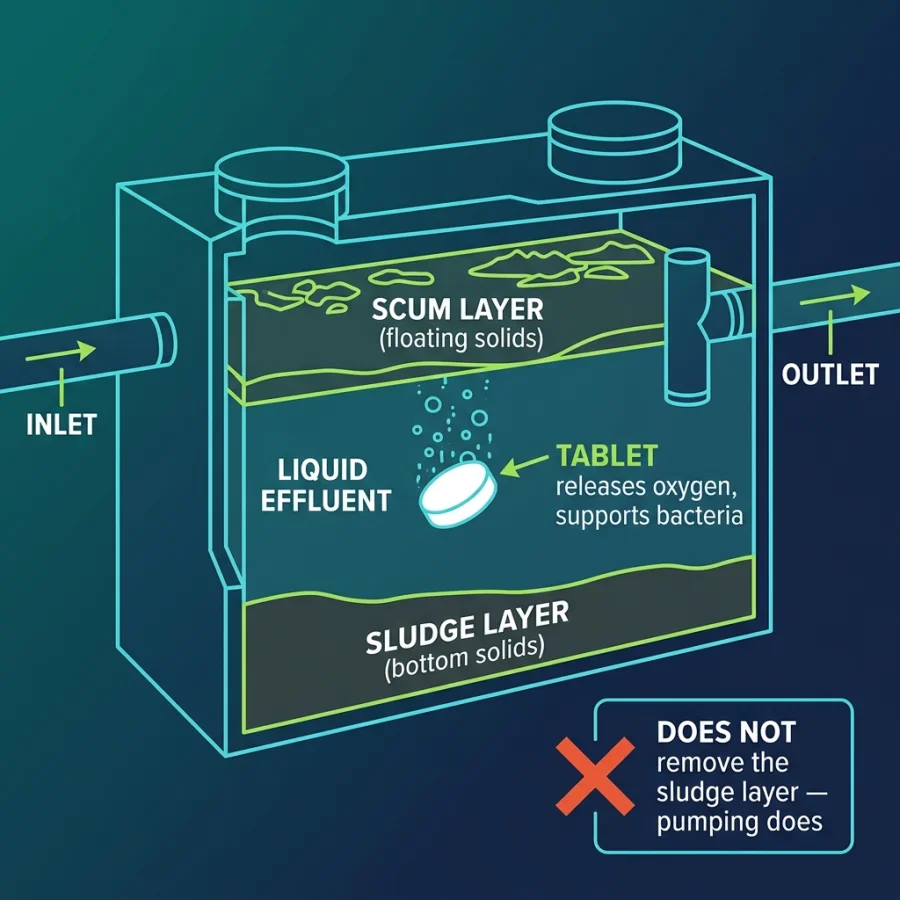
Treatment tabs are compressed tablets you flush down a toilet on a schedule. Each tablet usually contains an enzyme formula plus dried beneficial microorganisms designed to dissolve in your tank and reinforce the colony of anaerobic bacteria doing the real work below the surface.
Inside a healthy septic system, bacteria break down biodegradable waste into liquids, gases, and settled solids. The clarified effluent flows out to the leach field, while heavier material settles as sludge and lighter material floats as scum. Tabs are marketed to keep that biological activity running smoothly, especially in households where harsh cleaners, antibacterial products, or heavy bleach use can knock back the bacterial population.
Do septic tank treatment tabs actually work?
The practical answer is that tabs can help, but they are often oversold. A normally functioning tank already develops bacteria from the waste entering it. Tabs are best treated as optional routine maintenance for households that value consistent dosing—not as a repair or a replacement for pumping.
What tabs realistically support:
- Steadier wastewater treatment when bacterial counts dip.
- More consistent breakdown of biodegradable waste in the tank.
- Maintaining effluent quality heading to the drainfield.
What tabs cannot do:
- Dissolve accumulated sludge enough to skip pumping.
- Reverse a clogged or saturated leach field.
- Fix a structurally failing tank or broken baffle.
How do treatment tabs compare to other septic tank additives?
There are several formats of septic tank additives on the market. They mostly differ in convenience and concentration, not magic.
| Additive Type | How It’s Dosed | Best For | Pro’s Take |
|---|---|---|---|
| Treatment tabs | Flush 1 tablet, usually monthly | Hands-off routine maintenance | Most convenient; easy to stay consistent |
| Powder/packet | Mix or flush per dose | Targeted bacterial boosts | Good value, slightly more handling |
| Liquid enzyme | Pour down drain | Quick distribution | Fine, but easy to over- or under-dose |
| Chemical “openers” | Pour down drain | Marketed as clog fixes | Avoid harsh chemical types — they can harm bacteria |
Across all of these, biological products that add bacteria and enzymes are gentler on your system than caustic chemical drain treatments, which can actually disrupt the biological activity you’re trying to protect.
How often should you use septic tank treatment tabs?
Follow the product label first — formulations vary. As a general pattern:
- Standard households: one tablet per month is the common monthly maintenance rhythm.
- Larger tanks or heavy use: match tablet dosage to your tank capacity as the label directs.
- After heavy bleach or antibiotic use: resuming your normal dose helps the bacterial colony rebound.
More is not better. Overdosing won’t speed anything up and just wastes money. Consistency beats intensity.
What treatment tabs can’t replace: pumping and inspection
This is the part thin articles skip. No additive removes the physical solids that settle over time. The scum layer on top and the sludge accumulation on the bottom keep growing regardless of how good your biology is. When those layers get too thick, solids escape into the drainfield and cause drain field failure — the most expensive repair a homeowner faces.
That’s why pumping on a sensible pump-out interval matters more than any tablet. General EPA guidelines commonly cited in the industry suggest most households have their tank inspected and pumped on a regular multi-year cycle, with the exact timing depending on tank size and household load. Treatment tabs support the system between those visits — they don’t extend the interval indefinitely.
For the full routine, see our main septic tank treatment and maintenance guide, which walks through inspection timing, what to avoid putting down your drains, and how to read warning signs early.
How to choose a good septic treatment tab
When comparing products, check for:
- Live or dormant bacteria plus enzymes — an enzyme formula alone breaks down material temporarily; bacteria sustain the process.
- No harsh solvents or chemicals that could damage beneficial microorganisms.
- Clear dosing instructions tied to tank capacity.
- Septic-safe labeling rather than vague “drain” marketing.
A reliable, flush-and-forget option that keeps people consistent with their monthly maintenance is a good baseline pick.
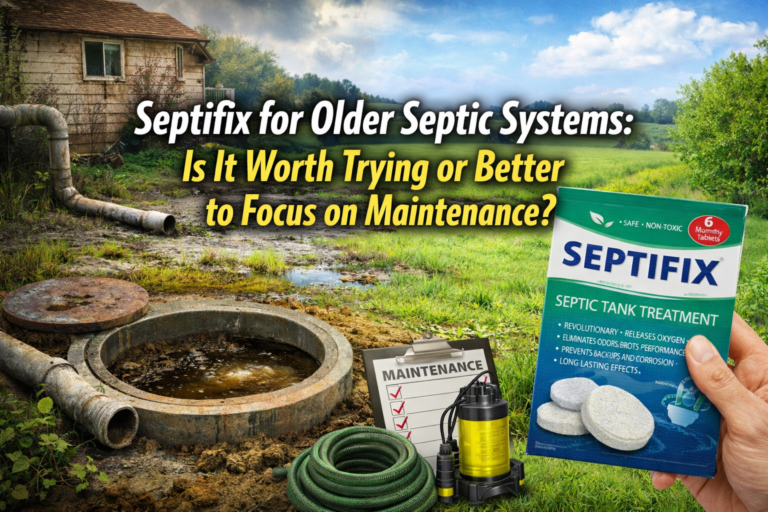
Can a simple monthly tablet really protect an aging septic system? For homeowners looking to proactively control odors and manage waste, this routine is worth exploring.
Check: Septifix Septic Tank Treatment Tabs →
For straightforward monthly dosing, a dedicated treatment tablet keeps the routine simple.
If you prefer a packet-based product that adds a strong bacterial and enzyme blend, this is a solid value choice.
For homes recovering after heavy cleaner or antibiotic use, a concentrated live-bacteria booster can help re-establish the colony faster.
When to call a professional
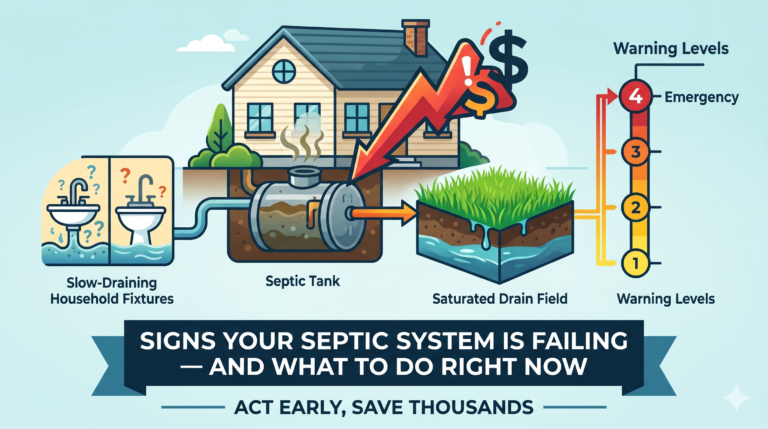
Tabs are routine maintenance. Call a licensed septic professional — don’t reach for more additives — if you notice any of these:
- Slow drains throughout the house at once, or gurgling fixtures.
- Sewage odors indoors or near the tank.
- Wet, spongy, or unusually green patches over the leach field.
- Sewage backing up into drains or toilets.
- You can’t remember your last pump-out, or you’re past your pump-out interval.
These point to physical problems — full tanks, blocked lines, or early drain field failure — that no tablet will solve. Catching them early is the difference between a routine pump and a five-figure drainfield replacement.
FAQ
Are septic tank treatment tabs safe for my system?
Yes, quality biological tabs are formulated to be septic-safe and support the bacteria your tank relies on. Avoid harsh chemical “drain openers,” which can harm beneficial microorganisms and disrupt wastewater treatment.
Do treatment tabs mean I can skip pumping?
No. Tabs support biological activity but don’t remove settled solids. You still need to pump on your normal pump-out interval based on tank capacity and household use.
How long do treatment tabs take to work?
They begin dissolving and seeding bacteria right away, but supporting a stable colony is gradual. Treat them as ongoing monthly maintenance, not an overnight fix for an existing problem.
Can tabs fix a slow drain or backup?
Not reliably. Slow drains or backups usually signal a full tank, a clog, or a saturated drainfield. Have it inspected rather than dosing more additives.
Compare the alternatives
If you are weighing brands before committing to a routine, these side-by-side comparisons cover the products homeowners ask about most:
- RID-X vs Septifix — the supermarket default, and where its powder format costs you consistency.
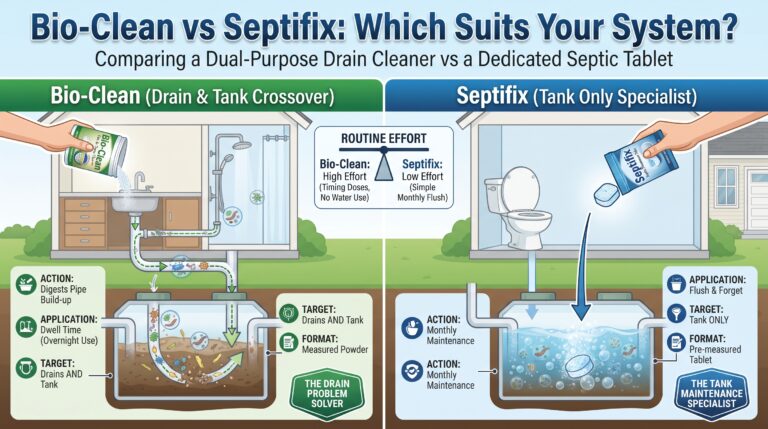
- Bio-Clean vs Septifix — a drain-and-tank crossover, and when the dual purpose is worth the extra effort.
- Instant Power Septic Shock vs Septifix — shock dosing versus monthly maintenance, and why they answer different questions.
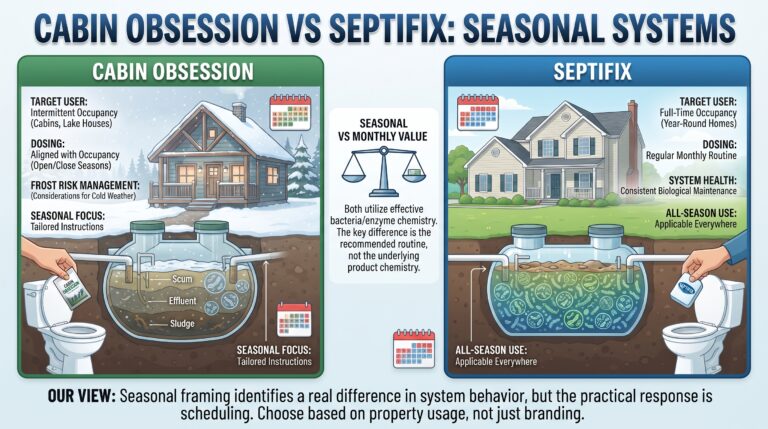
- Cabin Obsession vs Septifix — built for seasonal and intermittently used properties.
Essential septic guides
Affiliate disclosure: This guide contains affiliate links, including our Septifix partner link. If you purchase through one of these links, we may earn a commission at no additional cost to you. Our conclusions are based on product information and published guidance, not payment level.