Septic Additives vs Pumping: What Actually Prevents Backups and Drain Field Trouble?
⚠️ Affiliate Disclosure: This post contains affiliate links. As an Amazon Associate, I earn from qualifying purchases at no extra cost to you.
Septic Additives vs Pumping: What Actually Prevents Backups and Drain Field Trouble?
Homeowners often frame septic care as a choice between routine products and routine service. Should you buy additives every month, or should you just pump the tank on schedule? That question shows up again and again because pumping feels expensive in the moment, while additives feel cheap, simple, and proactive. But from a maintenance standpoint, the comparison is not really close.
Pumping and additives do not play the same role, and they should not be judged as interchangeable options. The U.S. Environmental Protection Agency states that septic additives are not recommended for normal domestic wastewater treatment because septic systems already contain the microorganisms they need to operate properly. By contrast, EPA and extension guidance repeatedly emphasize inspection and pumping as normal, necessary parts of care. That makes pumping a core maintenance action and additives, at best, an optional supplement.
Source: How to Care for Your Septic System | US EPA
What Pumping Actually Does
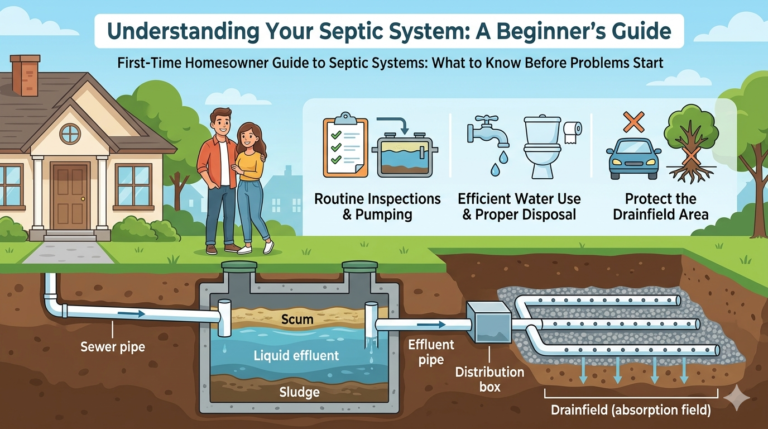
Pumping removes the sludge and scum that naturally build up in the septic tank over time. Those solids do not disappear on their own. Bacteria help break down some material, but a residual layer of solids always remains and accumulates with every flush and drain cycle. If too much sludge or scum stays in the tank, solids can migrate toward the outlet baffle and enter the drain field, where they clog the soil and create far more expensive problems than a standard pump-out ever would.
Penn State Extension is clear that sludge must be pumped out periodically to keep the system functioning properly. Most households should expect to pump every three to five years depending on tank size, household size, and usage habits. Skipping or indefinitely delaying pumping is one of the most common reasons drain fields fail prematurely.
To stay organized between service visits, it helps to keep a simple maintenance log. A laminated record card stored near your electrical panel or in a home binder works well for tracking pump dates, inspection notes, and technician contact information.
What Additives Claim to Do
Additives are typically sold as ways to support digestion, reduce odors, improve treatment efficiency, or reduce how often you need to pump. Products are marketed around bacterial cultures, enzymes, or chemical compounds. The sales pitch often sounds reasonable: if your system uses bacteria to break down waste, why not add more?
The honest answer is that a healthy, properly loaded septic tank already maintains a robust microbial population. Adding more bacteria from a packet or tablet does not meaningfully increase digestion rates under normal conditions. The existing colony self-regulates based on available food and environment. What additive marketing rarely addresses is that no product can remove the physical solids that accumulate at the bottom of the tank. Only mechanical pumping does that.
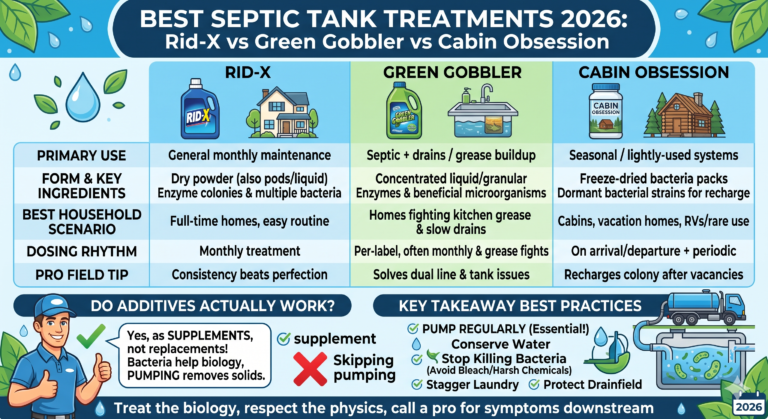
That said, some homeowners use bacterial additives after events that may disrupt tank biology, such as heavy antibiotic use by multiple household members, extended vacancy, or a system restart after repairs. In those specific situations, a product like RID-X Septic Tank Treatment may offer a modest benefit as a short-term recovery aid. It should be viewed as a supplement in unusual circumstances, not a substitute for scheduled pumping.
For households that want a more concentrated bacterial formula, Cabin Obsession Septic Tank Treatment is a well-reviewed option available on Amazon that delivers a high CFU count per dose. Again, this type of product works alongside pumping, not instead of it.
The Real Cost Comparison
A standard septic pump-out in 2026 typically costs between $300 and $600 depending on tank size, access, and regional labor rates. That cost spread over three to five years amounts to roughly $60 to $200 per year. Drain field replacement, by contrast, commonly runs between $5,000 and $20,000 or more depending on soil conditions, system size, and local regulations. The math is not subtle.
Monthly additives at $10 to $20 per treatment add up to $120 to $240 per year. If those additives are being used as a reason to delay pumping, you are spending money while increasing risk. If they are being used alongside a proper pumping schedule, the cost is manageable but the benefit is marginal for most systems.
Protecting Your Drain Field
The drain field is the most expensive and least replaceable part of a conventional septic system. Once the soil in a drain field becomes saturated with biomat or clogged with suspended solids, recovery options are limited and costly. The single most effective thing a homeowner can do to protect the drain field is keep solids out of it, and the only reliable way to do that is to pump the tank before sludge and scum levels get too high.
Beyond pumping, water conservation matters significantly. Overloading the system with excess water prevents adequate settling time in the tank and pushes partially treated effluent into the drain field faster than the soil can handle it. Spreading laundry loads across the week rather than running multiple loads in a single day is a simple habit that reduces hydraulic stress on the system.
Installing a quality inlet baffle or effluent filter on the tank outlet is another practical step. An effluent filter catches suspended solids before they leave the tank and can be cleaned during each pump-out visit. Products like the Polylok Septic Effluent Filter are widely used and compatible with standard septic tank outlet tees. Your pumping contractor can advise on installation if your tank does not already have one.
What You Should Actually Do
The practical guidance is straightforward. Have your tank inspected and pumped on a schedule appropriate to your household. The EPA recommends every three to five years as a general baseline, but your pumping contractor can give you a more specific recommendation based on actual sludge and scum measurements taken during service. Keep a written record of every pump-out and inspection. Know where your tank and drain field are located so you can protect them from vehicle traffic, deep-rooted plantings, and construction activity.
If you choose to use additives, use them as a low-cost optional supplement in situations where tank biology may have been disrupted, not as a reason to extend the interval between pump-outs. Do not let additive marketing convince you that you are maintaining your system when the tank has not been physically serviced in years.
Frequently Asked Questions
Do septic additives actually work?
The scientific and regulatory consensus in 2026 is that additives are unnecessary for normally functioning septic systems. The EPA does not recommend them as a standard practice. Some bacterial products may offer modest benefit after events that disrupt tank biology, such as extended antibiotic use or system restart, but no additive eliminates the need for periodic pumping. Solids accumulate physically and must be removed mechanically.
How do I know when my septic tank needs to be pumped?
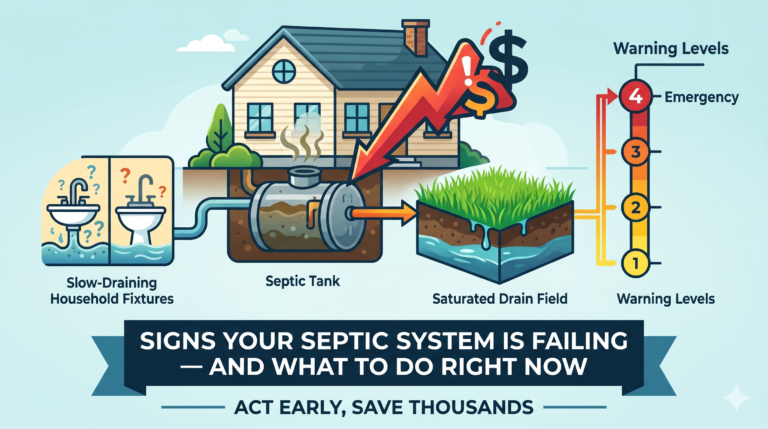
The most reliable method is to have a licensed septic professional measure sludge and scum levels during a routine inspection. A general rule of thumb is to pump when the combined sludge and scum layers occupy more than one-third of the tank’s liquid capacity. For most households, this happens every three to five years. Warning signs that pumping is overdue include slow drains throughout the house, gurgling sounds in plumbing, wet or odorous areas over the drain field, and sewage odors indoors or near the tank.
Can I use RID-X or similar products to skip a pump-out?
No. RID-X and similar bacterial treatments cannot remove the accumulated sludge and scum that settle in the bottom and float at the top of your tank. Those physical solids only come out through pumping. Using additives while skipping scheduled pump-outs increases the risk of solids reaching your drain field, which can cause permanent and costly damage. Additives are a supplement, never a replacement for service.
What is the most important thing I can do to protect my drain field?
Keep your tank pumped on schedule. The drain field fails most often because solids overflow from an overloaded or neglected tank. Secondary steps include conserving water to reduce hydraulic load, avoiding flushing non-biodegradable items, keeping vehicles and heavy equipment off the drain field area, and not planting trees or deep-rooted shrubs near the leach lines. Installing an effluent filter on your tank outlet is also a cost-effective way to add a layer of protection between the tank and the field.
The Bottom Line
Septic additives and septic pumping are not competing options. They operate in entirely different categories. Pumping is a non-negotiable maintenance requirement for any tank-based septic system. Additives are an optional consumer product with limited and context-specific benefit. Treating them as interchangeable choices is the framing the additive industry benefits from, not the one that protects your system.
If you are not sure when your tank was last pumped, or if you have never had it inspected since moving into your home, that is the place to start. Schedule a professional inspection, get a baseline on your sludge and scum levels, and build a pumping schedule from there. Your drain field will last longer, your system will function more reliably, and you will avoid the kind of repair bills that make a $400 pump-out look like the bargain it truly is.
Ready to take better care of your septic system? Start by scheduling a professional pump-out and inspection if it has been more than three years since your last service. While you wait for your appointment, browse our related guides on how often to pump your septic tank and protecting your drain field from early failure. Small habits and timely service are the two things that matter most — and both are entirely within your control.