Best Septic-Safe Toilet Paper (2026): Buying Guide
Quick Answer: What’s the best septic-safe toilet paper?
The best septic-safe toilet paper is a rapidly dissolving, biodegradable product — most often a single-ply or a lightly constructed two-ply — that breaks apart quickly in water so your septic tank can process it without building excess sludge.
- Look for: “septic-safe” or “rapidly dissolving” on the label, minimal added lotions/scents.
- Single-ply generally breaks down fastest; a thin two-ply can also work if it disperses well.
- Avoid: flushable wipes, thick quilted paper, and anything that stays intact after a quick jar-shake test.
- Solid budget picks: Scott 1000 and dedicated RV/marine dissolvable rolls are reliable performers.
Protect the whole system: Toilet paper choice helps, but inspections, sensible water use and pumping matter more.
Open the septic maintenance checklist →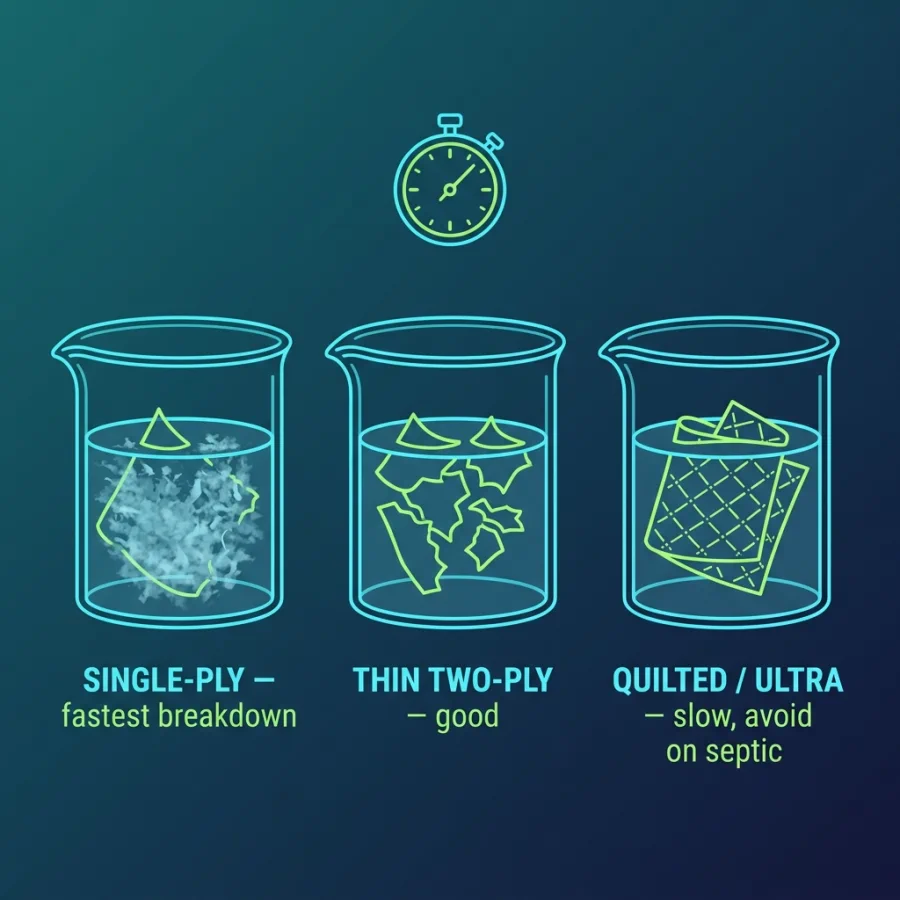
Why does toilet paper choice matter for a septic system?
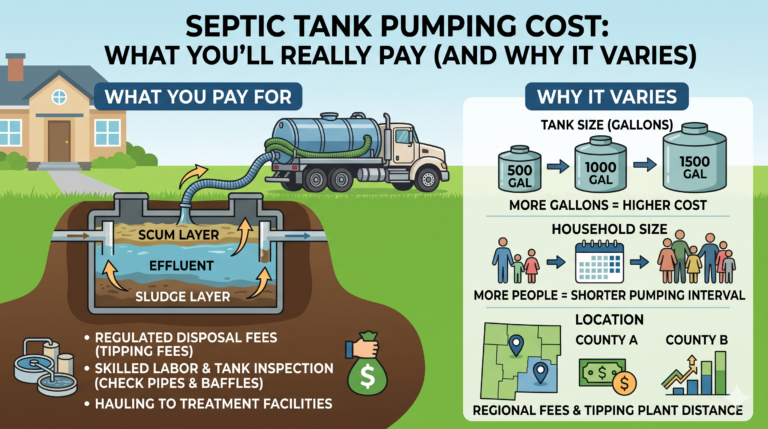
A septic tank works by giving wastewater time to settle. Heavy solids sink to form a sludge layer, grease and lighter material float into the scum layer, and the clarified liquid in the middle — the effluent — flows out to the drainfield (also called the leach field) to soak into the soil.
Inside the tank, anaerobic bacteria slowly digest organic material. Toilet paper is organic, so it does get broken down — but paper that resists dissolving hangs around longer, adds to the sludge layer, and shortens the time between pump-outs. The faster your paper disperses, the less it contributes to buildup.
Choosing the right paper won’t fix a failing system, but over years it meaningfully affects your pump-out interval and reduces the risk of clogs heading toward the drain field.
What makes a toilet paper “septic-safe”?
There’s no single certifying body that stamps every roll, so “septic-safe” is partly a marketing term. What actually matters is dissolvability — how quickly and completely the paper breaks apart in water.
The traits that count
- Fast dispersal: The paper should fall apart into small fibers, not stay as intact sheets.
- Biodegradable fiber: Standard wood-pulp paper is fine; the key is that it degrades rather than resisting bacteria.
- Minimal additives: Heavy lotions, dyes, and fragrances add material the tank has to process and don’t help dissolvability.
- Reasonable thickness: The more layers and embossing, the slower the breakdown — generally speaking.
Want to know how your current brand behaves? Drop a few sheets into a clear jar half-filled with water, cap it, and shake for about 10 seconds. Septic-friendly paper turns cloudy and breaks into fibers fast. If your sheets are still holding together as recognizable squares, that’s paper spending extra time in your tank as solids.
Single-ply vs. two-ply: which is better for a septic tank?
A common question is whether single-ply is always better. The practical answer is that dispersal matters more than the ply count printed on the package.
As a rule, single-ply uses less material per wipe and tends to break down faster, which is easier on your tank. A well-made, thin two-ply can perform nearly as well and is more comfortable, so plenty of homeowners land there. What you want to avoid is thick, quilted, “ultra” multi-ply paper marketed on softness and durability — durability is exactly the wrong trait inside a septic system.
| Type | Dissolvability | Comfort | Septic verdict |
|---|---|---|---|
| Single-ply | Fastest | Basic | Best for the tank |
| Thin two-ply | Good | Good | Solid everyday choice |
| Quilted / ultra multi-ply | Slow | Highest | Avoid on septic |
| RV / dissolvable toilet paper | Very fast | Basic | Great for heavy use or small tanks |
| Flushable wipes | Poor | High | Do not flush |
Which septic-safe toilet paper do you actually recommend?
The following categories cover common household needs. Choose based on comfort preferences and how heavily your household uses the system.
Reliable everyday pick
For an easy-to-find option that disperses well and doesn’t cost a premium, Scott 1000 is a long-standing favorite among septic owners because it’s thin and breaks down readily.
Quick answer: Septic-safe paper reduces what your tank has to break down. For the routine side of the job between pumps, Septifix is our featured tablet option — check tank size and current package directions first.
Dedicated septic/RV dissolvable paper
If you have a smaller tank, a busy household, or you just want the fastest breakdown possible, a purpose-made RV toilet paper or dissolvable toilet paper is worth the small upgrade — these are engineered to disperse almost immediately.
Comfort-focused septic-safe two-ply
If single-ply is a non-starter at your house, a two-ply specifically labeled septic-safe gives you a softer feel while still dispersing reasonably well.
Don’t chase a paper switch as a cure for a slow-draining system. Toilet paper is a maintenance factor, not a repair. If you’re already noticing backups or odors, the paper aisle isn’t where your problem lives — see the “when to call a professional” note below.
What about flushable wipes and “septic-safe” wipes?
Short version: keep them out of the toilet. Even wipes labeled “flushable” or “septic-safe” resist breaking down far more than toilet paper. They tend to stay intact, contribute heavily to the scum and sludge layers, and are a leading cause of clogs — both in the tank and in the pipes leading to it. The trash can is the right place for wipes, even the good ones.
The same caution applies to paper towels, facial tissue, cotton products, and “septic-safe” tampons or liners. Toilet paper and human waste are the only things that belong down the drain.
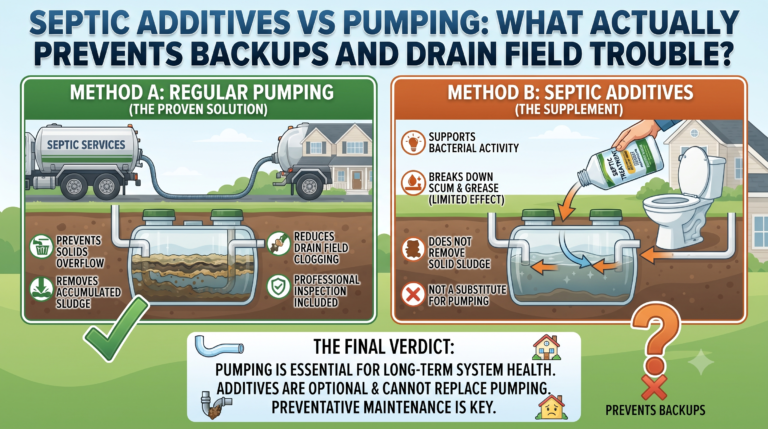
Do I still need septic additives if I use the right paper?
Generally, no. A healthy septic system already hosts the anaerobic bacteria it needs, and normal household use keeps that population going. Most homeowners never need to add enzyme boosters or bacterial septic additives to a well-maintained tank.
Where additives can have a place is in specific situations — for example, a system that’s been through heavy antibacterial cleaner use. Even then, they’re a supplement, not a substitute for pumping. If you want a fuller breakdown of what helps and what’s marketing, our complete septic treatment and maintenance guide walks through it in depth.
How does toilet paper affect my pump-out schedule?
Every sheet that doesn’t dissolve adds to the sludge layer. As that layer grows, it eats into your usable tank capacity and pushes solids closer to the outlet — which risks carrying material into the drainfield and causing drain field clogging. Over time, the soil pores and the natural biomat at the trench walls can become overwhelmed, and drainfield repairs are the most expensive fix in the septic world.
Using a fast-dissolving paper slows sludge accumulation, which can stretch the time between pump-outs slightly. But it doesn’t eliminate the need to pump. Regular inspection and pumping remain the foundation of a healthy system.
Habits that protect your tank alongside good paper
- Use only as much paper as you need; heavy wadding overwhelms even good products.
- Spread out laundry and dishwasher loads to avoid flooding the tank with wastewater at once.
- Never flush wipes, grease, or chemicals.
- Get the tank inspected and pumped on the schedule a professional recommends for your household size.
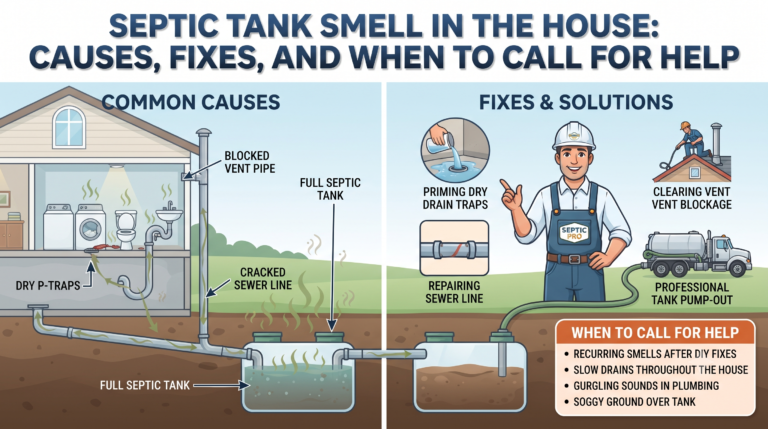
Switching toilet paper won’t solve these — call a licensed septic contractor if you notice slow drains throughout the house, gurgling toilets, sewage odors indoors or over the drainfield, wet or unusually green patches above the leach field, or sewage backing up. These are signs of a system problem or an overdue pump-out, and delaying can turn a routine service into a full drainfield replacement.
FAQ
Is Scott 1000 actually septic-safe?
Yes — Scott 1000 is thin and disperses quickly, which is exactly what a septic system wants. It’s one of the most commonly recommended everyday options for septic households.
Does septic-safe toilet paper cost more?
Not necessarily. Many budget single-ply and value brands dissolve well. Dedicated dissolvable and RV papers can cost a bit more per roll, but you don’t have to pay a premium to get septic-friendly performance.
Can I flush “flushable” wipes if I use them sparingly?
It’s best not to. Flushable wipes don’t break down like toilet paper and build up in the tank and pipes even in small amounts. Throw them in the trash instead.
Will better toilet paper let me skip pumping my tank?
No. Good paper reduces how fast solids accumulate, but every septic tank still needs periodic inspection and pumping. Think of paper choice as one helpful habit, not a replacement for maintenance.
Quick answer: A treatment supports routine maintenance; it does not replace pumping, inspection, or repair. If the tablet format suits you, compare package options and check your tank size before ordering.
Essential septic guides
Affiliate disclosure: This guide contains affiliate links, including our Septifix partner link. If you purchase through one of these links, we may earn a commission at no additional cost to you. Our conclusions are based on product information and published guidance, not payment level.