Best Septic Tank Treatment: A Pro’s Honest Guide to What Actually Works
Quick Answer: What’s the best septic tank treatment?
The best septic tank treatment for most households is a routine of smart habits plus regular pumping — not a bottle of additive. If you do use a product, choose a bacteria-and-enzyme bio-activator designed for residential systems rather than chemical drain openers, which can harm the beneficial bacteria your tank depends on.
- Foundation: water conservation, keeping grease and non-biodegradables out, and pumping on schedule.
- Optional support: a quality enzyme/bacteria additive if your household uses antibacterial products heavily or after antibiotic use.
- Avoid: harsh chemicals, “miracle” tank cleaners, and anything promising you’ll never pump again.
How does a septic system actually work?
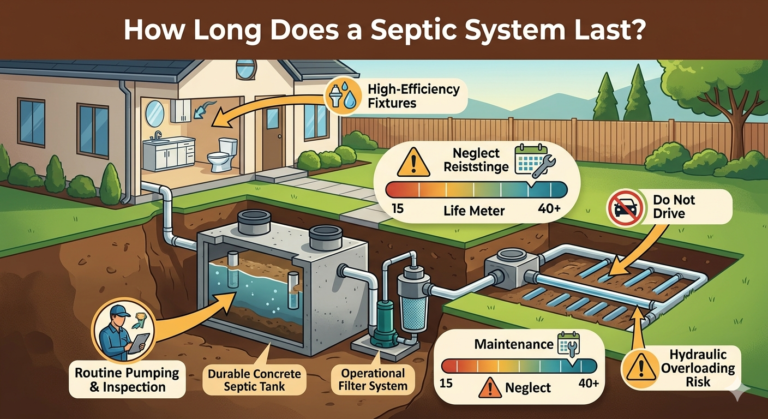
Before you can pick a treatment, you need a clear picture of what’s happening underground. A conventional septic system has two main parts: the tank and the leach field (also called the drainfield).
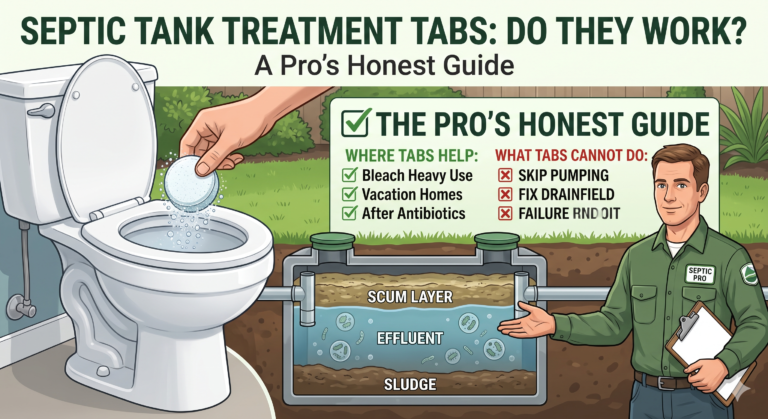
Wastewater from your home flows into the tank, where it separates into three layers. Solids settle to the bottom as sludge. Fats, oils, and grease float to the top as the scum layer. The relatively clear liquid in the middle — the effluent — exits through a baffle and travels to a distribution box, which spreads it across the leach field for final filtration into the soil.
Inside the tank, oxygen is scarce, so anaerobic bacteria do the heavy lifting of breaking down solids. Some advanced systems add a chamber with aerobic bacteria, which work faster but require an air pump. This biological breakdown is the heart of on-site wastewater treatment — and it’s why protecting your bacteria matters more than any product on a shelf.
Do septic tank additives actually work?
This is the question I get most often, and the honest answer is: it depends, and the marketing oversells it. Septic tank additives generally fall into two camps — biological (bacteria and enzymes) and chemical.
A healthy tank already contains billions of beneficial bacteria that arrive naturally in household waste. In a normally functioning system, you usually don’t need to add more. The bacteria population is self-sustaining as long as you aren’t routinely killing it off.
That said, there are real situations where a biological additive can help:
- After a course of antibiotics, which can pass through and knock down your bacteria count.
- In homes that use a lot of antibacterial soaps, bleach, or harsh cleaners.
- For a vacation home or seasonal property where the system sits idle for long stretches.
- To help re-establish bacteria after the tank has been pumped completely dry.
What additives cannot do: replace pumping, dissolve a compacted sludge layer back into nothing, or fix a failing drainfield. Be deeply skeptical of any product claiming you’ll “never need to pump again.” Pumping removes the inorganic solids and accumulated sludge that no bacteria can digest. For a deeper walkthrough of building a complete maintenance routine, see our main guide to septic tank treatment and care.
What are the different types of septic tank treatment?
Here’s how the common options compare so you can match the right approach to your situation.
| Treatment Type | What It Does | Best For | Watch Out For |
|---|---|---|---|
| Bacteria additive (bio-activator) | Adds live or dormant beneficial bacteria | Idle homes, post-antibiotic recovery | Won’t replace pumping |
| Enzyme treatment | Helps break down fats, proteins, starches | Households with heavy grease load | Effect is supplemental, not a fix |
| Combined bacteria + enzyme | Both seeding and breakdown support | General routine support | Quality varies widely by brand |
| Chemical/inorganic treatments | Marketed to “clean” the tank | Rarely recommended | Can kill bacteria, harm leach field |
| Routine pumping (the real foundation) | Physically removes sludge and scum | Every household | Skipping it causes drain field failure |
What’s the difference between an enzyme treatment and a bacteria treatment?
An enzyme treatment supplies catalysts that speed up the breakdown of specific waste — fats, proteins, and starches — but enzymes themselves aren’t alive and get used up. A bacteria bio-activator introduces the living microorganisms that do the ongoing digestion and reproduce inside the tank. Many quality products combine both: enzymes for an immediate boost, bacteria for sustained populations.
Which septic treatments does a pro actually recommend?
I’ll be straight with you: I recommend products as supplements to good habits, never as substitutes. If you’ve decided a biological additive fits your situation, here are the categories I’d point a homeowner toward.
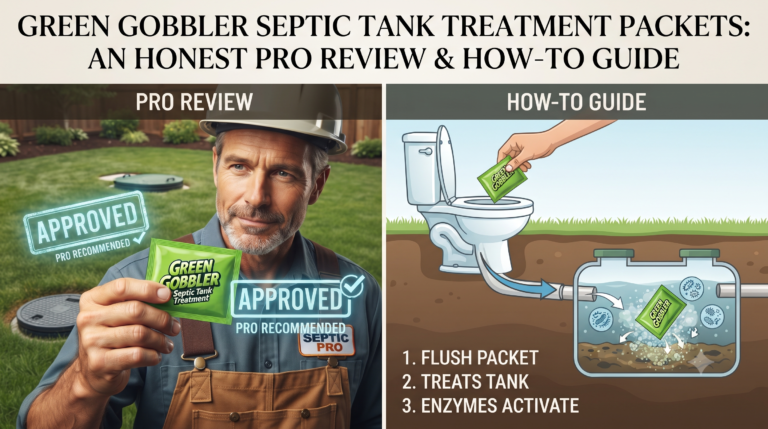
Septifix Can a simple monthly tablet really protect an aging septic system? For homeowners looking to proactively control odors and manage waste, this routine is worth exploring.
Check: Septifix Septic Tank Treatment Tabs →
For routine monthly support in an active household, a combined bacteria-and-enzyme product in pre-measured packets is the easiest to dose correctly and hard to overdo.
YOU’RE JUST ONE FLUSH AWAY FROM A HEALTHY SEPTIC SYSTEM! easy flush dissolving packets are specially formulated to help break down waste and maintain a properly functioning septic system. This is the easiest and most efficient way to prevent expensive septic tank backups and drain field repairs. Just flush one packet down your toilet each month!
For homes recovering from heavy antibiotic use or a slow, sluggish system, a higher-count live bacteria treatment can help rebuild the population faster.
What should you NEVER put in a septic system?
The fastest way to wreck an expensive system is to abuse it. These habits do far more damage than any additive can repair: (For regulatory context, see the EPA Septic Systems Overview.)
- Grease, fats, and oils: They harden, thicken the scum layer, and can clog the system. If you have a kitchen grease trap, keep it serviced — and never wash grease down the drain regardless.
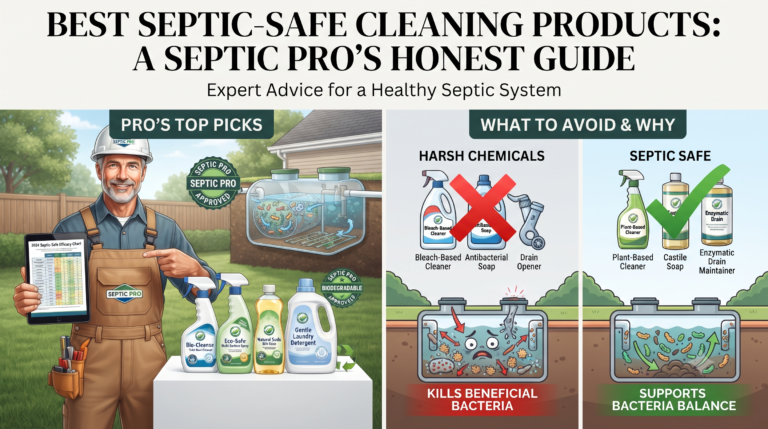
- Harsh chemicals: Bleach in volume, drain openers, paint thinners, and pesticides kill the bacteria you depend on.
- Non-biodegradables: “Flushable” wipes (they aren’t), feminine products, paper towels, cat litter, and cigarette butts. They don’t break down and fill the tank with junk.
- Excess water: Overloading the system pushes solids toward the leach field before they settle. Fix running toilets and spread out laundry loads.
- Pharmaceuticals: Don’t flush unused medications.
How often should you pump a septic tank?
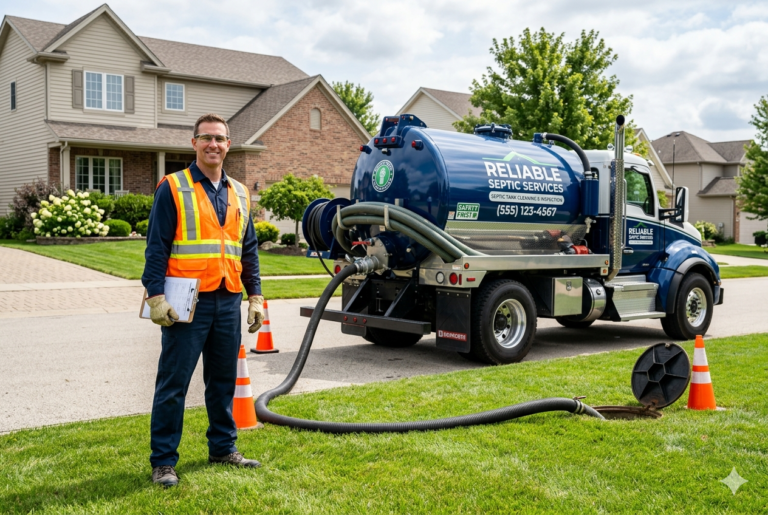
Pumping is the single most important maintenance task, and no additive changes that. The right pump-out interval depends on tank size and how many people use it. As a general rule of thumb in the industry, many households fall somewhere in the every-three-to-five-year range — but a small tank serving a large family may need it sooner, while a large tank serving one or two people may go longer.
The only way to know for sure is to have your sludge and scum layers measured. When the combined solids approach the point where they could reach the baffle or distribution box, it’s time to pump. General EPA guidelines for homeowners emphasize regular inspection and pumping as the core of system care; check your state and local requirements, since some areas mandate specific inspection schedules.
What about cesspools and holding tanks?
Not every on-site system is a true septic tank. A holding tank has no drainfield at all — it simply stores wastewater until it’s pumped out, so additives do little and regular pumping is everything. An older cesspool is essentially a pit that lets liquid seep directly into the surrounding soil; these are being phased out in many areas and don’t treat effluent the way a modern septic system does. If you have either, talk to a local pro about your specific maintenance and compliance obligations.
What are the warning signs of drain field failure?
A failing drainfield is the most expensive repair in this whole subject, often running into the thousands. Catching the early signs can save you. Watch for:
- Slow drains throughout the house, not just one fixture.
- Gurgling sounds in plumbing.
- Sewage odors indoors or outside near the tank or field.
- Soggy, spongy ground or unusually lush green grass over the leach field.
- Sewage backing up into the lowest drains in the home.
These symptoms mean effluent isn’t filtering properly through the soil. No bottle of bacteria fixes a saturated or clogged field — that’s a job for diagnosis and possible repair.
When should you call a professional?
Call a licensed septic professional if you notice any of the following:
- Sewage backing up into your home or pooling on the ground.
- Persistent odors that don’t clear up.
- You can’t remember the last pump-out, or it’s been more than five years.
- You’re buying a property and need a system inspection.
- You suspect drain field failure or a damaged baffle or distribution box.
Septic gases are dangerous and tanks can collapse — never enter a tank yourself, and don’t remove lids with children or pets around. When in doubt, get a pro out before a small problem becomes a system replacement.
FAQ
Will a septic treatment unclog my drain field?
No. Once a drainfield is clogged or saturated, additives won’t restore it. Some products are marketed for this, but the realistic fixes are professional diagnosis, resting the field, or replacement. Prevention through pumping and water conservation is your only reliable protection.
Is Rid-X safe to use every month?
Used as directed, combined bacteria-and-enzyme products are generally formulated for monthly dosing and won’t harm a healthy system. Just remember they supplement, not replace, your pumping schedule. If your system is working fine and you maintain good habits, monthly dosing is optional, not essential.
Can I make my own septic treatment?
You’ll see DIY recipes online involving yeast, sugar, or rotten meat. They’re inconsistent at best and a waste of money at worst. There’s no reliable evidence these match the bacteria counts in a purpose-made bio-activator. If you want to support your bacteria, a quality commercial product or simply good habits will serve you better.
Does bleach kill the bacteria in my septic tank?
In normal cleaning amounts, occasional bleach use usually won’t crash a healthy system — the tank is large and the bacteria recover. The danger is heavy, routine use of bleach, antibacterial cleaners, and drain chemicals, which can suppress the anaerobic bacteria your tank relies on. Moderation is the key.
The bottom line
The best septic tank treatment isn’t a product — it’s a habit. Conserve water, keep grease and chemicals out, never flush non-biodegradables, and pump on schedule. A quality enzyme or bacteria additive can be a smart supplement in specific situations like idle homes or post-antibiotic recovery, but it earns its place as a helper, not a hero. Treat your system with respect and it can quietly serve your home for decades.