Best Septic-Safe Cleaning Products: A Septic Pro’s Honest Guide
Quick Answer
The best septic-safe cleaning products are ones that are biodegradable, low in harsh surfactants, and free of chlorine bleach, ammonia, and antibacterial agents that kill the beneficial bacteria your septic tank depends on. In practice, that means simple plant-based cleaners, mild dish soap, vinegar, and baking soda for everyday jobs.
- Choose: biodegradable, phosphate-free, fragrance-light cleaners
- Avoid: chlorine bleach, antibacterial soap, and caustic drain cleaner
- Rule of thumb: if it disinfects aggressively, it also harms your microbial balance
- Everyday truth: less product, used less often, protects the system more than any “septic-safe” label
The form you have selected does not exist.
Why do cleaning products matter for a septic system?
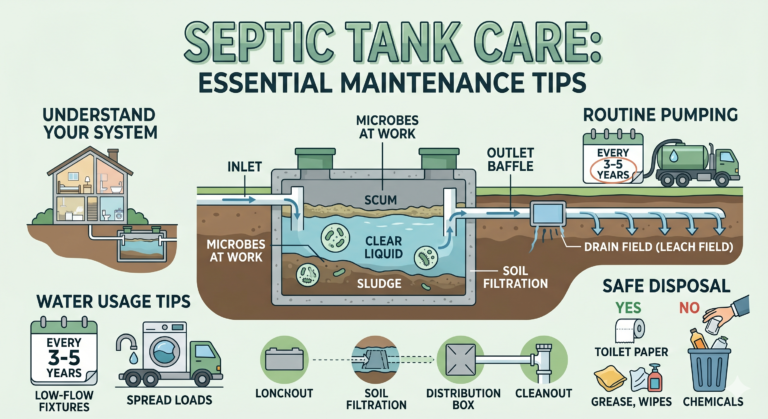
Your septic system isn’t just a buried tank — it’s a small living treatment plant. Inside the septic tank, anaerobic bacteria break down solids into a settled sludge layer on the bottom and a floating scum layer on top. The liquid in the middle, called effluent, flows out to the drainfield (also called a leach field), where it slowly filters through soil.
That whole process runs on beneficial bacteria. When cleaning products full of disinfectants and heavy surfactants go down your drains, they travel with the gray water and wastewater straight into the tank. Enough of the wrong chemicals slows digestion, upsets the pH balance, and can push more solids downstream than the system was designed to handle.
Over 15 years in the field, the pattern is consistent: homes that use gentle products and space out cleaning tend to have healthier tanks and longer intervals between service. Homes that douse everything in bleach and drain cleaner tend to call sooner — and pay more.
What makes a cleaning product “septic-safe”?
There’s no single legal definition, so the label alone isn’t enough. Here’s what actually matters when you read the ingredients and claims.
- Biodegradable: the product breaks down naturally instead of lingering in the tank.
- Low or plant-derived surfactants: surfactants cut grease, but harsh ones can disrupt the microbial balance.
- No chlorine bleach or ammonia: both are effective disinfectants — which is exactly the problem inside a tank.
- Not antibacterial: antibacterial soap is designed to kill bacteria, including the good kind.
- Phosphate-free and fragrance-light: gentler on the soil percolation in your leach field.
- Near-neutral pH: extreme acids and bases stress the bacterial population.
A product marked “septic-safe” or “EPA-approved” for a specific use is a reasonable starting point, but I’d still rather see a short, recognizable ingredient list than a marketing badge. (For regulatory context, see the EPA Septic Systems Overview.)
Which cleaning products are safe vs. harmful for septic tanks?
This is the comparison I wish every homeowner had taped inside a cabinet door.
| Product / Category | Septic Impact | Verdict |
|---|---|---|
| Plant-based / biodegradable all-purpose cleaners | Break down easily, gentle on bacteria | ✅ Best choice |
| Mild dish soap | Fine in normal amounts | ✅ Safe |
| Vinegar & baking soda | Effective, low residue, pH-friendly in small doses | ✅ Safe |
| Enzyme cleaners | Help break down organic matter; support digestion | ✅ Safe |
| Chlorine bleach | Kills beneficial and anaerobic bacteria | ⚠️ Sparingly at most |
| Antibacterial soap | Designed to kill bacteria | ⚠️ Avoid regular use |
| Caustic/chemical drain cleaner | Harsh on pipes, bacteria, and pH balance | ❌ Avoid |
| Toilet bowl tablets with bleach | Continuous slow-release disinfectant | ❌ Avoid |
What about occasional bleach use?
Occasional, diluted use of chlorine bleach for cleaning a toilet or surface generally won’t wreck a healthy system. The trouble is habitual, heavy use — bleach poured down drains daily, or bleach tablets sitting in the tank of your toilet releasing disinfectant into every flush. A single household using bleach constantly can meaningfully suppress the bacterial activity in a normal-sized tank.
What are the best septic-safe cleaning products by task?
Rather than one “magic” product, think in categories. Here’s how I’d stock a septic-friendly home.
All-purpose surface cleaning
For counters, sinks, and general surfaces, a biodegradable plant-based all-purpose cleaner does the job without loading your wastewater with harsh chemistry. For most everyday messes, a diluted plant-derived cleaner is my pro pick.
Kitchen-Bathroom Cleaner-Degreaser
Safely remove grease and grime with our pH-balanced, plant-based cleaner. It’s biodegradable, surface-safe, and leaves your home smelling naturally fresh with a hint of parsley.
Drain maintenance (instead of chemical drain cleaner)
Chemical drain cleaner is one of the worst things you can put through a septic system. Instead of a caustic product that harms pipes and bacteria, use a routine enzyme-based maintenance treatment to keep organic buildup in check. Enzyme cleaners work with your system, not against it.
Bacterial support treatment
If your household leans heavily on cleaning products, or you’ve recently had a stretch of antibiotic use in the home, a periodic beneficial-bacteria additive can help maintain microbial balance. Treat it as insurance, not a substitute for good habits.
How do cleaning chemicals affect the drainfield and biomat?
People focus on the tank and forget the drainfield, which is usually the most expensive part to repair. As effluent leaves the tank through the distribution box and spreads across the leach field, a natural layer called the biomat forms in the soil. That biomat is living material that actually helps treat the wastewater as it moves through soil percolation.
Harsh chemistry that survives the tank keeps traveling downstream. Over time, a steady diet of disinfectants and heavy surfactants can disrupt the biological activity in the drainfield and interfere with how well the soil accepts water. A struggling drainfield shows up as slow drains, soggy ground, or backups — problems no cleaning product can reverse.
Does it matter whether you have a septic tank or a holding tank?
Yes. A conventional septic system relies on bacteria to treat waste before effluent goes to the drainfield, so protecting the bacteria is critical. A holding tank, by contrast, simply stores wastewater until it’s pumped out — there’s no biological treatment and no leach field to protect.
If you have a holding tank, cleaning-product chemistry matters less for treatment, though you’ll still want to avoid anything corrosive. If you have a standard septic system, everything in this guide applies fully.
Simple habits that protect your septic system
The products help, but habits do the heavy lifting. Here’s what I recommend to every homeowner:
- Use less product. Most people use two to three times what they need.
- Space out heavy cleaning. Don’t dump bleach, drain cleaner, and disinfectants all in one day.
- Keep grease and food solids out of drains. They build the scum and sludge layers fast.
- Never flush chemicals, paints, or solvents. They poison the whole system.
- Spread out laundry. A dozen loads in one day floods the tank with gray water and pushes solids toward the drainfield.
- Stick to your pump-out interval. Regular pumping is the foundation everything else rests on.
When to call a professional
Cleaning-product choices are preventive. Once you see warning signs, it’s time for a pro — not another additive. Call a licensed septic professional if you notice:
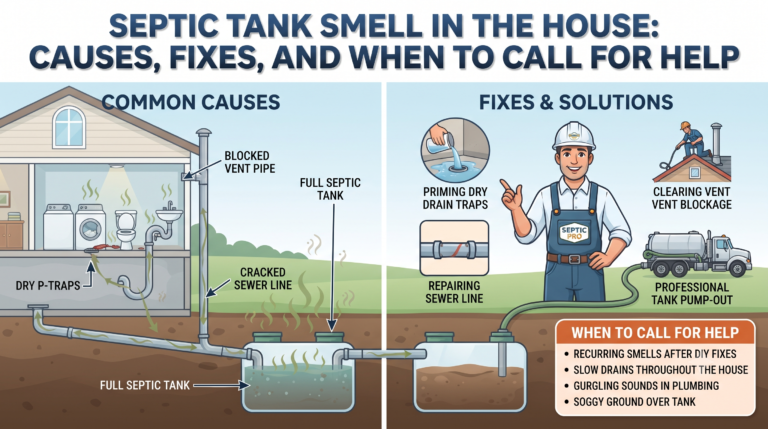
- Slow drains or gurgling throughout the house
- Sewage odors indoors or over the drainfield
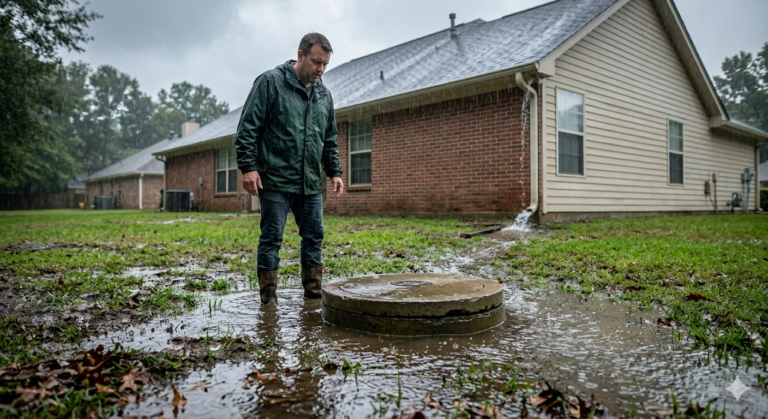
- Standing water, soggy soil, or unusually green grass over the leach field
- Backups after normal water use
- You can’t remember your last pump-out, or you’re past your recommended pump-out interval
A professional can inspect the tank, distribution box, and drainfield, measure your sludge and scum layers, and tell you whether you’re dealing with a maintenance issue or something structural. Guessing with chemicals usually costs more than an inspection.
Frequently asked questions
Are enzyme cleaners safe for septic systems?
Yes. Enzyme cleaners are generally septic-safe because they help break down organic matter rather than killing bacteria. They’re a solid alternative to caustic drain cleaner for routine maintenance, though they won’t clear a fully blocked line the way a plumber’s tools will.
Can I ever use chlorine bleach with a septic tank?
Occasional, well-diluted use for cleaning is usually tolerable in a healthy system. The problem is frequent, heavy use and bleach-releasing toilet tablets, which continuously suppress the beneficial and anaerobic bacteria your tank needs. When possible, choose non-chlorine options.
Is antibacterial soap bad for septic systems?
For routine handwashing and dishes, antibacterial soap isn’t ideal because it’s specifically designed to kill bacteria — the opposite of what a septic tank wants. Ordinary mild soap works fine for everyday cleaning and is gentler on your microbial balance.
Do I need a bacteria additive if I use septic-safe products?
Most well-maintained systems with normal use don’t strictly need additives. They can help households that use a lot of cleaning products or have had heavy antibiotic use, but they’re a supplement to regular pumping and good habits — never a replacement for them.
This guide reflects general septic maintenance knowledge and field experience. Your local soil, system design, and household size all affect what’s right for you — when in doubt, have a licensed professional evaluate your specific system.