Best Septic Tank Treatment 2026: Top 7 Compared
Quick answer: A septic treatment may be useful as an optional maintenance product, but it cannot replace pumping, inspection, or repair. For homeowners who prefer an easy tablet format, Septifix is our featured option to compare first. Check your tank size and the current package directions before ordering.
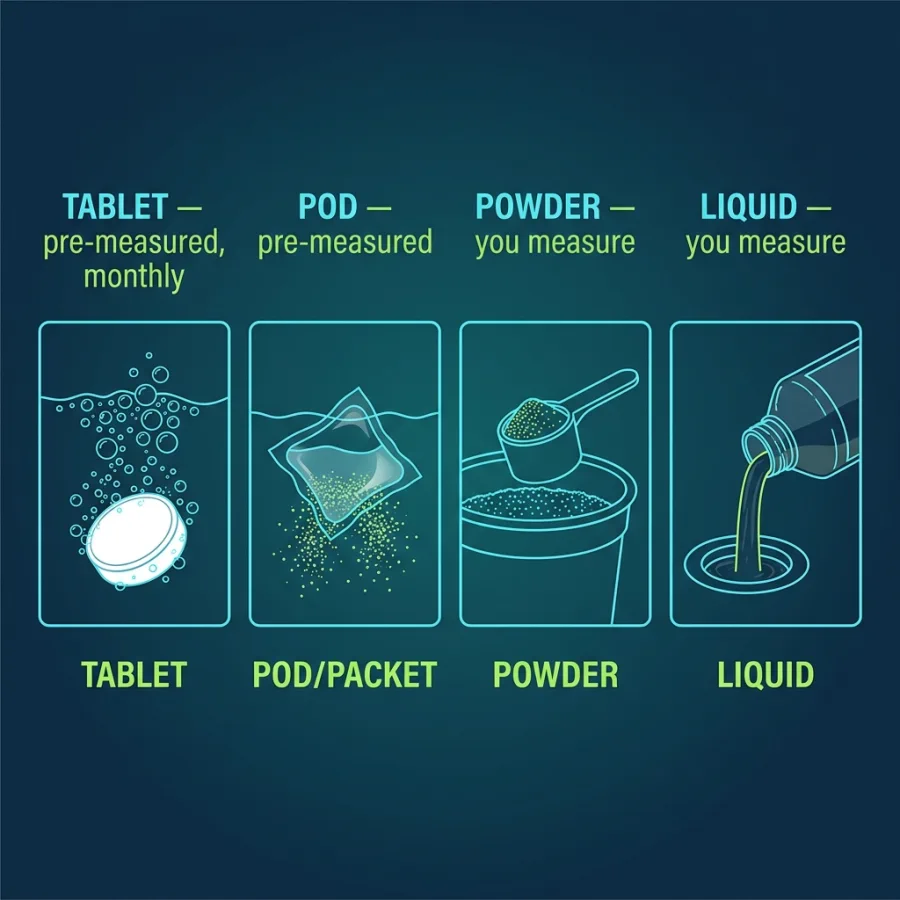
The best septic tank treatment depends on what you are trying to accomplish. A monthly tablet or packet may make routine dosing easier, but a product will not repair a damaged baffle, clear a failed drain field, or make an overdue tank safe to ignore. This guide compares five popular treatment formats, explains the limits of additives, and helps you decide when to use a product and when to call a septic professional.
Best septic tank treatments compared
| Option | Best for | Format | Main consideration |
|---|---|---|---|
| Septifix | Homeowners who want a tablet-style direct offer | Flushable tablets | Follow the current label for tank size and initial dose |
| Green Gobbler Septic Saver | Simple monthly dosing | Pre-measured pods | A maintenance product, not an emergency clog remover |
| Rid-X | Shoppers who prefer a widely available brand | Powder, liquid, or pods | Compare dose and annual cost by package format |
| Cabin Obsession | A pre-measured annual packet supply | Dissolvable packets | Confirm that the package matches your tank and schedule |
| No additive | A normally functioning system maintained on schedule | Regular inspection and pumping | Often the evidence-based starting point |
| Bio-Clean | An active drain complaint as well as the tank | Powder | Needs an overnight dwell with no water use |
| Instant Power Septic Shock | A one-off reset after a biological disruption | Liquid concentrate | An event, not a monthly routine |
| Treatment Tabs, 1 Year Supply | Buying a year of dosing in one go | Tablets, annual supply | Confirm the tablet count matches your tank size |
Important: We have not conducted a controlled field test of these products, so we do not claim that one formula prevents pumping or repairs a failing system. Product formulas, package sizes, directions, and availability can change. Check the current manufacturer label before use.
1. Septifix tablets: featured direct-offer option
Septifix is marketed as a flushable tablet treatment. Its main practical advantage is convenience: the tablet format makes dosing straightforward for homeowners who prefer not to measure a powder or liquid. The seller promotes benefits related to odors, organic waste, and routine septic maintenance; those are seller claims and should not be treated as a substitute for an inspection.
Who may prefer Septifix?
- Homeowners comparing tablet-style septic treatment products.
- People who prefer ordering a multi-month supply directly.
- Users willing to check tank size and follow the current package directions.
What to check before buying
- The recommended starting and maintenance dose for your tank size.
- The number of tablets in each package and the resulting annual cost.
- The current refund, shipping, and customer-service terms on the official offer page.
- Whether your symptoms indicate a maintenance issue or a system failure requiring service.
View the current Septifix offer
2. Green Gobbler Septic Saver pods
Green Gobbler uses pre-measured pods intended for regular septic maintenance. This format is useful for people who value a simple monthly routine. It is not the right tool for standing sewage, a rapidly rising tank level, or a suspected drain-field failure.
Read our focused Green Gobbler septic treatment review for the product-specific details. If you are choosing between brands, compare the actual dose, package size, ingredients disclosed on the current label, and annual cost rather than relying on marketing language alone.
3. Rid-X septic treatment
Rid-X is available in several formats and is easy to find. Its strongest advantage is familiarity and availability, not proof that every septic system needs an additive. Compare the current powder, pod, and liquid directions carefully because package size and dose frequency affect the true yearly cost.
Rid-X may suit a homeowner who wants a familiar maintenance product. It should not be used to postpone pumping or diagnose a slow drain, backup, wet drain field, or structural problem.
4. Cabin Obsession septic treatment packets
Cabin Obsession is commonly sold as pre-measured dissolvable packets, making it another convenience-focused option. The annual-supply format can make scheduling easier, but buyers should verify the number of treatments, intended tank capacity, and current label directions before comparing its cost with tablets, liquids, or powders.
5. Bio-Clean drain and septic bacteria
Bio-Clean is aimed at a slightly different problem from the others here: it targets an active drain complaint as well as the tank. If a kitchen line is running slow and you want to avoid a caustic opener, it is solving something a septic tablet does not address. It asks for an overnight application with no water use, which makes it higher-friction as a monthly habit. Read the full Bio-Clean comparison.
6. Instant Power Septic Shock
A concentrated liquid poured and flushed as a one-off dose. It is a legitimate tool after a genuine biological disruption, such as a course of antibiotics or heavy cleaner use, and it is cheaper up front than a multi-month supply. It is the wrong product to rely on for maintenance, because a shock bottle has no natural next date and so never becomes a routine. Read the full Instant Power comparison.
7. Septic tank treatment tabs, 1 year supply
An annual pack of dissolvable tablets dosed once a month, sold for home, RV and boat systems. The appeal is removing the repeat-ordering decision for a year. Check the tablet count against your tank size before comparing its cost with a shorter pack. Read the full 1-year-supply review.
Not sure a treatment is what you need?
An additive helps a working system keep working. It will not fix a failing one. If you are shopping because something already smells, drains slowly, or has backed up, it is worth knowing what you are dealing with before you spend anything.
Our free septic health check asks eight questions about drains, odor, pumping history and your drain field, then gives you a written read on what those answers point to and what to check next.
Or no additive at all: the right choice for many working systems
A normally functioning septic system already contains microorganisms that break down household waste. The U.S. Environmental Protection Agency emphasizes routine inspection, water efficiency, drain-field care, and pumping—not additives—as the foundation of septic maintenance. Review the EPA’s septic-system care guidance.
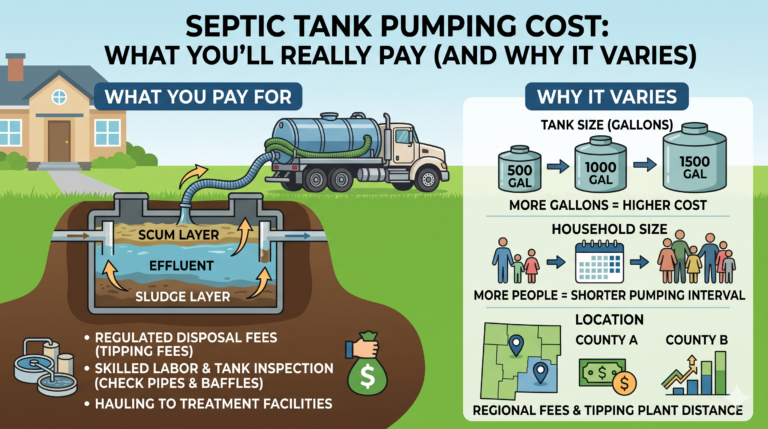
Most household septic tanks should be inspected regularly and are commonly pumped every three to five years, although the correct interval depends on tank size, household size, wastewater volume, and solids. Use our septic pumping cost calculator to prepare for service, not to delay it.
Do septic tank treatment pods work?
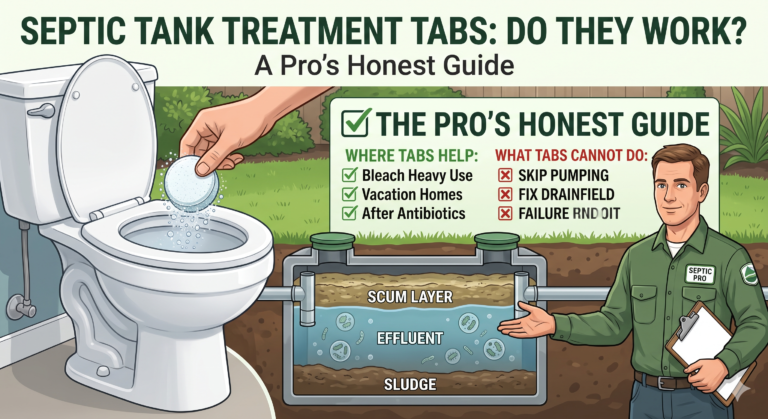
Pods and tablets are delivery formats. Whether a treatment is appropriate depends on the formula, correct dosing, system condition, and the reason you are using it. A pod can make routine dosing convenient; it cannot make a broken component functional again. Be cautious of any claim that a treatment permanently eliminates pumping or repairs a failed system.
Treatment versus cleaner: what is the difference?
A septic treatment is added to the system as a maintenance product. A septic-safe household cleaner is used in sinks, toilets, laundry, or showers without overwhelming the system when used as directed. These are different search intents and different buying decisions.
See our guide to the best septic-safe cleaning products by room if you are choosing hand soap, laundry detergent, toilet cleaner, or another household product.
Can a treatment fix septic odor or a clog?
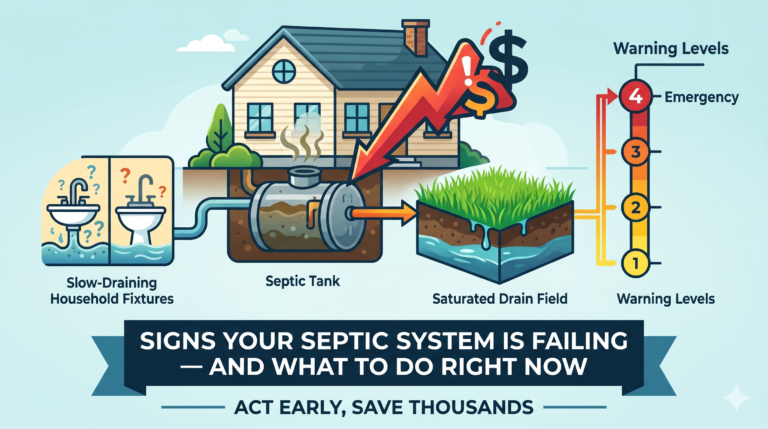
Odor does not identify one specific problem. Causes may include a dry plumbing trap, blocked vent, damaged seal, overloaded system, overdue pumping, or drain-field failure. A maintenance treatment should not be the first response to sewage backing up into the home, standing wastewater, multiple slow drains, or a strong persistent odor.
For symptoms, use the free septic diagnosis quiz as an educational starting point, then contact a qualified local septic professional when there is a backup, surfacing sewage, or suspected failure.
How we compared these options
We compared product format, ease of dosing, intended use, availability, package structure, and the clarity of current directions. We also separated manufacturer marketing claims from established septic-care guidance. We did not assign star ratings or claim laboratory or field-test results that we have not independently produced.
Our recommendations prioritize fit by use case. The commission available from a merchant does not change the safety advice: an additive is optional maintenance, while inspection, pumping, water management, and drain-field protection are essential.
How to choose a septic treatment
- Identify the goal. Routine dosing, odor investigation, and an active backup require different actions.
- Check your tank size. Do not assume that one dose fits every household system.
- Read the current label. Verify dose frequency, warnings, storage, and compatibility.
- Calculate annual cost. Compare a full year, not only the package price.
- Protect the drain field. Keep vehicles, structures, and excess water away from it.
- Keep the pumping schedule. Never use a treatment as permission to skip necessary service.
For the complete routine, follow our septic tank maintenance checklist.
Frequently asked questions
What is the best septic tank treatment?
There is no universal best product for every tank. Septifix is our featured tablet-format offer, while Green Gobbler, Rid-X, and Cabin Obsession provide other common delivery formats. A functioning system may not need an additive at all. Choose by tank size, label directions, annual cost, and the problem you are actually trying to solve.
What are the best septic tank treatment pods?
The best pod is one with clear dosing instructions that matches your tank and maintenance goal. Compare Septifix tablets with Green Gobbler, Rid-X, and packet-style alternatives, but do not treat any pod as a repair for a failing system.
Can septic treatment replace pumping?
No. Solids still accumulate in a septic tank. Pumping frequency varies, but an additive should not be used to postpone an inspection or service recommended for your system.
Are septic treatments safe for all systems?
Do not assume so. Read the current label, confirm tank compatibility, and ask a qualified professional when the system is aerobic, uses specialized components, is under a service agreement, or is already malfunctioning.
Bottom line: If you want to compare a convenient tablet treatment, review the current Septifix package and directions. If you have sewage backing up, wastewater on the ground, or several slow drains, stop shopping for additives and arrange professional service.
Compare the alternatives
If you are weighing brands before committing to a routine, these side-by-side comparisons cover the products homeowners ask about most:
- RID-X vs Septifix — the supermarket default, and where its powder format costs you consistency.
- Bio-Clean vs Septifix — a drain-and-tank crossover, and when the dual purpose is worth the extra effort.
- Instant Power Septic Shock vs Septifix — shock dosing versus monthly maintenance, and why they answer different questions.
- Cabin Obsession vs Septifix — built for seasonal and intermittently used properties.
- Septifix tablets review — the full assessment of our top pick, including what the evidence does and does not support.
Essential septic guides
Affiliate disclosure: This guide contains affiliate links, including our Septifix partner link. If you purchase through one of these links, we may earn a commission at no additional cost to you. Our conclusions are based on product information and published guidance, not payment level.