Septifix for Older Septic Systems: Should You Bother?
Older septic systems make homeowners nervous in a different way than newer ones. With an aging system, every odd smell, slow drain, or rainy-season issue feels more serious because the system has years of wear behind it. That anxiety often leads homeowners to look for products that promise easier maintenance or extra support. Septifix is one of the products that naturally catches attention in that situation. It is easy to use, premium-positioned, and marketed as a way to support waste breakdown and odor control. But if your septic system is older, is it actually worth trying, or should your focus stay somewhere else?

The short answer is that older systems benefit most from disciplined maintenance, not from product-first thinking. That does not mean a homeowner with an older system can never try Septifix. It means the order matters. Start with inspection history, pumping schedule, water-use patterns, and drain-field condition. Only after those are in place should a product like Septifix be treated as a possible supplement. [Source] How to Care for Your Septic System | US EPA
Why Older Septic Systems Need a Different Mindset
An older system may have a smaller tank than modern expectations assume, older components, more wear on baffles or pipes, and a drain field that has been handling wastewater for many years. Michigan State University notes that older homes may have smaller tanks, which can require more frequent pumping. That matters because homeowners with older systems often assume they can maintain the same schedule as newer, larger systems even when their setup may need more attention.
Click here to buy Septifix Septic Tank Treatment Tabs now.
What Septifix Might Offer in an Older System
Septifix may still appeal to owners of older systems for understandable reasons. It offers a simple monthly tablet routine, and homeowners may hope it helps support waste digestion and odor control in a system that feels more fragile. The product’s official positioning is especially attractive to people who want to feel proactive rather than reactive. In a healthy older system that is already being managed well, that mindset is not unreasonable. A homeowner may decide a product like Septifix is worth trying as a convenience-driven supplement. [Source] https://septifix.com
What Septifix Cannot Solve in an Older System

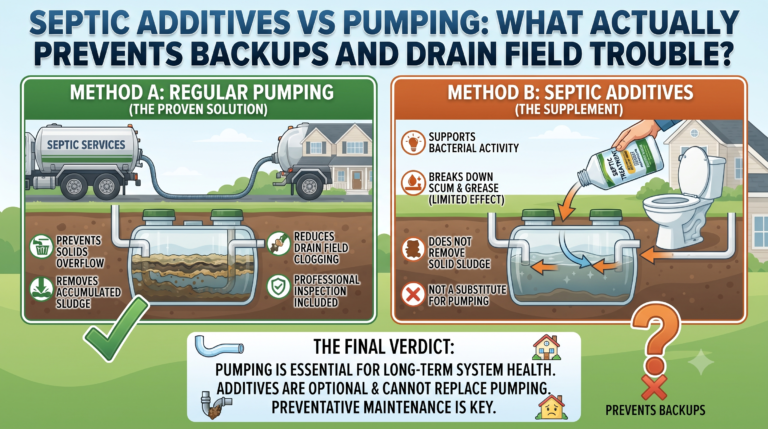
What it cannot do is reverse age. It cannot restore damaged pipes, fix an undersized tank, repair a stressed drain field, or undo years of hydraulic overload. It also cannot compensate for skipped pumping. That is where the danger lies. Older systems have less margin for neglect. If the real issue is accumulated solids, worn components, or field strain, a monthly product is not going to change those fundamentals. NC State’s failure guidance is useful here because it points to overloading, poor maintenance, design limitations, and physical damage as leading reasons systems fail. Older systems are often more vulnerable to those pressures, not less.
[Source] Why Do Septic Systems Fail? | NC State Extension Publications
Maintenance Priorities for Older Systems
If your septic system is older, your first priority should be knowing the maintenance baseline. When was it last pumped? Where is the tank and drain field located? Have you noticed wetter yard conditions, greener patches, slow drains, or odor after heavy water use? Penn State Extension recommends keeping records, knowing the system layout, conserving water, and diverting roof and surface water away from the field. Those steps become even more important as a system ages.
Click here to buy Septifix Septic Tank Treatment Tabs now.
Water Use Matters More in Aging Systems

One of the easiest ways to stress an older septic system is by sending too much water through it too quickly. EPA recommends water-efficient fixtures, spreading laundry loads across the week, and avoiding practices that flood the system. In an older setup, water management may give you more benefit than any additive ever could. That is because excessive flow reduces settling time in the tank and increases stress on the drain field.
When It May Be Reasonable to Try Septifix
Trying Septifix may be reasonable if your older system is currently stable, pumped on schedule, and free from major warning signs. In that scenario, you are not trying to fix a system in distress. You are experimenting with a maintenance product in a system that is already under control. That is the right frame. If you go in with modest expectations and see the product as optional support rather than a safeguard against age-related issues, the decision is easier to justify.
When Maintenance Should Clearly Come First
If your older system has unknown history, overdue pumping, recurring odors, wet spots, or repeated slow drains, maintenance should come first every time. This is especially true because the EPA’s additive guidance says these products are not recommended for normal domestic wastewater treatment, and Washington State University warns against treating additives like a substitute for pumping. When a system is older, the risk of misreading symptoms is even greater.
A Better Way to Decide
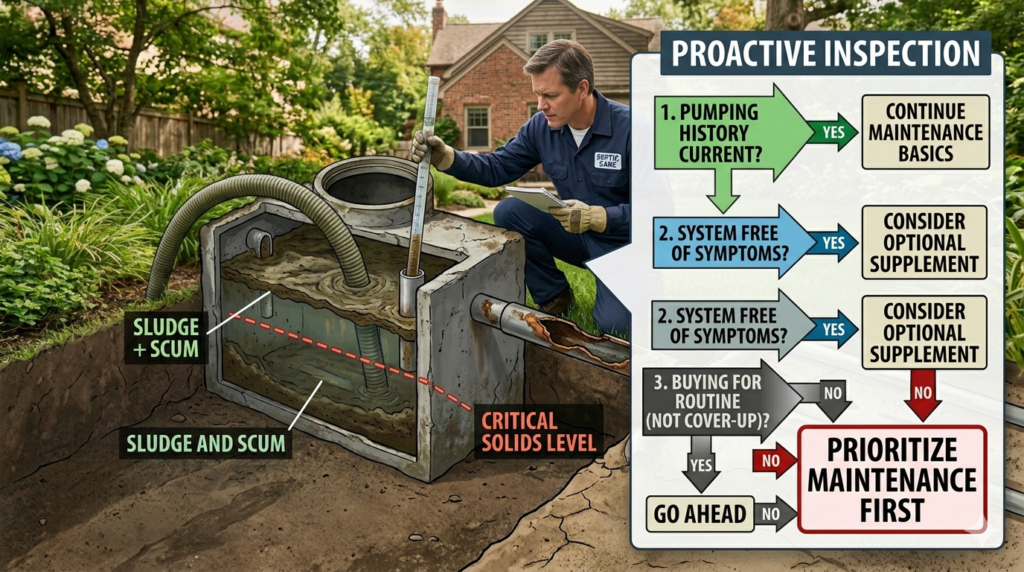
If you own an older septic system, ask three questions before buying any additive. First, is my pumping and inspection history current? Second, am I using the system carefully enough with water, waste disposal, and drain-field protection? Third, am I buying this product because it fits a routine, or because I hope it will cover up unknown problems? If the answer to the last question leans toward “cover up,” pause and address the maintenance side first.
Click here to buy Septifix Septic Tank Treatment Tabs now.
Bottom Line
Septifix can be worth trying in an older septic system only when maintenance is already in order. It is not a substitute for pumping, careful water use, or investigation of warning signs. Older systems benefit most from disciplined basics. If you want to use Septifix at all, treat it as a side option, not a strategy. For related reading, pair this article with our published guides on Best Septic Tank Treatment and Septic Additives vs. Pumping.
Related Reading
- Residential Septic Tank Maintenance
- How Often Should You Pump a Septic Tank?
- Septic Tank Pumping Costs
- 7 Easy Steps to Maintain Septic Tank Effectively
Compare the alternatives
If you are weighing brands before committing to a routine, these side-by-side comparisons cover the products homeowners ask about most:
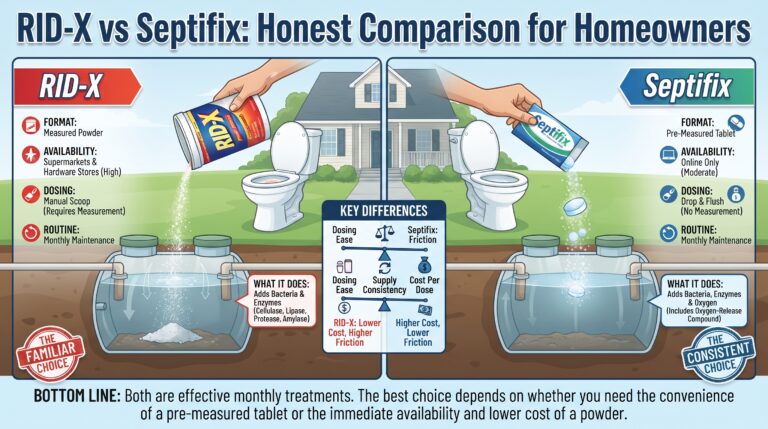
- RID-X vs Septifix — the supermarket default, and where its powder format costs you consistency.
- Bio-Clean vs Septifix — a drain-and-tank crossover, and when the dual purpose is worth the extra effort.
- Instant Power Septic Shock vs Septifix — shock dosing versus monthly maintenance, and why they answer different questions.
- Cabin Obsession vs Septifix — built for seasonal and intermittently used properties.
- Septifix tablets review — our full verdict on the product itself, separate from the older-system question.
Three Checks Before You Spend Anything on an Older System
Older systems reward diagnosis over products. Before any additive is worth considering, three checks tell you whether you are looking at a maintenance question or a structural one:
- When was it last pumped, and what were the depths? If nobody knows, that is the answer — book the pump-out first. An additive dosed into an overdue tank changes nothing you can measure.
- Are the baffles intact? A collapsed outlet baffle lets solids pass straight to the drainfield, which is the single most expensive failure mode on an ageing system. It is visible at any pump-out, and cheap to fix compared with a field replacement.
- Does the ground above the field stay dry? Persistent softness or unusually vigorous grass over the drainfield, in dry weather, points at a field reaching the end of its working life. No product addresses that.
If all three come back clean, the system is in maintenance territory and a monthly routine is a reasonable optional addition. If any one of them does not, the money is better spent on the finding than on a tablet. This ordering matters more on an old system than a new one, because the failure modes that age brings are precisely the ones additives cannot touch.
Essential septic guides
Affiliate disclosure: This guide contains affiliate links, including our Septifix partner link. If you purchase through one of these links, we may earn a commission at no additional cost to you. Our conclusions are based on product information and published guidance, not payment level.