How Long Does a Septic System Last?
One of the most common homeowner questions is simple: how long does a septic system last? The frustrating answer is that septic lifespan is measured in decades, but not with one universal number. A well-built, well-maintained system can serve a home for a very long time. A neglected or poorly located system can become a costly problem much sooner. That is why lifespan is less about finding one magic average and more about understanding what shortens or extends useful life.
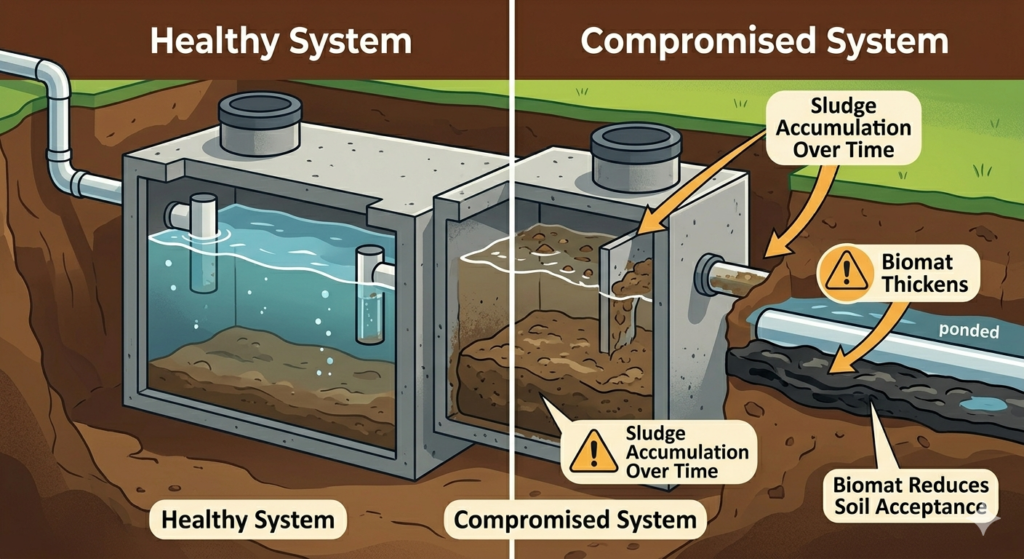
EPA’s homebuyer guide says the average lifespan of a septic system is about 15 to 40 years, and it can last longer with proper maintenance. EPA’s maintenance page adds useful detail: a concrete tank may last 50 years or more, while pumps and controls often need replacement every 10 to 20 years, and drainfields older than 25 to 30 years may begin to lose performance as biomat thickens. In other words, “the septic system” is really several components aging on different timelines. Source
The Tank, the Field, and the Components Do Not Age the Same Way
Homeowners often picture lifespan as one date on the calendar, but septic systems age in layers. The tank may remain structurally sound for decades, especially if it is concrete and was installed correctly. Pumps, alarms, and controls on more advanced systems typically wear out faster. The drainfield has its own life cycle because it depends on soil function, loading, and how much stress it has taken over time. That is why one part of the system can feel “fine” while another part is nearing the end of its useful life.
Get Free Septic Tank Diagnose Using Our Free Septic Tank Diagnose Tool
Quick answer: Lifespan comes down to loading, water use, and whether the tank was pumped on time — not to any additive. A monthly tablet supports the routine side of that. Septifix is our featured option to compare.
What Shortens Septic System Lifespan Fastest
The biggest lifespan killers are usually not mysterious. NC State Extension points to excessive water use, poor maintenance, poor design or installation, and physical damage as leading causes of septic failure. Excessive water means more wastewater than the system can reasonably treat. Poor maintenance means solids build up until they move where they should not. Poor design or siting means the system may struggle even when the homeowner does everything right. Physical damage includes driving or building over system areas and allowing root intrusion near the field. Source
Maintenance Is the Biggest Lifespan Lever Most Homeowners Control
EPA says routine maintenance generally costs far less than system repair or replacement and recommends inspection every one to three years and pumping roughly every three to five years for many systems. Penn State Extension reinforces that homeowner maintenance is critical because sludge accumulates over time and must be pumped out. This is one of the rare parts of septic ownership where the homeowner has real leverage. You cannot change the age of your drainfield, but you can keep excess solids from shortening its life unnecessarily. Source
Water Use Has a Bigger Effect Than Many Owners Realize
A septic system can be structurally sound and still age badly if it is hydraulically overloaded year after year. EPA recommends using high-efficiency fixtures, repairing leaks, and spreading laundry across the week. Those habits protect lifespan because they give solids more time to settle in the tank and prevent the drainfield from being flooded with more water than it can absorb. Homes that suddenly add people, appliances, or constant leak problems often stress systems that previously seemed stable.
Drainfield Care Determines the Expensive Part of Lifespan
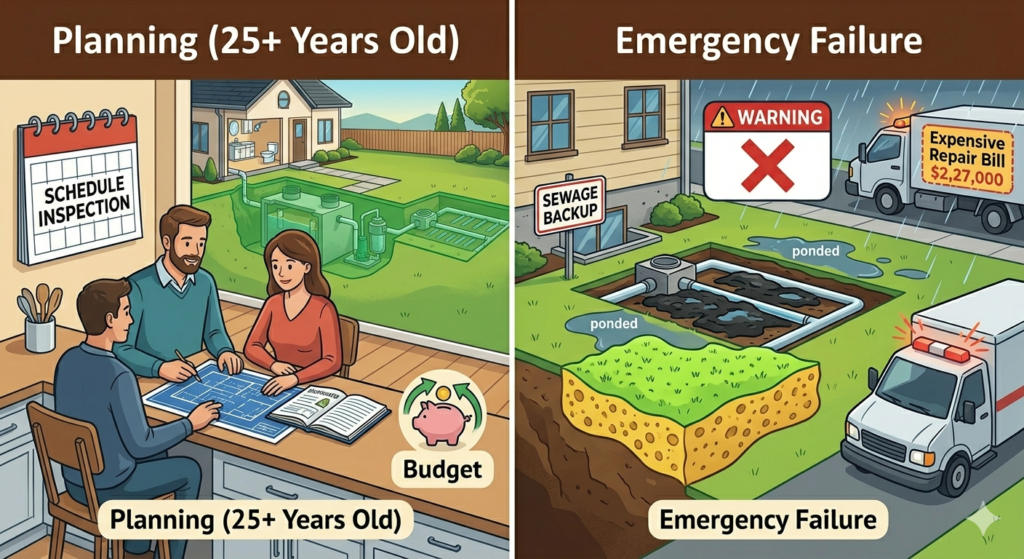
The drainfield is often where lifespan becomes financially meaningful. EPA says drainfields older than 25 to 30 years may begin to struggle as biomat thickens and soil acceptance changes. Penn State and EPA both advise homeowners to keep heavy vehicles off the field, keep trees and shrubs away, and divert runoff away from the area. Once drainfield performance declines, owners may face ponding, odor, slow drains, or backup issues that are far more expensive than routine service. Source
How to Tell If Your System May Be Nearing the End
No article can tell you the exact remaining life of a specific septic system, but warning signs matter. NC State lists slow drains, sewage backup, wet or smelly yard spots, greener grass over the septic area, and problems that worsen after rain as indicators of trouble. EPA’s homebuyer guide adds strong odor, bright green spongy grass, and backup into household drains. These do not always mean total failure, but they do mean lifespan is being consumed faster than it should be.
Systems with pumps and float switches age differently from plain gravity ones: the mechanical parts fail long before the tank does, and they announce it. Knowing what a septic alarm means — and which causes are a cheap component swap rather than a failed field — is what keeps a pump fault from becoming a drainfield bill.
What Smart Homeowners Do Before an Emergency
EPA advises owners of systems more than 25 to 30 years old to start planning for an upgrade before an emergency. That does not mean panic. It means treat age as a planning variable, not a surprise. Keep maintenance records. Know what type of system you have. Ask professionals about tank condition, baffles, filters, pumps, and field performance. Budgeting early is always easier than reacting during a backup or failed sale inspection. Source
If the reason you are estimating remaining life is that the house is about to change hands, a different set of rules applies: some states and many counties require a septic inspection before title transfers, and what the report says about the drainfield is what drives the negotiation. Our guide to selling a home with a septic system works through it.
Bottom Line
A septic system can last anywhere from roughly 15 to 40 years on average, with some components lasting longer and some wearing out sooner. The biggest factors are maintenance, water use, site conditions, design quality, and drainfield protection. If you want your system to stay on the long end of the range, the boring habits matter most: inspect, pump, conserve water, protect the field, and respond early to warning signs.
Related Reading
- How Often Should You Pump a Septic Tank?
- Septic Tank Installation Cost
- Residential Septic Tank Maintenance
- Septic Tank Maintenance Checklist
Quick answer: A treatment supports routine maintenance; it does not replace pumping, inspection, or repair. If the tablet format suits you, compare package options and check your tank size before ordering.
Estimating Remaining Life on a System You Did Not Install
Most owners inherit a system with no installation date and no paperwork. Four things narrow the estimate considerably:
- County permit records. These usually list the install year, tank size and field layout, they are held by the local health department, and requesting the file is normally free.
- Tank material. Concrete is the most common and, kept in good condition, the longest-lived; older concrete with mortar joints is more prone to leaking than a modern single-pour tank. Plastic and fibreglass resist corrosion but can shift or deform in saturated ground.
- Loading history. A drainfield that has served a large household for twenty years has absorbed far more than one under a couple for the same period. Age alone tells you very little without the loading behind it.
- Baffle condition at the last inspection. Baffles are the cheapest component to replace and the most revealing about how the tank has been treated.
The combination matters more than the number. A concrete tank in good condition with intact baffles and a field that still accepts water can have years left at age thirty. A tank of the same age with crumbling baffles and soggy ground above the field is near the end regardless of what the permit says.
If you are buying, note that a septic inspection is separate from a home inspection and is rarely included by default. Commission one, and insist that it includes opening the tank and measuring sludge and scum depths rather than a visual check of the lids. The cost difference is small; the difference in what it tells you is the entire point.
The drainfield usually reaches the end of its life before the tank does. Our drain field replacement cost guide covers what a replacement costs when that day comes, and what shortens a field’s life in the first place.
Essential septic guides
Affiliate disclosure: This guide contains affiliate links, including our Septifix partner link. If you purchase through one of these links, we may earn a commission at no additional cost to you. Our conclusions are based on product information and published guidance, not payment level.